Underbody protection
Long-term underbody protection -D 314 D36 M2-, colour grey
Designation:
- Long-term underbody protection -D 314 D36 M2-, colour grey
Product description Long-term underbody protection -D 314 D36 M2-, colour grey
Long-term underbody protection -D 314 D36 M2- is a grey coating compound based on an aqueous plastic dispersion, applied by spraying with a UBS gun.
The drying time depends on the film thickness, ambient temperature and ambient air humidity. Good ventilation and higher temperatures accelerate drying.
The dried film shows good adhesion to galvanised and cathodic dip-primed (KTL) sheet metal, as well as to painted surfaces. Due to its high abrasion resistance and low-temperature flexibility, the long-term underbody protection offers very good stone chip protection.
The long-term underbody protection can be overcoated quickly with waterborne paints.
After air drying (approx. 2–3 hours), the material can also be overcoated with conventional (solvent-based) paint systems.
Once fully cured, the dried coating can be sanded easily.
The long-term underbody protection is suitable for restoring the original structure after a repair.
The material is only temporarily resistant to petrol and cold cleaners.
Application
- Long-term underbody protection -D 314 D36 M2- is suitable for repair work on the underbody, wheel arches, and front and rear areas. It is used on visible components, e.g. on rocker panels, as an overcoatable protection against stone chips, road salt and moisture corrosion.
- The material is suitable for restoring the various surface textures after a repair on vehicles of all types.
- The long-term underbody protection is also suitable for sound deadening of luggage compartments, bonnets, wheel arches and side panels, and for covering and sealing repair areas, weld seams and overlaps.

Note
- Before starting work, read the safety data sheet for precautions and safety advice.
- Even for products that do not require labeling, observe the precautions usual for chemical products.
Processing
- The surfaces to be treated must be thoroughly cleaned beforehand; rust must be removed.
- The surfaces must be free of dirt and dust, dry and free of grease.
- Areas not to be coated should be masked off with masking paper.
- Bare steel surfaces must be primed before applying the long-term underbody protection.
- The long-term underbody protection is applied with the UBS gun from the 1 litre can. The application pressure is 4–5 bar.
- Shake the can thoroughly for one minute before use.

Caution!
Do not spray onto joints, engine, transmission, propeller shaft, exhaust, catalytic converter or brake systems.
Blow out the UBS gun immediately after use, then flush it through with plastic cleaner -D 195 850 A1-.
A clogged gun can cause the can to burst!
Observe the operating instructions for the UBS gun!
Overcoating

Note
The long-term underbody protection can be overcoated with waterborne paints and solvent-based paints. Due to the large number of paint systems available on the market, preliminary tests are necessary.
- Overcoating with water-thinnable paints:
- The long-term underbody protection can be overcoated with water-thinnable paints after brief flash-off (matt surface) and up to 72 hours after application.
- Overcoating with conventional (solvent-based) paints:
- The long-term underbody protection can be overcoated with conventional (solvent-based) paints after full drying and up to 72 hours after application. The material is a fast-drying thick-film system. When drying is accelerated with an air flow, make sure that the skin that forms quickly does not float on and get blown off the still-wet material. This could lead to cracking.
Cleaning
- Splashes on painted surfaces should be removed immediately with plastic cleaner -D 195 850 A1-.
- Equipment and soiled parts should be cleaned with water immediately after application, if necessary with the addition of an aqueous cleaner. Solvent-based cleaners must not be used (coagulation). Once dry, the long-term underbody protection can only be removed mechanically.
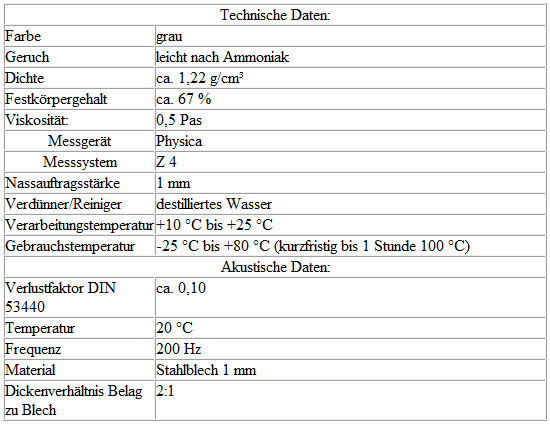
Technical Data
Storage
Guaranteed storage stability is 12 months from the production date. Usable at the latest until the date stated on the label when stored in closed original containers at +20 ºC.
Storage conditions
The recommended storage temperature for the long-term underbody protection is +10 ºC to 25 ºC.
The long-term underbody protection is susceptible to frost damage; do not allow the temperature to fall below +5 ºC.
Long-term underbody protection -D 314 D37 M2-, colour black
Designation:
- Long-term underbody protection -D 314 D37 M2-, colour black
Product description Long-term underbody protection -D 314 D37 M2-, colour black
Long-term underbody protection -D 314 D37 M2- is a black coating compound based on an aqueous plastic dispersion, applied by spraying with a UBS gun.
The drying time depends on the film thickness, ambient temperature and ambient air humidity. Good ventilation and higher temperatures accelerate drying.
The dried film shows good adhesion to galvanised and cathodic dip-primed (KTL) sheet metal, as well as to painted surfaces. Due to its high abrasion resistance and low-temperature flexibility, the long-term underbody protection offers very good stone chip protection.
The long-term underbody protection can be overcoated quickly with waterborne paints.
After air drying (approx. 2–3 hours), the material can also be overcoated with conventional (solvent-based) paint systems.
Once fully cured, the dried coating can be sanded easily.
The long-term underbody protection is suitable for restoring the original structure after a repair.
The material is only temporarily resistant to petrol and cold cleaners.
Application
- Long-term underbody protection -D 314 D37 M2- is suitable for repair work on the underbody, wheel arches, and front and rear areas. It is used on visible components, e.g. on rocker panels, as an overcoatable protection against stone chips, road salt and moisture corrosion.
- The material is suitable for restoring the various surface textures after a repair on vehicles of all types.
- The long-term underbody protection is also suitable for sound deadening of luggage compartments, bonnets, wheel arches and side panels, and for covering and sealing repair areas, weld seams and overlaps.

Note
- Before starting work, read the safety data sheet for precautions and safety advice.
- Even for products that do not require labeling, observe the precautions usual for chemical products.
Processing
- The surfaces to be treated must be thoroughly cleaned beforehand; rust must be removed.
- The surfaces must be free of dirt and dust, dry and free of grease.
- Areas not to be coated should be masked off with masking paper.
- Bare steel surfaces must be primed before applying the long-term underbody protection.
- The long-term underbody protection is applied with the UBS gun from the 1 litre can. The application pressure is 4–5 bar.
- Shake the can thoroughly for one minute before use.

Caution!
Do not spray onto joints, engine, transmission, propeller shaft, exhaust, catalytic converter or brake systems.
Blow out the UBS gun immediately after use, then flush it through with plastic cleaner -D 195 850 A1-.
A clogged gun can cause the can to burst!
Observe the operating instructions for the UBS gun!
Overcoating

Note
The long-term underbody protection can be overcoated with waterborne paints and solvent-based paints. Due to the large number of paint systems available on the market, preliminary tests are necessary.
- Overcoating with water-thinnable paints:
- The long-term underbody protection can be overcoated with water-thinnable paints after brief flash-off (matt surface) and up to 72 hours after application.
- Overcoating with conventional (solvent-based) paints:
- The long-term underbody protection can be overcoated with conventional (solvent-based) paints after full drying and up to 72 hours after application. The material is a fast-drying thick-film system. When drying is accelerated with an air flow, make sure that the skin that forms quickly does not float on and get blown off the still-wet material. This could lead to cracking.
Cleaning
- Splashes on painted surfaces should be removed immediately with plastic cleaner -D 195 850 A1-.
- Equipment and soiled parts should be cleaned with water immediately after application, if necessary with the addition of an aqueous cleaner. Solvent-based cleaners must not be used (coagulation). Once dry, the long-term underbody protection can only be removed mechanically.
Technical Data
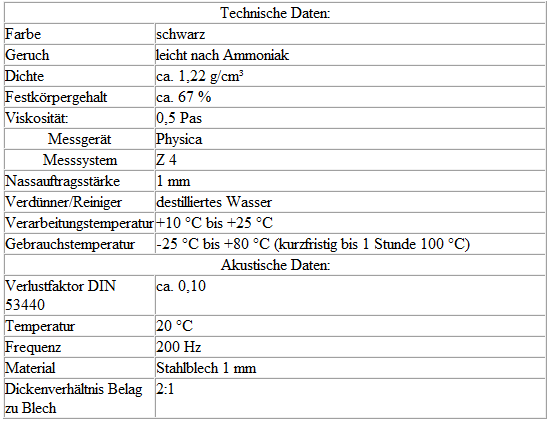
Storage
Guaranteed storage stability is 12 months from the production date. Usable at the latest until the date stated on the label when stored in closed original containers at +20 ºC.
Storage conditions
The recommended storage temperature for the long-term underbody protection is +10 ºC to 25 ºC.
The long-term underbody protection is susceptible to frost damage; do not allow the temperature to fall below +5 ºC.

Long-term underbody protection -D 314 D38 M2-, colour light
Designation:
- Long-term underbody protection -D 314 D38 M2-, colour light
Product description
Long-term underbody protection -D 314 D38 M2- is a light, transparent, i.e. translucent, non-opaque coating compound based on an aqueous plastic dispersion, applied by spraying with a UBS gun, paint gun or filler gun.
The drying time depends on the film thickness, ambient temperature and ambient air humidity. Good ventilation and higher temperatures accelerate drying.
The dried film shows good adhesion to galvanised and cathodic dip-primed (KTL) sheet metal, as well as to painted surfaces. Due to its high abrasion resistance and low-temperature flexibility, the long-term underbody protection offers very good stone chip protection.
The long-term underbody protection can be processed and overcoated quickly with waterborne paints.
After air drying (approx. 2–3 hours), the material can also be overcoated with conventional (solvent-based) paint systems.
The long-term underbody protection can be tinted and mixed with waterborne paints, and thinned with fully demineralised water. For tinting, up to 30 % by volume of ready-to-spray waterborne paint can be added.
Varying the mixing ratios, application pressures and distances allows smooth surfaces as well as fine to coarse textures to be produced.
The material is only temporarily resistant to petrol and cold cleaners.
Application
- Long-term underbody protection -D 314 D38 M2- is suitable for repair work on the underbody, wheel arches, and front and rear areas. On visible components, e.g. rocker panels, it is used as an overpaintable protection against stone chips, road salt and moisture corrosion.
- The material is suitable for restoring the various surface textures after a repair on vehicles of all types.
- A particular advantage is the variable tinting option. Any scratches and stone chips are thus rendered virtually invisible.

Note
- Before starting work, read the safety data sheet for precautions and safety advice.
- Even for products that do not require labeling, observe the precautions usual for chemical products.
Processing
- The surfaces to be treated must be thoroughly cleaned beforehand; rust must be removed.
- The surfaces must be free of dirt and dust, dry and free of grease.
- Areas not to be coated should be masked off with masking paper.
- Bare steel surfaces must be primed before applying the long-term underbody protection.
- The long-term underbody protection can be applied over all common sealants (except silicone) and is characterized by good adhesion.
- With sealants containing plasticizers, the surface of the long-term underbody protection may become soft and show some tackiness. The material does not lose its adhesion, however.
- Shake the can thoroughly before use.
- Long-term underbody protection is applied with stainless-steel filler or paint guns. For adjustment, the material can be thinned with distilled or demineralized water (DI water) (addition max. 10 vol.-%).
- Do not apply the first coat too thick.
- Long-term underbody protection is miscible with ready-to-spray waterborne paints (addition max. 30 vol.-%).
- To reproduce common textures, the best results are achieved with 10-15 % ready-to-spray paint mix.
- Before application, filter the material through a paint strainer.

Caution!
Do not spray onto joints, engine, transmission, propeller shaft, exhaust, catalytic converter or brake systems.
Blow out the UBS gun immediately after use, then flush it through with plastic cleaner -D 195 850 A1-.
A clogged gun can cause the can to burst!
Observe the operating instructions for the UBS gun!
Overcoating

Note
The long-term underbody protection can be overcoated with waterborne paints and solvent-based paints. Due to the large number of paint systems available on the market, preliminary tests are necessary.
- Overcoating with water-thinnable paints:
- The long-term underbody protection can be overcoated with water-thinnable paints after brief flash-off (matt surface) and up to 72 hours after application.
- Overcoating with conventional (solvent-based) paints:
- The long-term underbody protection can be overcoated with conventional (solvent-based) paints after full drying and up to 72 hours after application. The material is a fast-drying thick-film system. When drying is accelerated with an air flow, make sure that the skin that forms quickly does not float on and get blown off the still-wet material. This could lead to cracking.
Cleaning
- Splashes on painted surfaces should be removed immediately with plastic cleaner -D 195 850 A1-.
- Equipment and soiled parts should be cleaned with water immediately after application, if necessary with the addition of an aqueous cleaner. Solvent-based cleaners must not be used (coagulation). Once dry, the long-term underbody protection can only be removed mechanically.
Technical Data
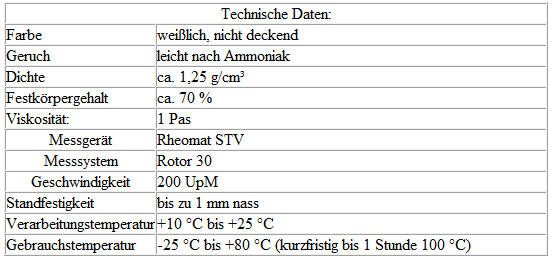
Storage
Guaranteed storage stability is 12 months from the date of production. Use no later than the date stated on the label when stored in sealed original containers at +20 °C.

Storage conditions
The recommended storage temperature for the long-term underbody protection is +10 ºC to 25 ºC.
The long-term underbody protection is susceptible to frost damage; do not allow the temperature to fall below +5 ºC.