Driver and Front Passenger Airbag Protection
Injuries to drivers and passengers in a collision are usually caused by being thrown against stationary objects. Inside the vehicle, these can be the steering wheel, instrument panel, or windshield; when ejected from the vehicle, they can be the road surface or a tree. Serious injuries can also be caused by impact forces generated during a collision, even without the body contacting a stationary object or surface.
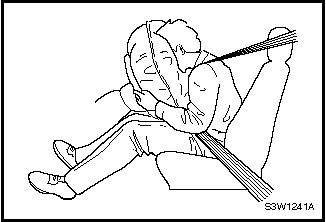
All such injuries are caused by impact forces generated during a collision due to the sudden stop of the vehicle. The time and distance required for the vehicle to decelerate or stop largely determine the severity of collision effects on the driver and passengers. For example, when the vehicle brakes before a red traffic light, the driver's and passengers' upper bodies continue moving forward due to inertia.
This is because, before braking, the vehicle and occupants were moving at the same speed. When braking, the vehicle slows down, and the occupants continue moving forward for a short time due to inertia. However, a driver and passengers who are wearing seat belts and sitting in the correct position are practically unlikely to be injured during a sudden stop or hard braking. Even during hard braking, there is still sufficient time and distance to stop the vehicle. Seat belts normally provide reliable restraint against the forces generated during braking.
In a high-speed collision, the time to complete stop is a fraction of a second, and the distance is less than 30 cm (12 in).
The extremely short time and distance to stop greatly increase the forces acting on occupants. The human body cannot withstand such forces.
Even for occupants wearing seat belts and sitting in the correct position, the forward movement speed of the head, upper torso, arms, and thighs equals the vehicle speed before the collision. In moderate and severe frontal collisions, belted occupants are at risk of injury to internal organs and tissues, even without the head or torso striking stationary objects or surfaces.
Airbags provide the head and upper body of the driver and front passenger with additional time and distance to stop in moderate and severe frontal collisions, or collisions close to frontal. This additional time and distance can save lives and prevent serious injuries.
Test yourself
A quick Chevrolet Lacetti quiz: every answer comes with an explanation and a link to the manual page.