Smart Key System
Specifications
Specifications
Smart Key Unit
| Items | Specification |
| Rated Voltage | 12 V DC |
| Operating Voltage | 9–16 V DC |
| Operating Temperature | -22 to 167°F (-30 to 75°C) |
RF Receiver
| Items | Specification |
| Frequency | 433.92 MHz |
| Antenna Type | FSK |
Smart Key
| Items | Specification |
| Battery | Lithium battery 3 V, 1 pc. |
| Range | - Distance at which the RF (radio frequency) receiver can receive the FOB transmission signal: 30 m - Distance at which the LF (low frequency) antenna (outside handle/trunk/luggage compartment) can detect the FOB: 0.7 m |
| Battery Life | More than 2 years (10 times/day) |
| Press the buttons | 3 (door lock/unlock, trunk) |
| Frequency (Reception) | 125 kHz |
| Frequency (Transmission) | 433.92 MHz |
| Quantity | 2 units |
Antenna
| Items | Specification |
| Rated Voltage | 12 V DC |
| Operating Voltage | 9–16 V DC |
| Operating Temperature | -22 to 167°F (-30 to 75°C) |
| Frequency | 125 kHz |
| Quantity | Interior (3 pcs), Door (2 pcs), Bumper (1 pc) |
Components and Component Location
Components (1)
[4DR]
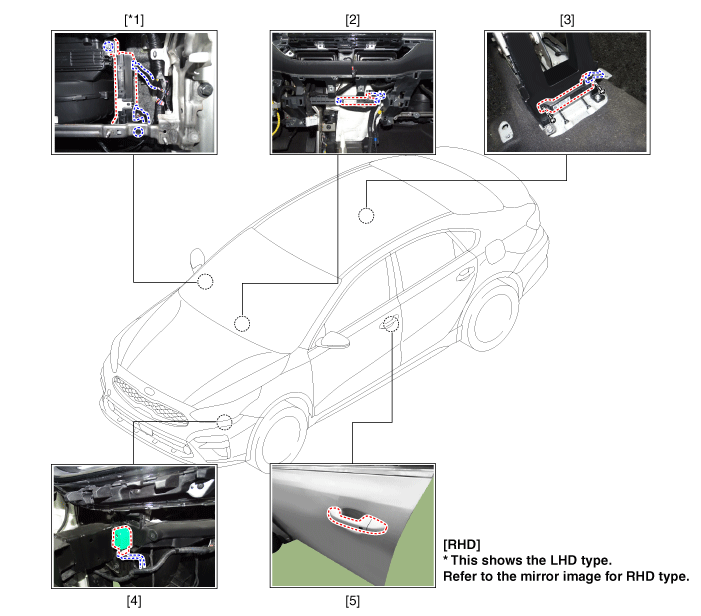
| 1. Integrated Body Control Module (BCM) 2. Interior Antenna 1 3. Interior Antenna 2 |
4. Buzzer 5. Door Handle and Door Antenna |
[5DR]
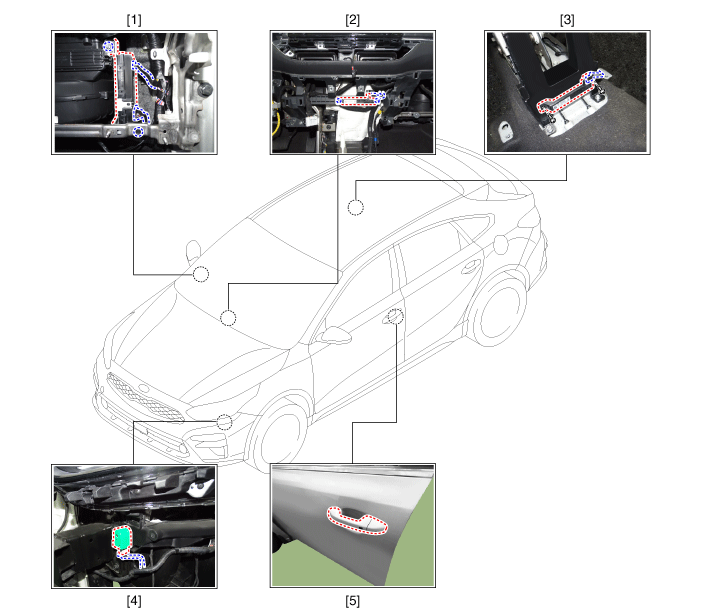
| 1. Integrated Body Control Module (BCM) 2. Interior Antenna 1 3. Interior Antenna 2 |
4. Buzzer 5. Door Handle and Door Antenna |
Components (2)
[4DR]
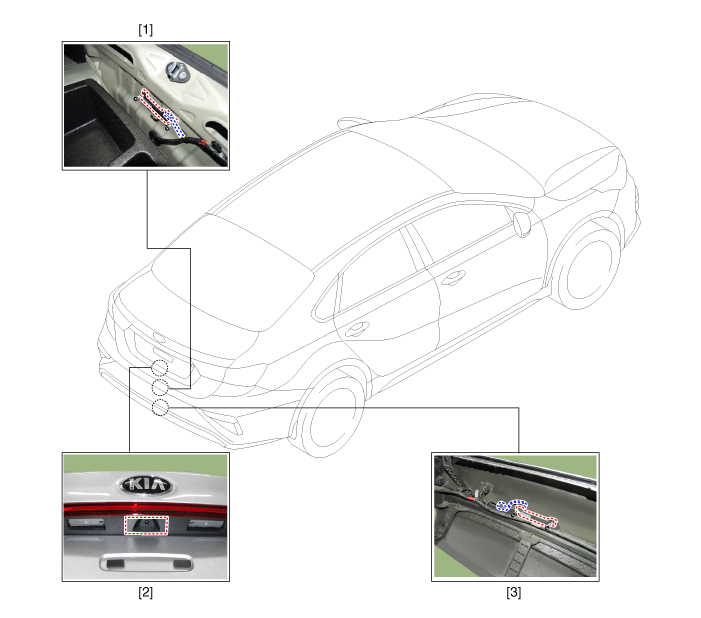
| 1. Main Antenna 2. Trunk Lid Handle |
3. Bumper Antenna |
[5DR]
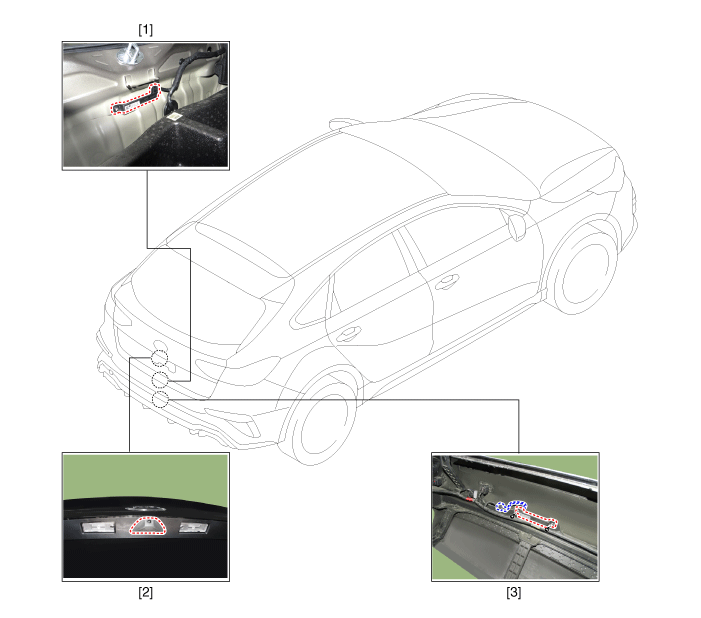
| 1. Main Antenna 2. Trunk Lid Handle |
3. Bumper Antenna |
Description and Operation
Description
Block Diagram
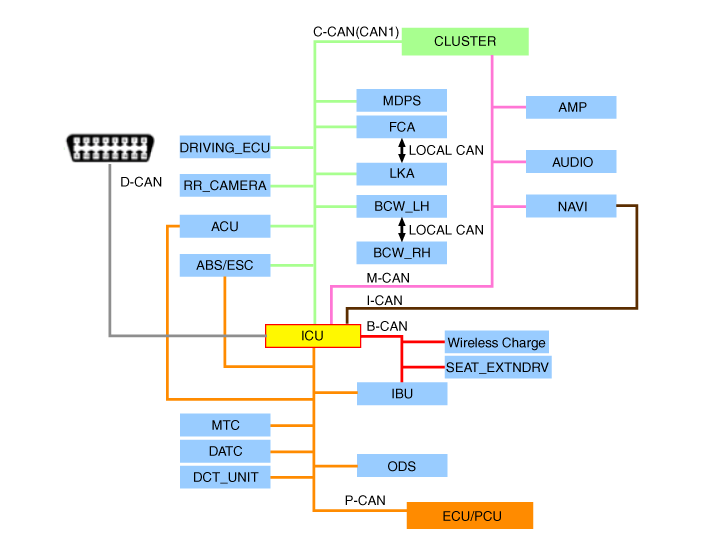
| Abbreviation | Abbreviation Description |
| ACU | Airbag Control Unit |
| MDPS | Motor Driven Power Steering |
| LKA | Ground care assistance |
| BCW | Blind-Spot Collision Warning |
| IBU | Intelligent Body Control Unit |
| ICU (Intensive Care Unit) | Integrated Central Control Unit |
| MTS | Manual Temperature Control |
| DATC | Dual Automatic Temperature Control |
| ORV | Passenger Sensing System |
| PCM | Powertrain Control Module |
| ABS | Anti-Lock Braking System |
The SMART KEY system is a system that allows the user to access and operate the vehicle in a very convenient way. To access the vehicle, there is no need for a traditional key or remote control. A control unit is required.
The user carries the SMART KEY fob, which does not require any conscious action by the user (for example, pressing an RKE button). The SMART KEY system is activated by pressing the button on the door handle.
Once activated, the vehicle sends a request within a limited range. If the SMART KEY FOB receives this request, it automatically sends a response to the vehicle. The system then decides whether to perform a certain action (unlock, lock...) or remain inactive.
Again, communication between the vehicle and the SMART KEY FOB is required before any action can be performed.
The system provides the following functions:
Passive Unlock via 4 Doors
Passive Lock via 4 Doors
Passive Start
Passive Trunk Access via Trunk Lid Switch
A maximum of 2 fobs can be processed by the system
Immobilizer backup antenna driver is integrated into the SSB for TP authentication (i.e. keyless home mode).
Communication with Engine Management System
Communication with SRX
LF-RF Communication
Passive Unlock
The system allows the user to access (unlock) the vehicle without performing any action with the SMART KEY fob.
Passive Locking
The system allows the user to lock the vehicle by pressing the button on the door handle with the SMART KEY fob.
Start Button
The system allows the user to switch power modes (Off, Accessory, Ignition) and start and stop the engine without performing any action with the SMART KEY fob. See the Engine Start/Stop Button System specifications.
LIMP HOME Mode
In addition, the system features a so-called "Valet Mode", in which the user can control all vehicle functions by inserting the key into the SSB.
Operation
Passive Functions
The system allows the user to access the vehicle without having to perform any actions (for example, pressing the RKE button) with the SMART KEY fob. It is sufficient for a valid SMART KEY fob to be within a specified and limited range relative to the vehicle. In this way, the system is able to detect and authenticate the SMART KEY fob within the ranges specified below.
Operating Range
The SMART KEY FOB receives and interprets the challenge sent by the vehicle through the external antennas in free space at a minimum radius of 0.7 m outside the antennas built into the door handles.
The access range to the trunk or tailgate is also a minimum of 0.7 m from the antenna position.
Passive Entry (Passive Unlock)
Pressing one of the buttons on the door handles when all doors are locked indicates the operator's intention to access the vehicle and thus initiates the system unlock.
Passive Lock (Exit)
Press one of the buttons on the door handles when one of the following conditions is met:
At least one door is open and the two-stage timer is not running, or.
The two-stage timer is running and one of the buttons, other than the front left side, is pressed to indicate the operator's intention to lock the vehicle, thus causing the system to lock.
Passive Trunk Warning (Sedan Only)
Whenever the trunk is closed, the SMK ECU uses an appropriate search strategy to avoid the trunk buzzer warning with the fob outside the vehicle. The SMK then searches for the SMART KEY fob inside the trunk compartment. If a valid SMART KEY fob is detected in the trunk, the SMK ECU activates the external SMK buzzer (to be confirmed) to inform the user that the trunk was closed with the fob inside the trunk.
The SMK will send a trunk open command to the IBU to reopen the trunk if the trunk reopen bit is set (BK). For this function, a "valid" SMART KEY FOB means any SMART KEY FOB belonging to the vehicle, even if it is DEACTIVATED.
Smart Trunk
When a valid SMART KEY remains near the rear bumper (within the LF antenna range) for more than 3 seconds, the trunk will open.
The rear bumper antenna constantly detects a valid SMART KEY in the vicinity.
If a valid SMART KEY enters the rear bumper antenna range, the buzzer and hazard lamp will be activated once.
If the electronic key remains within the rear bumper detection range (antenna range) for more than 3 seconds, the warning buzzer and hazard lamp will be activated twice and the trunk will open.
Welcome Light
When the driver with the electronic key approaches the vehicle, the outside mirrors and puddle lamps will be controlled by smart key authentication.
Access to Welcome Light Search Mode (a mode that periodically searches for the SMART KEY to prevent vehicle battery discharge)
The vehicle enters the security state by RKE locking or passive locking by the driver.
The Smart Key Module (SMK) searches for the deactivated fob by controlling the internal antennas.
If the SMART KEY is not found in the vehicle, the Smart Key Module (SMK) will control the door handle antenna to search for the approaching driver.
The Smart Key Module (SMK) performs a search for 3 seconds, 3 times, by activating the door handle antenna. If the key is not found all 3 times, it will enter Welcome Light Search Mode.
If the outside mirror folding connection mode is activated, the mirror folding operation will be engaged.
Welcome Light On
In Welcome Light Search Mode, the SMART KEY is detected when the driver approaches the vehicle.
The Smart Key Module (SMK) sends a welcome lighting signal to the DDM for 15 seconds over CAN.
The DDM turns on the outside mirror puddle lamp for 15 seconds. (If the outside mirror folding is connected, the mirror folding operation will be engaged.)
SMART KEY Reminder 1
Preconditions:
All terminals "OFF".
At least one door is open
Unlocked status (checked periodically by the SMK every 100 ms while CAN/LIN is active)
Event:
IF THE FOB IS NOT ACTIVE
The SMK searches for fobs inside the vehicle. The same LF strategy as for the ID-out warning must be used (registration only, no authentication).
IF THE FOB IS ACTIVE
SMK searches for a valid TP
If no fob or TP is found, no action is required.
If any valid fob or valid TP is detected, the SMK unlocks the vehicle by sending a CAN key unlock message with the fob number reminder.
If any valid fob is found, the SMK unlocks the vehicle by sending a CAN/LIN key unlock reminder with the fob number.
Smart Key Reminder 2
Preconditions:
All terminals "OFF".
Any door (including the trunk) is open
No FOB-IN and lock status (checked periodically by the SMK every 100 ms while CAN/LIN is active)
Vehicle action:
Closes the last door or trunk with the handles in the locked state or with locking in progress
SMK Actions:
Checks the lock status for 500 ms after the door is closed. If all doors are locked:
IF THE FOB IS NOT ACTIVE
The SMK searches for fobs inside the vehicle.
The same LF strategy is applied as for the ID exit. Warning (registration only, no authentication).
IF THE FOB IS ACTIVE
SMK searches for a valid TP.
If no FOB is found, no action is required.
If any valid FOB is found, SMK sends an unlock command via CAN/LIN and activates the additional buzzer warning.
Smart Key Door Lock Warning
Door Lock Warning 1
If the terminal status is ACC or IGN, all doors are closed, and the user triggers SMK Lock, the search starts outside the vehicle at the side of the trigger.
If a valid FOB is not found, no action is required. However, if a valid FOB is found, the audible warning must be activated.
If the following conditions are met, the door lock warning applies to the trunk as a door, and the trunk lock/unlock button as the door unlock switch:
Trunk option is enabled
Trunk lock/unlock option is enabled.
Door Lock Warning 2
If the terminal status is OFF, not all doors are closed, and the user triggers SMK Lock, the search starts outside the vehicle at the side of the trigger.
If a valid FOB is not found, no action is required. However, if a valid FOB is found, the audible warning must be activated.
If the following conditions are met, the door lock warning applies to the trunk as a door, and the trunk lock/unlock button as the door unlock switch:
Trunk option is enabled
Trunk lock/unlock option is enabled.
Door Lock Warning 3
If the terminal status is OFF, ATWS is considered disarmed, all doors are closed, and the user activates SMK Lock, the search starts inside the vehicle.
If a valid FOB is not found, the SMK Lock search starts. However, if a valid FOB is found, the buzzer is activated.
If the following conditions are met, the door lock warning applies to the trunk as a door, and the trunk lock/unlock button as the door unlock switch:
Trunk option is enabled
Trunk lock/unlock option is enabled.
Smart Key Lamp Warning
If the final terminal status is ACC or IGN and the vehicle speed is less than 3 km/h, a periodic search (every 3 seconds) is performed from inside the vehicle to confirm that a valid FOB is still inside the vehicle.
If a valid FOB is not found, a warning is issued. However, if a valid FOB is found, no action is initiated.
Fail-Safe Functions (Backup for Limp Home)
If the SMART KEY FOB battery is discharged or communication fails, the following functions are available:
Unlocking/locking doors or trunk: use the mechanical key.
User Information Functions
ID OUT Warning
Preconditions:
(ACC or IGN1) & (any door open or trunk open)
Event:
The last open door is closed.
SMK Action:
SMK searches for the SMART KEY FOB from inside the vehicle.
If a valid SMART KEY FOB is not found, SMK activates the exterior buzzer and sends the ID OUT warning via CAN (exterior buzzer, warning and interior buzzer).
If a door is opened and closed again while the terminal is on and a valid FOB is inside the vehicle, SMK re-enables authentication and stops the warning. If the terminal is in ACC, SMK must turn on the immobilizer lamp.
Smart Key Battery Low Voltage Detection
To detect a low battery condition of the FOB, a battery voltage measurement and low voltage detection strategy is implemented in the FOB. Battery voltage measurement is performed when the FOB button is pressed or when an LF measurement command is received.
Registration Description
This section explains the registration procedure for the SMK and FOB.
To register the SMK and FOB, a connection to the diagnostic tool is required.
REGISTRATION MODE
In any mode, the registration process is controlled by the SMK.
Before starting the registration service, the Fob-In signal must be active, and the vehicle security code (called the PIN code) must be known.
Registration Mode
This mode is used by dealers to replace the SMK and/or key set, or to register additional keys for an existing system. In this case, the system has already learned the PIN code. The PIN code is fixed for the life of the vehicle, so the same PIN code must be used in this mode. Otherwise, registration will fail.
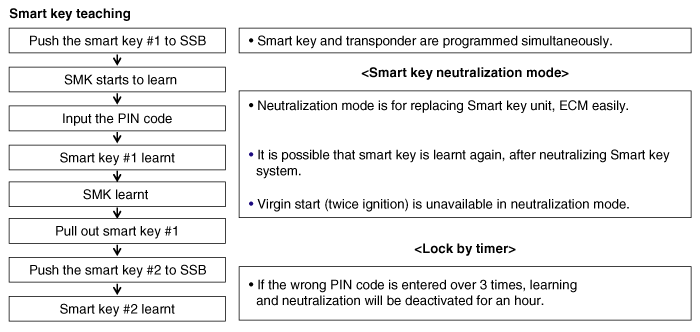
REGISTRATION MODE Procedure Description (Step by Step)
Purpose: Key registration procedure at a service station
Initial Condition:
SMK replacement: SMK is not registered, and the SMART FOB is already registered with the same PIN code.
Registration of additional or new keys: SMK and ESCL are already registered with the same PIN code.
Start-up after replacement (initial start)
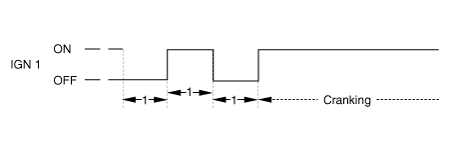
Start-up is possible in the following process after replacement with a new smart key unit or key FOB.
This method is used when starting from the initial condition.
All related parts are in original condition (smart key, PCM).
Depress the brake pedal in P or N range.
Press the start button once with the virgin smart key.
Repair Procedures
Inspection
In the body electrical system, faults can be quickly diagnosed using the Korean Diagnostic System (KDS).
The Diagnostic System (KDS) provides the following information.
Self-diagnosis: check for malfunction and diagnostic trouble code (DTC).
Current Data: Check the system input/output status.
Operation check: Check the operating status of the system.
Additional function: Control of other functions, including the setting parameter system and zero point adjustment.
Select "Vehicle Model" and "IBU-SMK" for inspection to check the vehicle with the tester.
Select the "Current Data" menu to view the current input/output data status.
To forcibly check the operation of each module, select "Activation Test".
Antenna Activation Diagnosis
Connect the KDS cable to the data link connector (DLC) on the lower driver-side instrument panel trim.
After turning the ignition switch ON, select "Active Test".
Place the smart key near the corresponding antenna and operate it using the KDS.
If the smart key LED blinks, the smart key is normal.
If the smart key LED does not blink, check the smart key battery voltage.
Antenna Activation
Interior Antenna 1
Interior Antenna 2
Trunk Antenna
Bumper Antenna
Driver Door Antenna
Auxiliary Door Antenna
Antenna Status Inspection
Connect the KDS cable to the data link connector (DLC) on the lower driver-side instrument panel trim.
Select "Antenna Status Check".
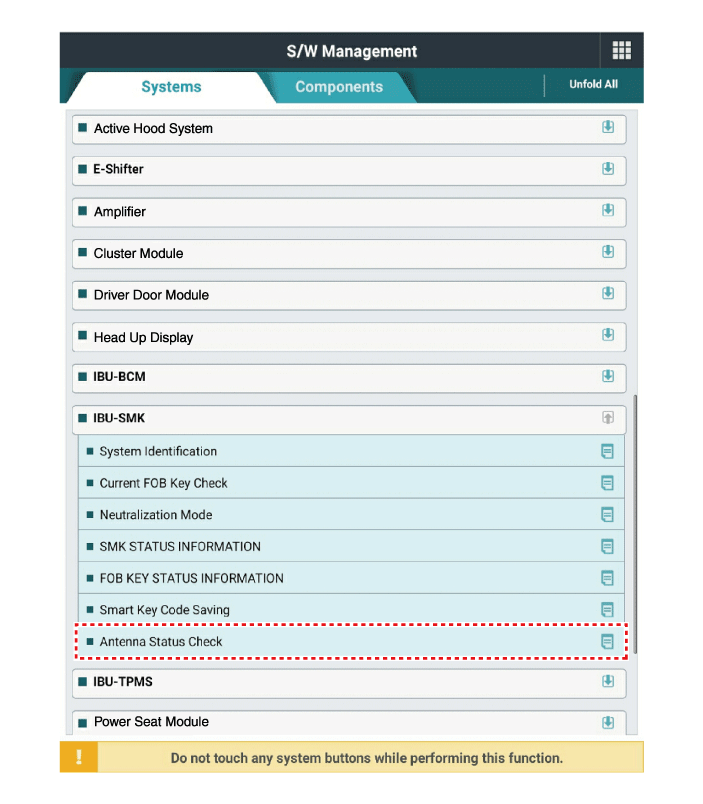
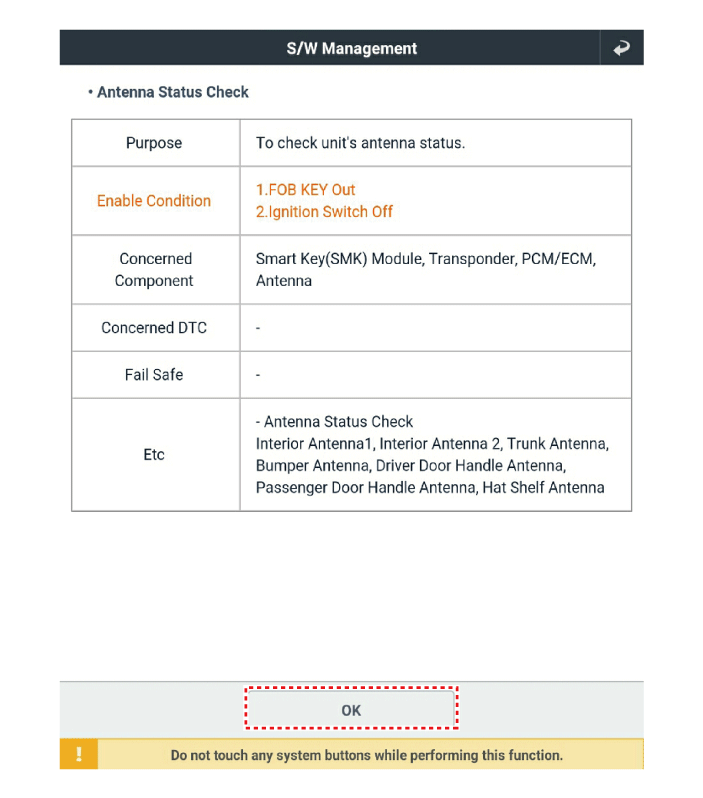
After turning the IG switch ON, select "Antenna Status Check".
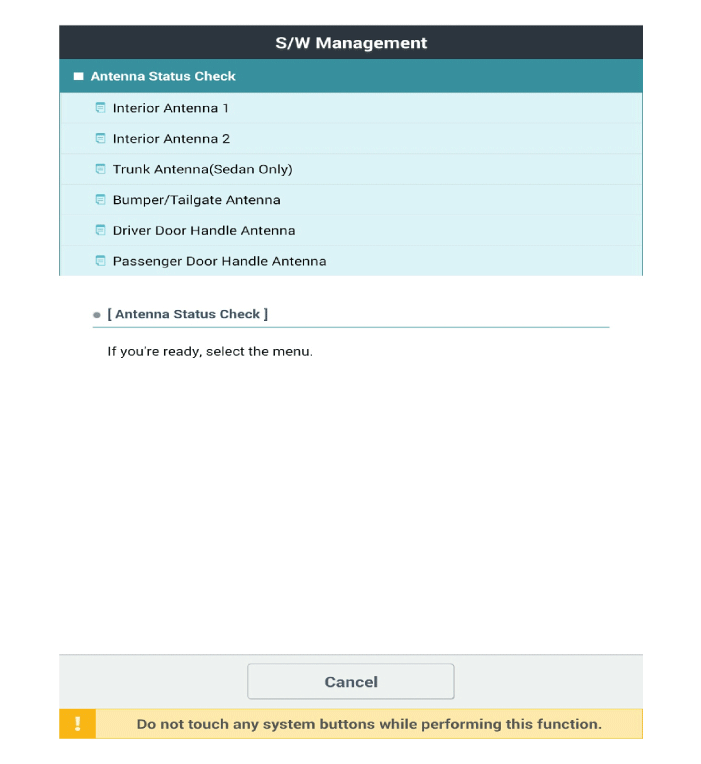
Place the smart key near the corresponding antenna and operate it using the KDS.
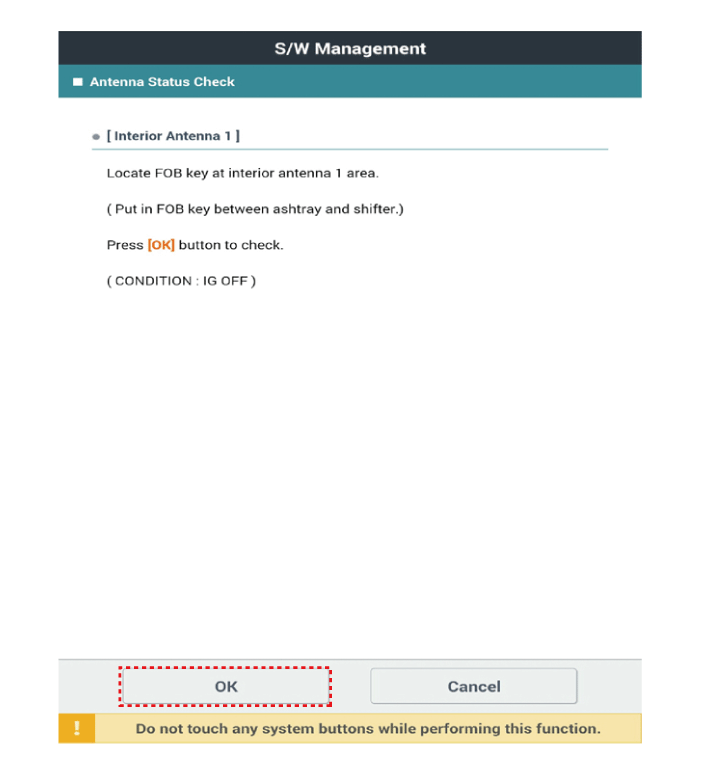
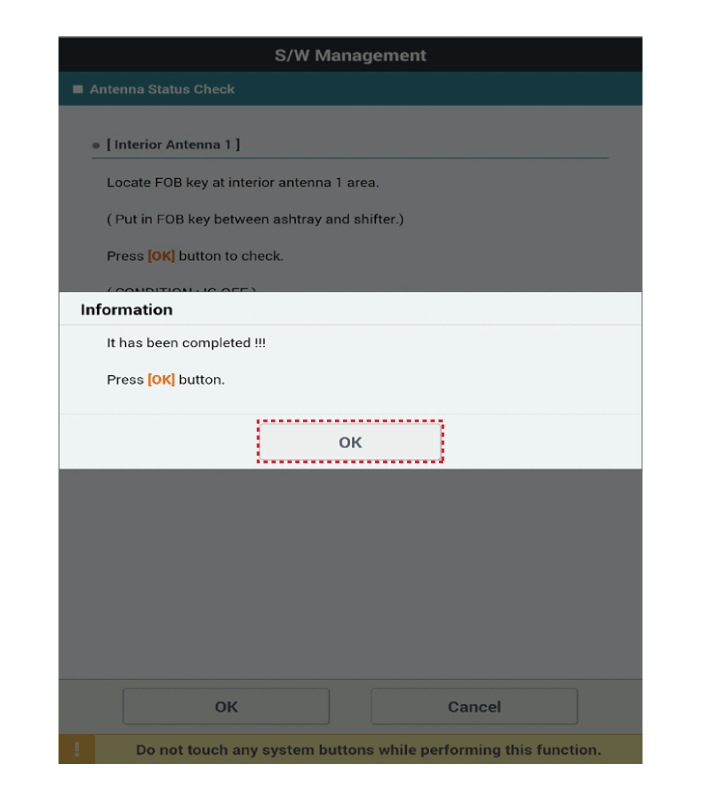
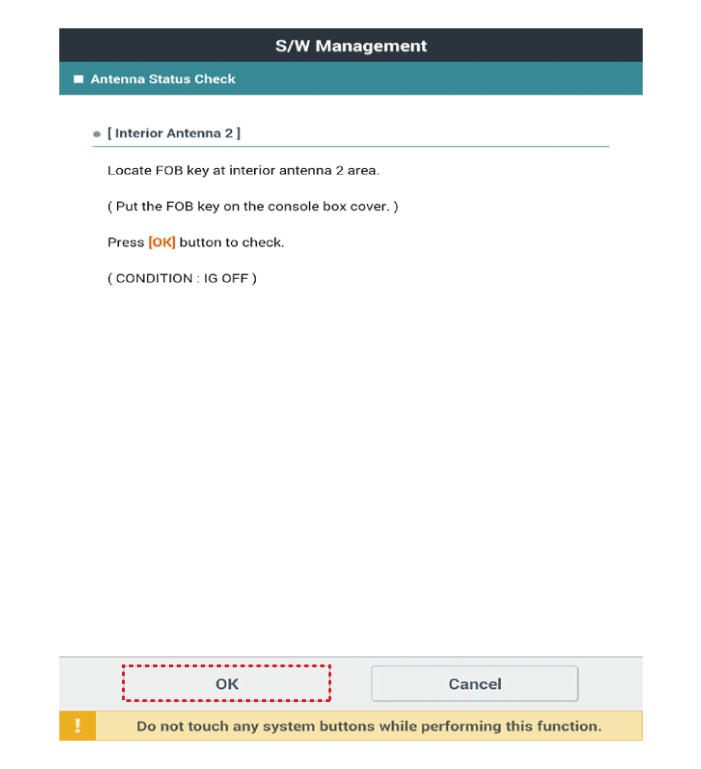
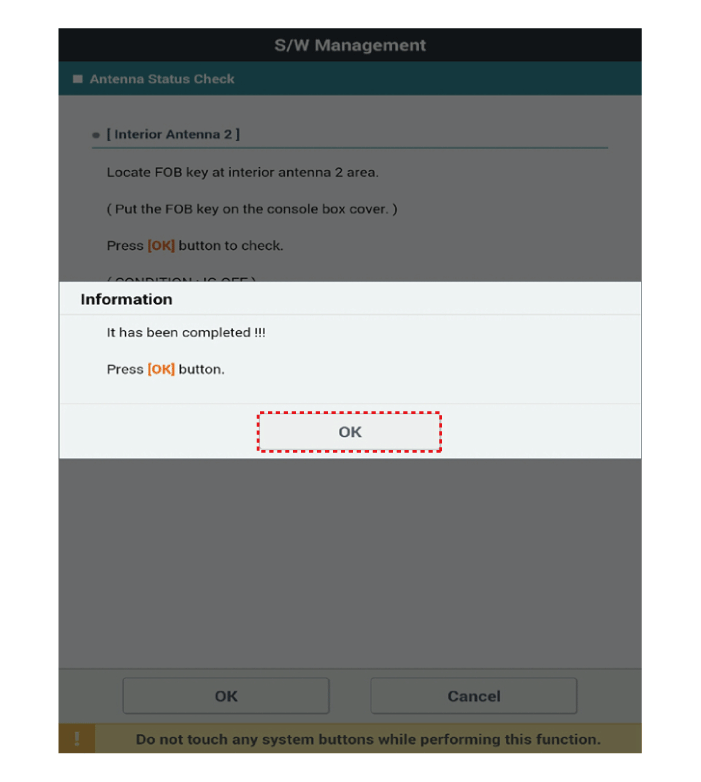
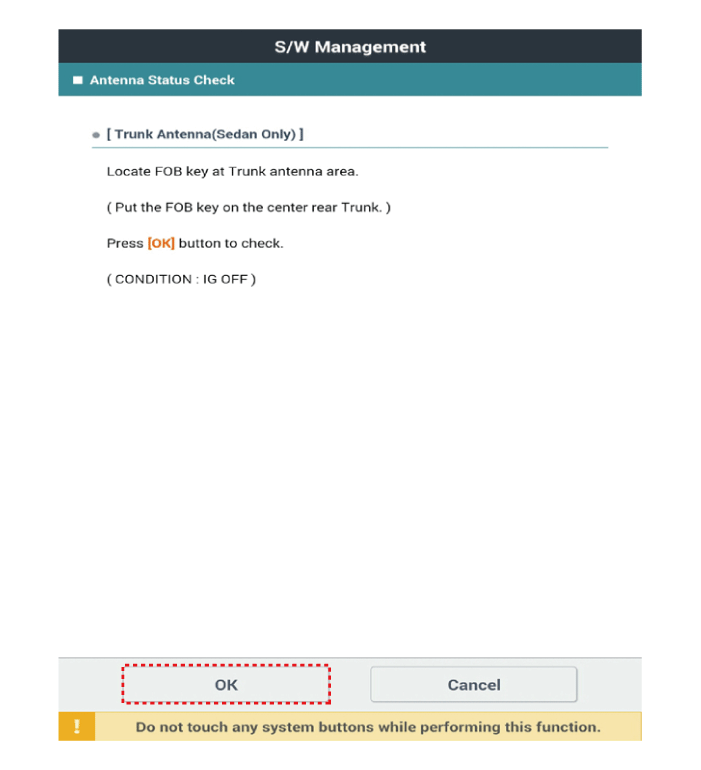
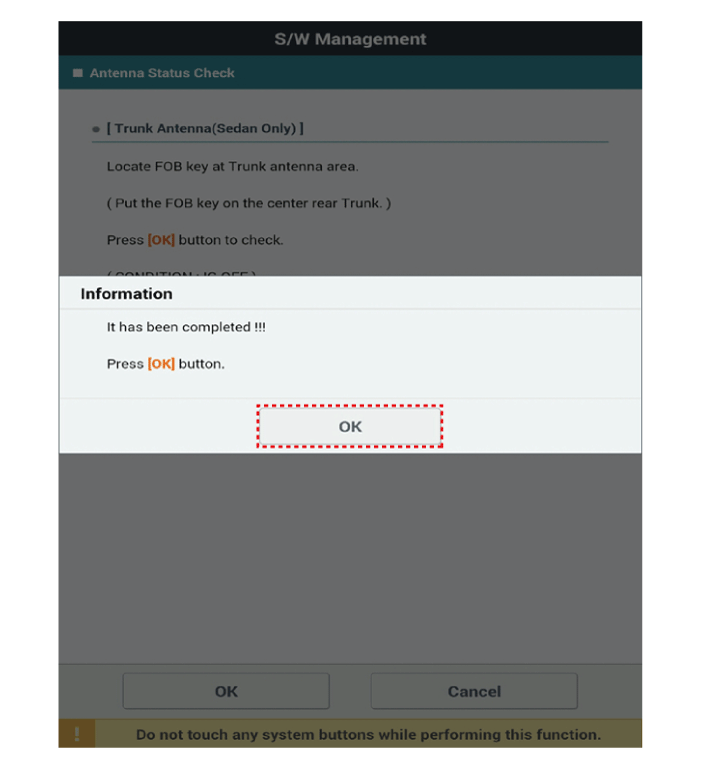
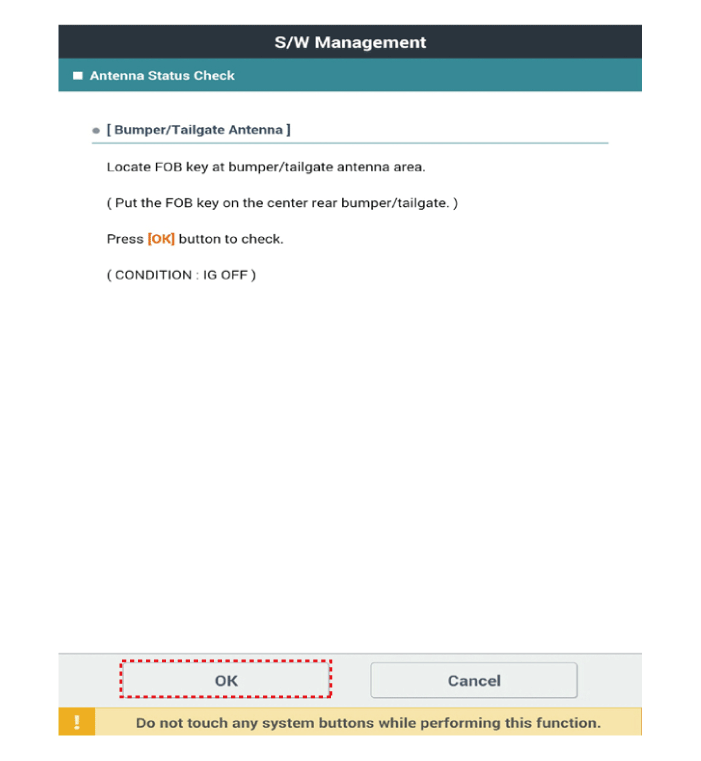
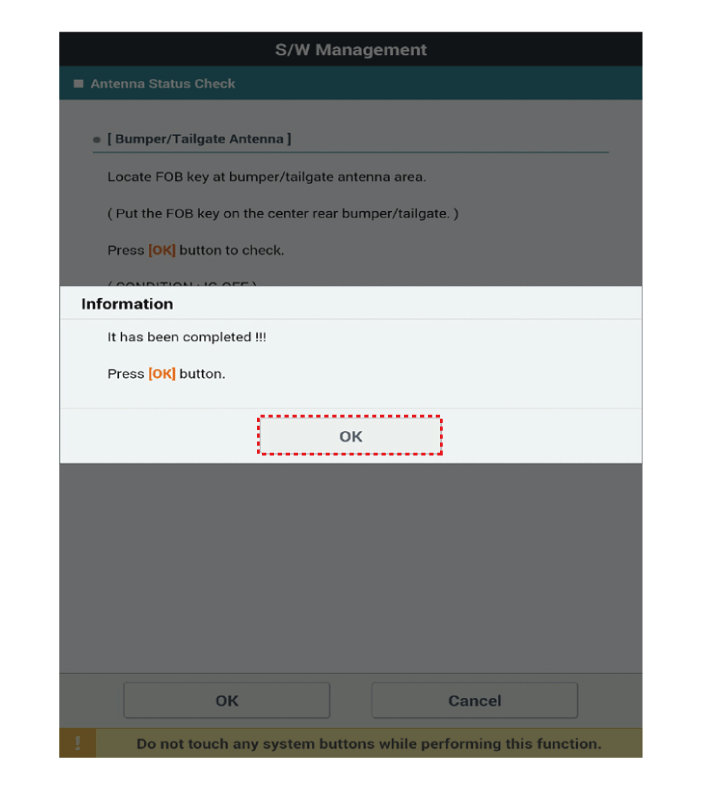
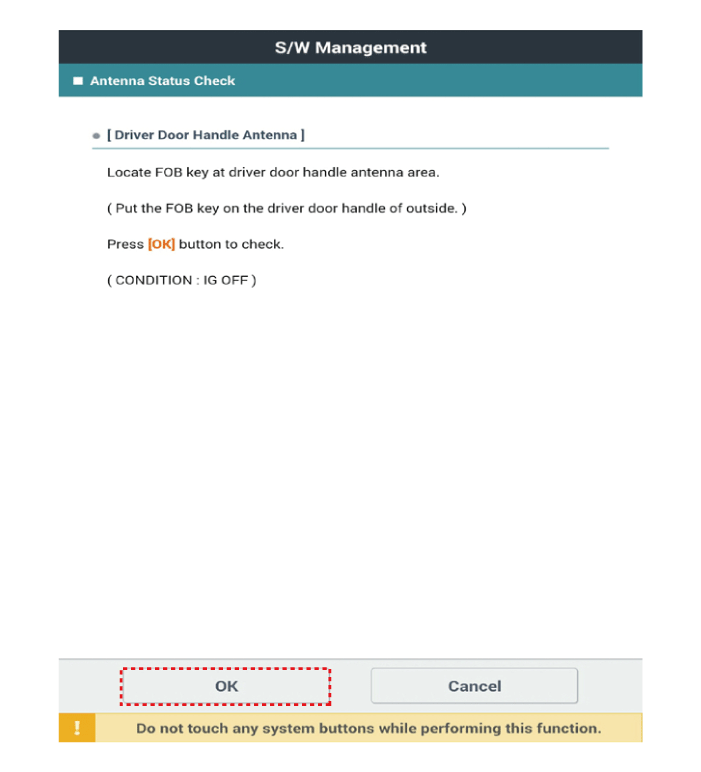
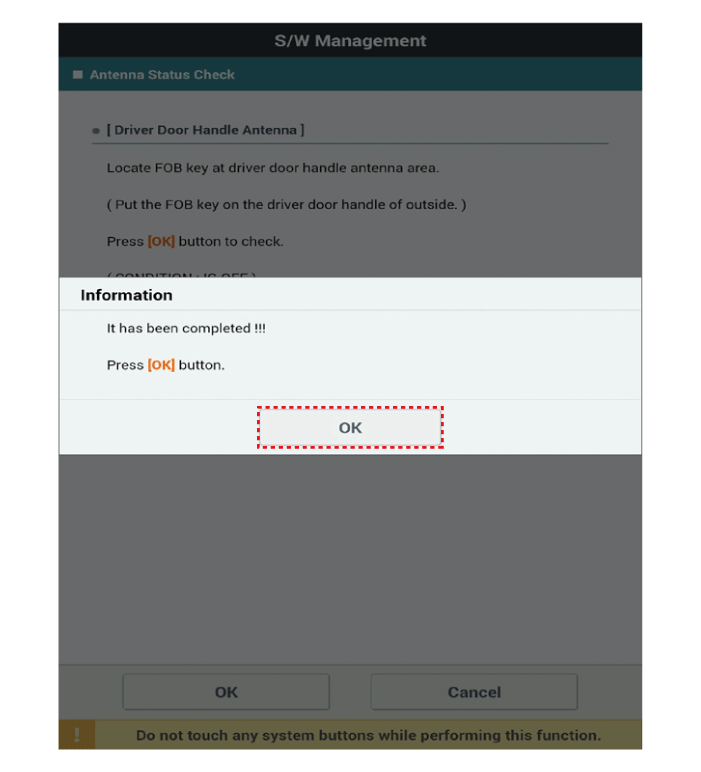
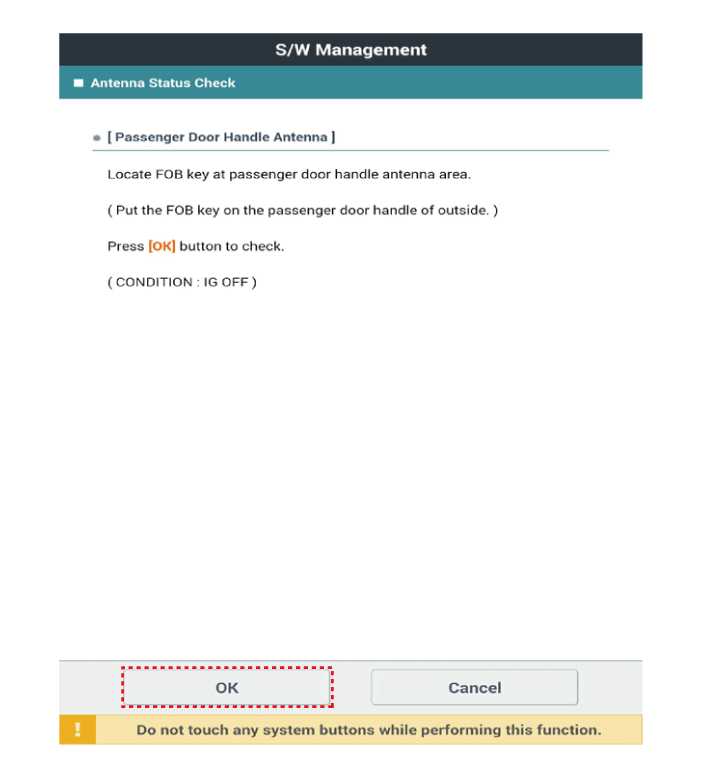
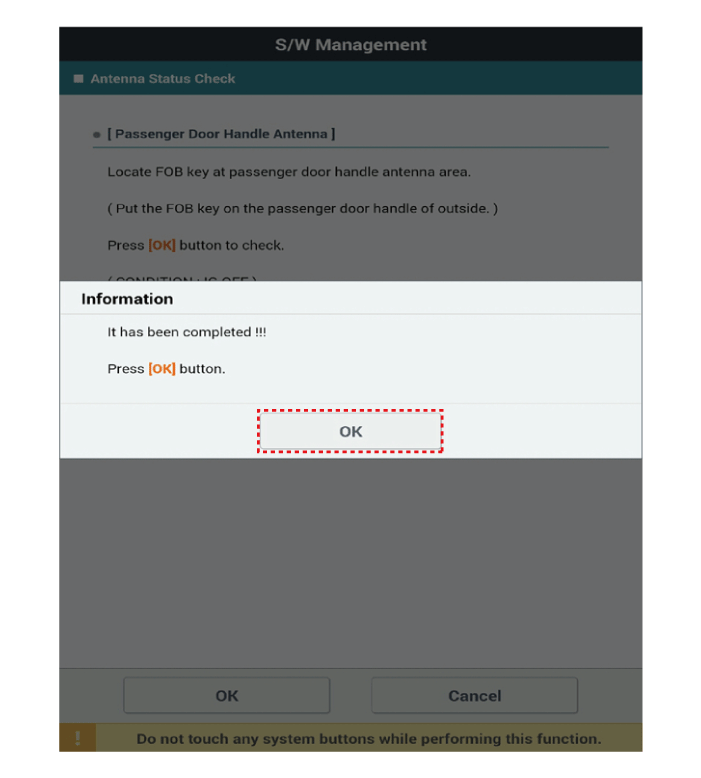
If the Smart Key operates normally, the corresponding antenna, Smart Key (transmission, reception) and external receiver are normal.
Antenna Status
Interior Antenna 1
Interior Antenna 2
Trunk Antenna
Bumper Antenna
Driver Door Antenna
Auxiliary Door Antenna
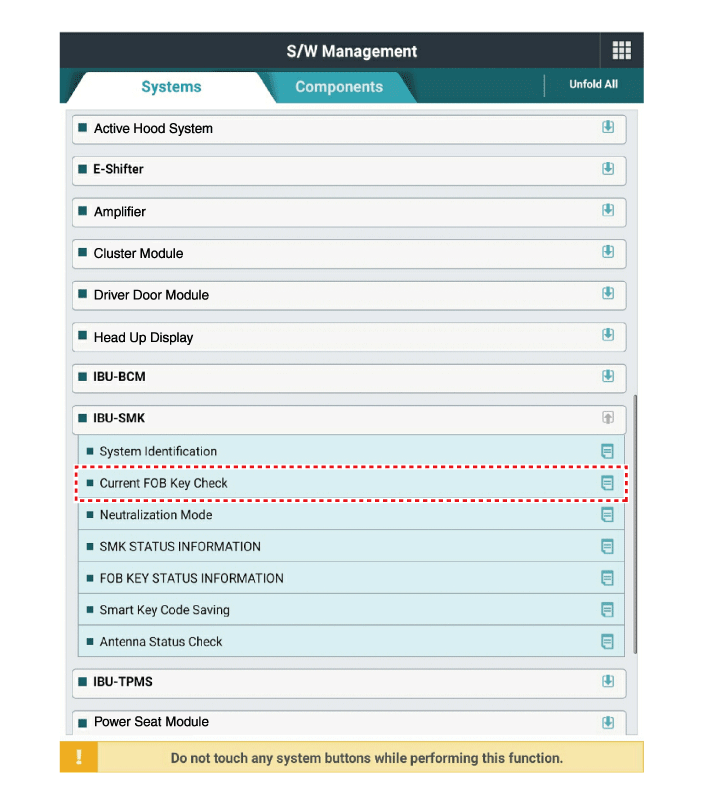
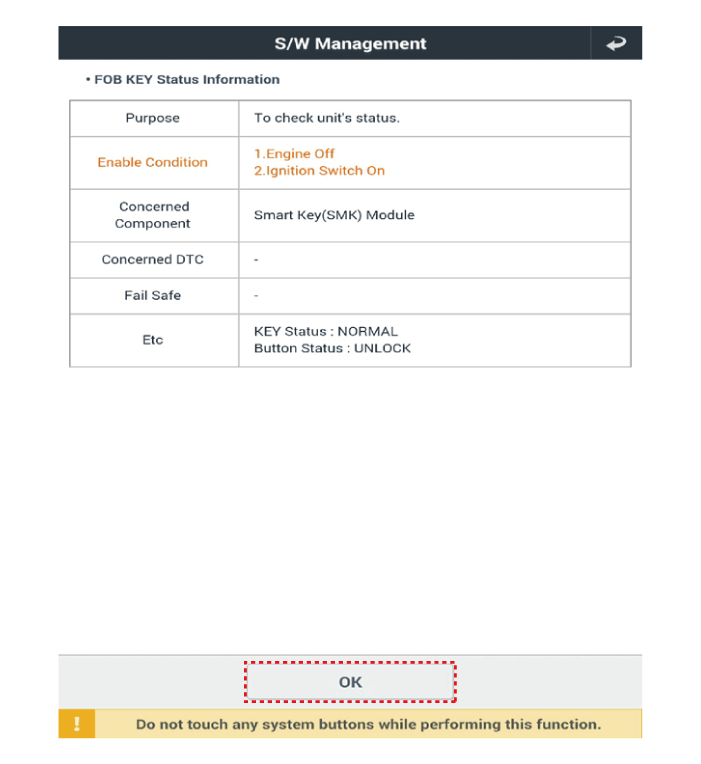
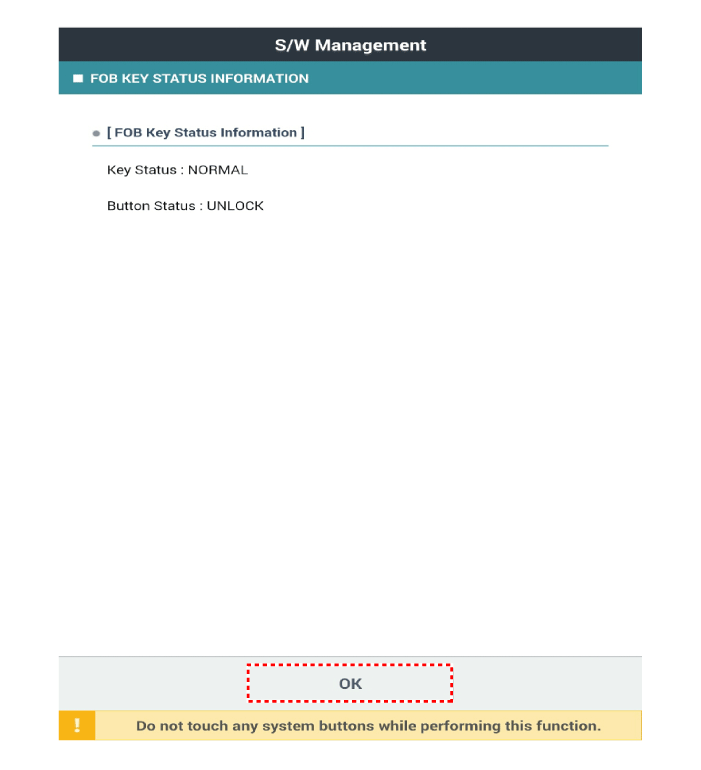
FOB Status Inspection
Connect the KDS cable to the data link connector (DLC) on the lower driver-side instrument panel trim.
After turning the ignition switch ON, select "KEY FOB STATUS INFO".
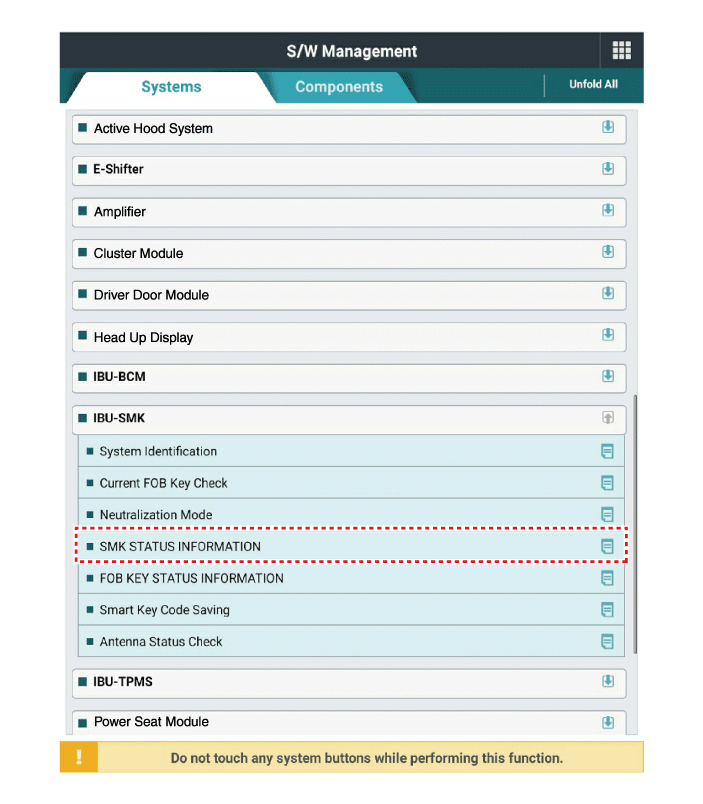
Smart Key Status Inspection
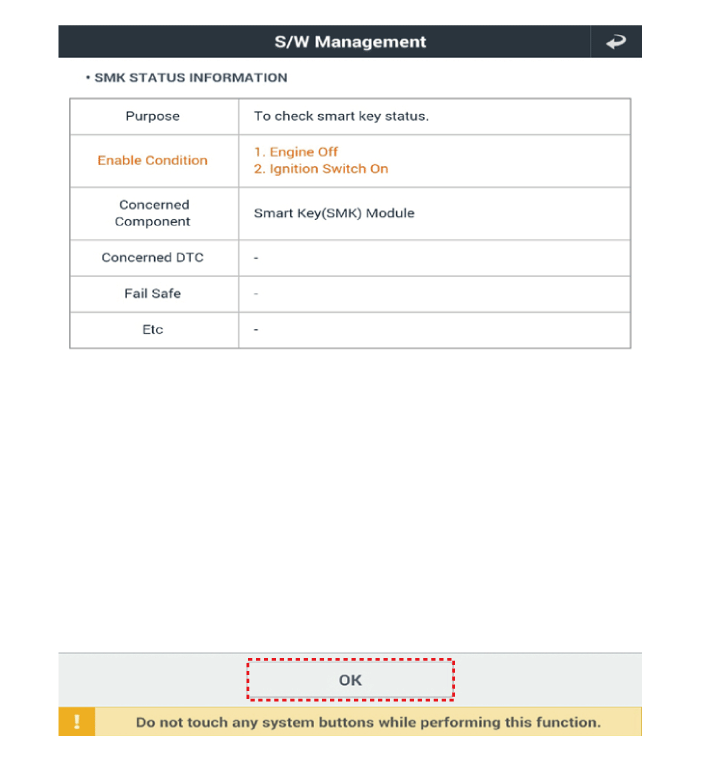
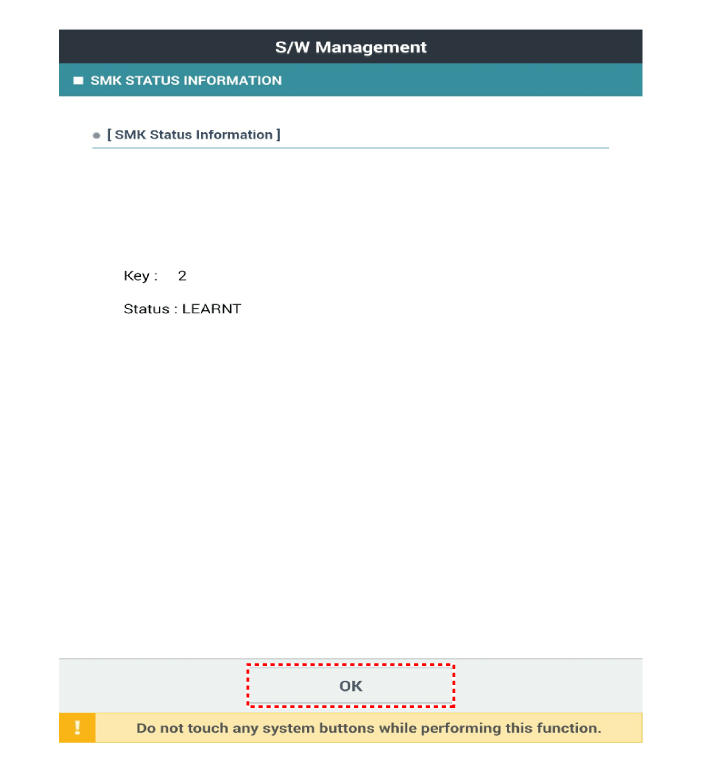
Connect the KDS cable to the data link connector (DLC) on the lower driver-side instrument panel trim.
After turning the ignition switch ON, select "SMK STATUS INFO".
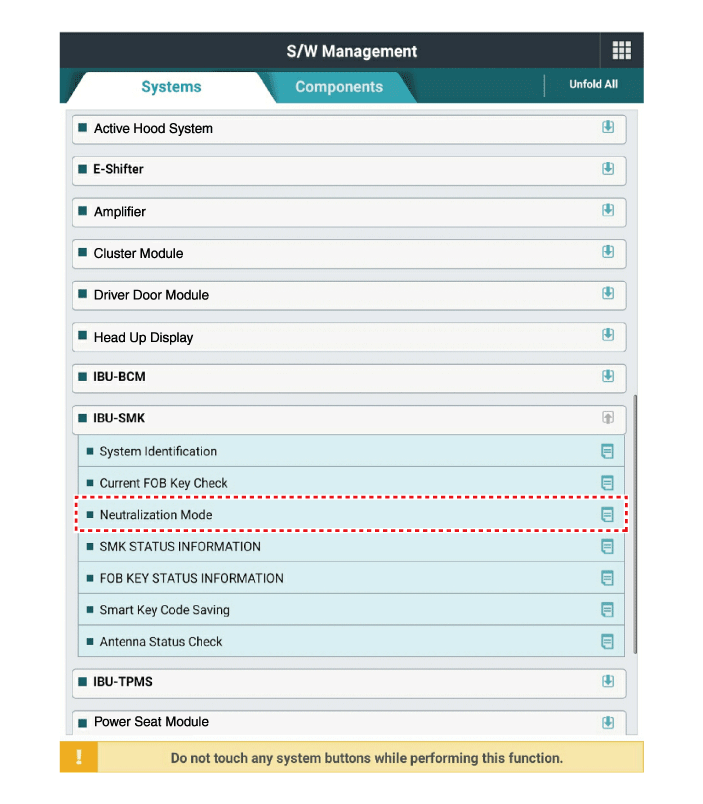
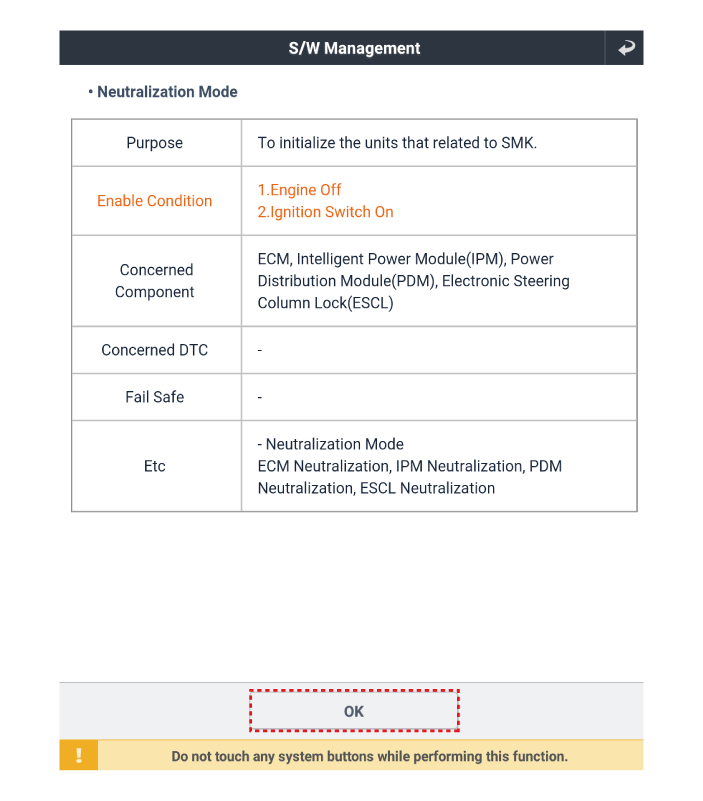
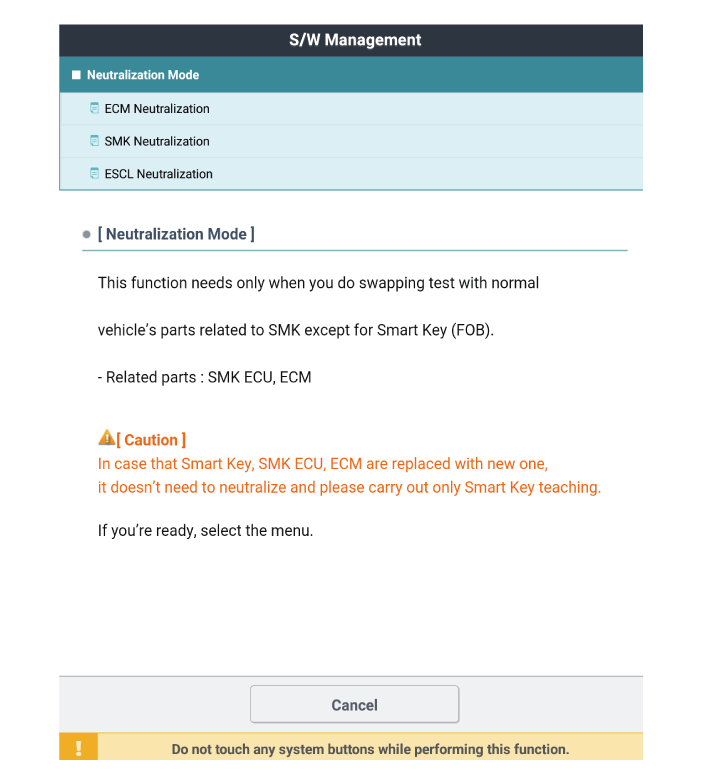
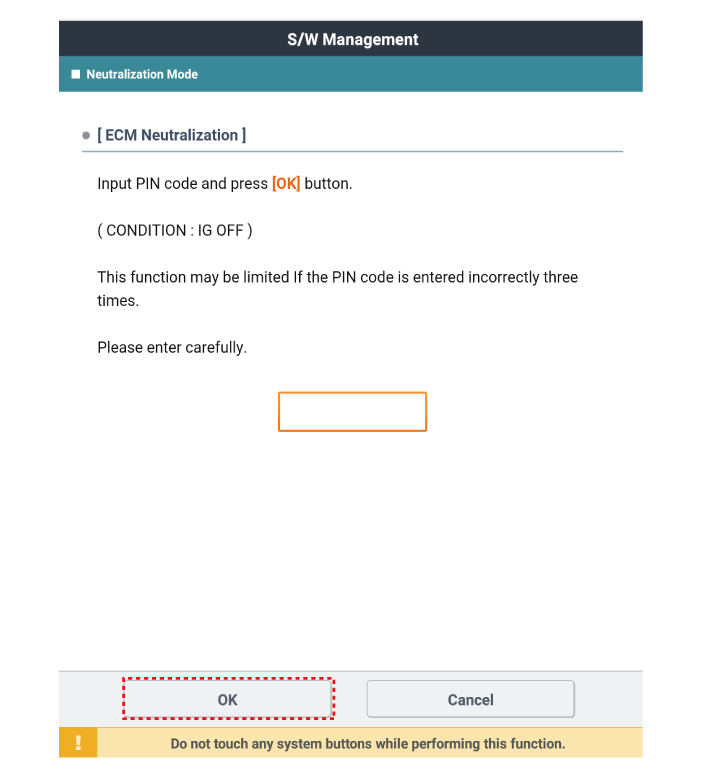
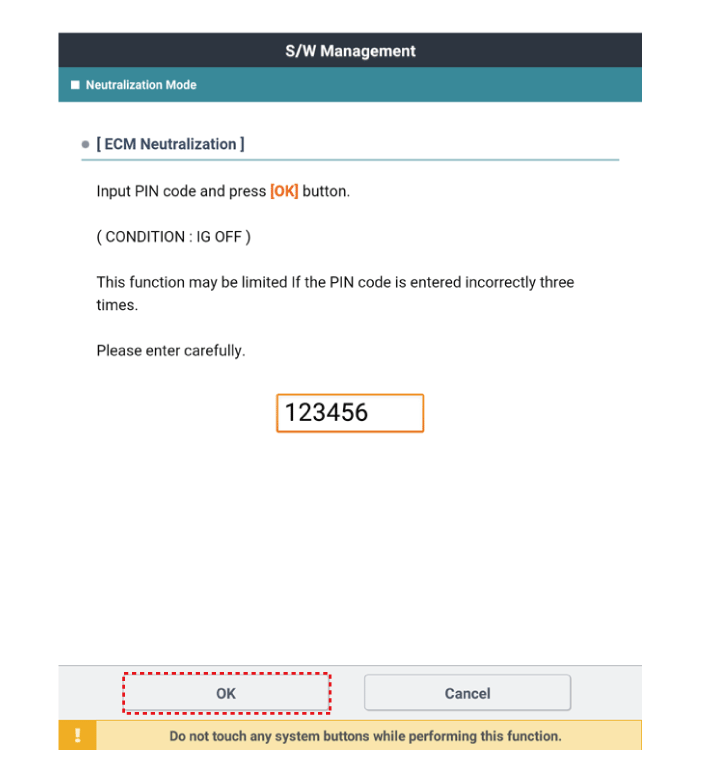
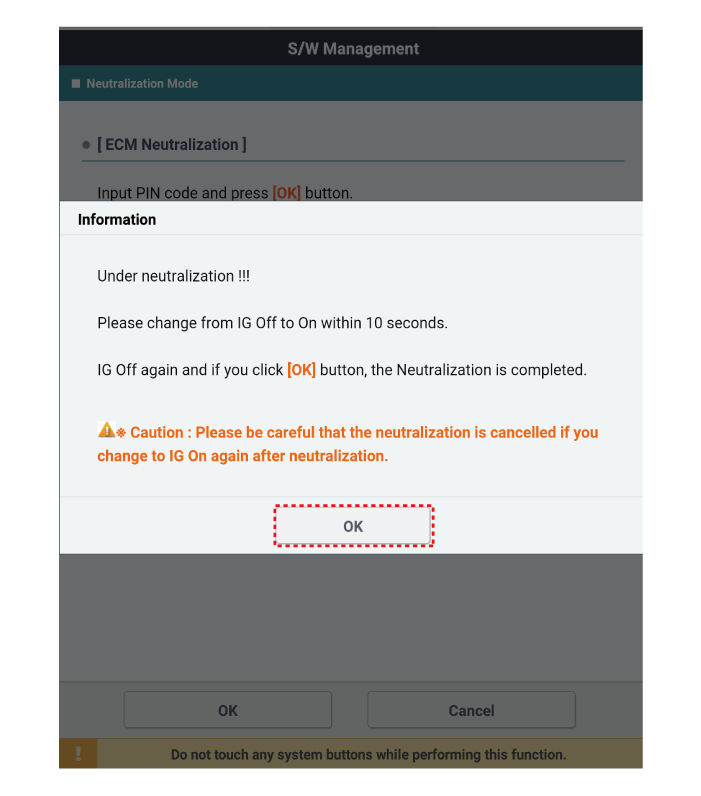
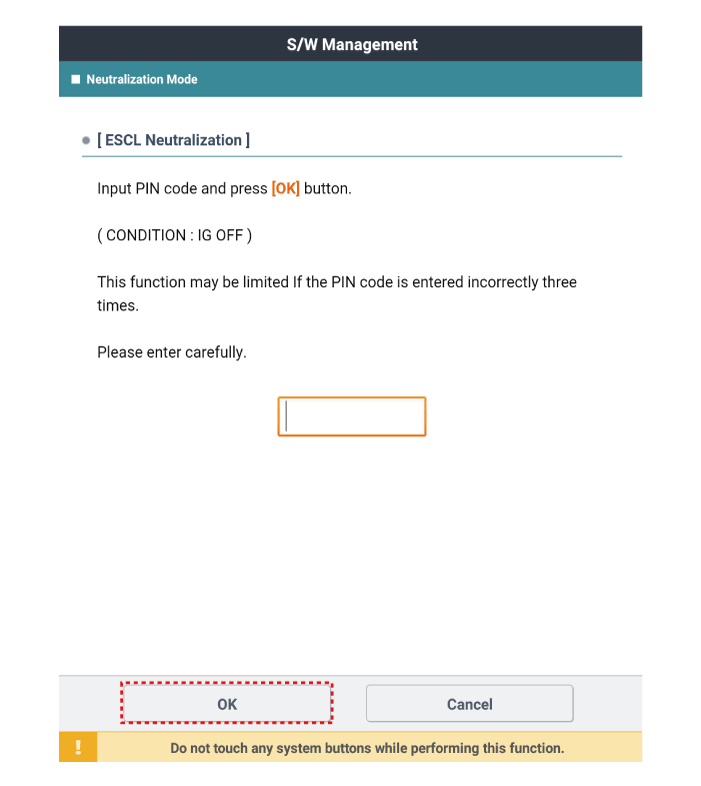
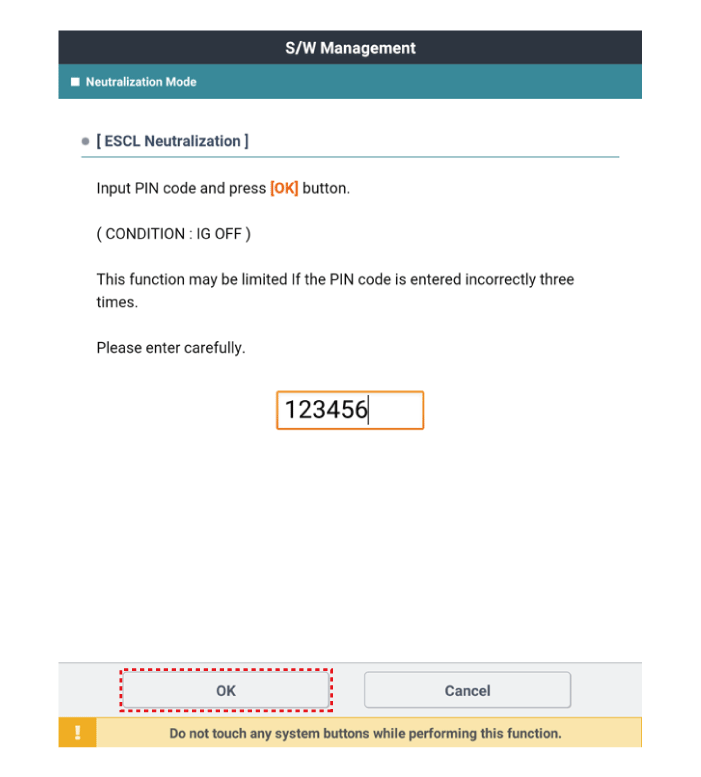
Neutralization Status Inspection
Connect the KDS cable to the data link connector (DLC) on the lower driver-side instrument panel trim.
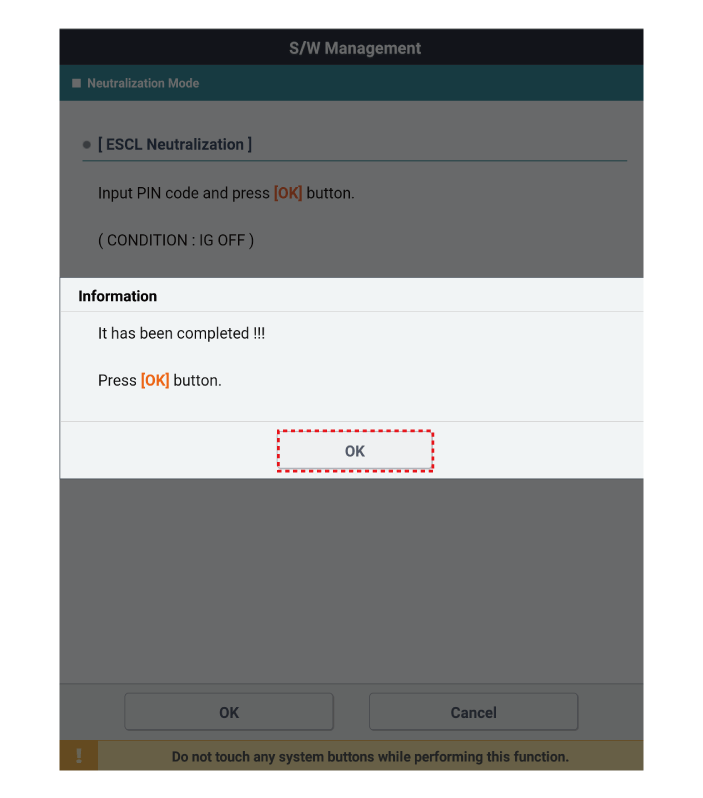
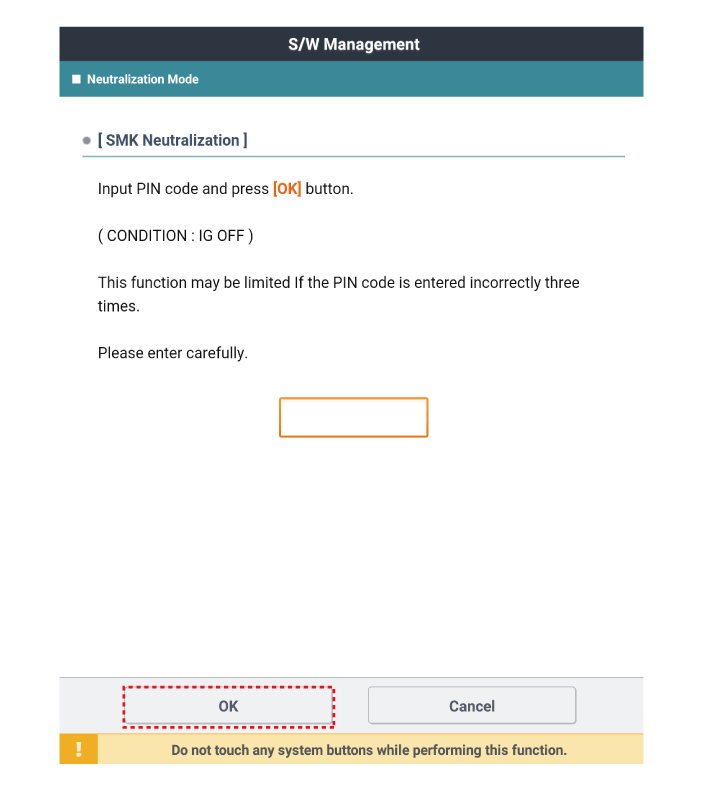
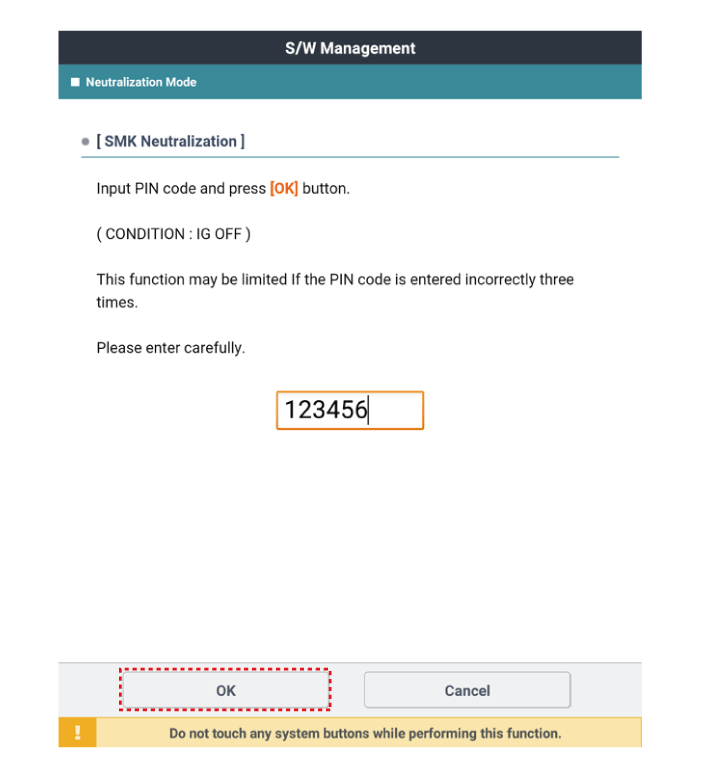
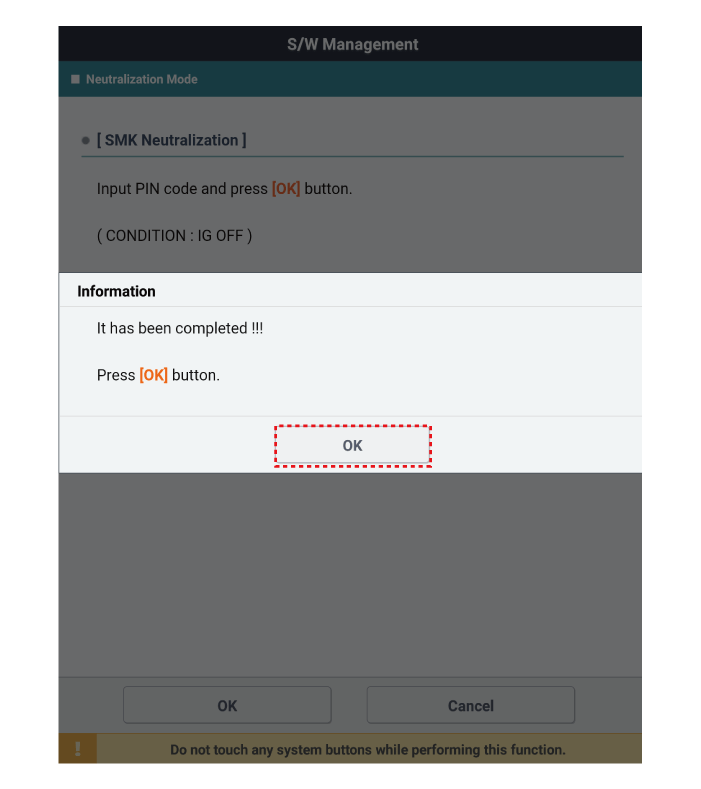
After turning the ignition switch ON, select "Neutralization Mode".
Test yourself
A quick Kia Forte BD quiz: every answer comes with an explanation and a link to the manual page.