Exterior cleaning
General notes on exterior cleaning
When using chemical cleaning or polishing products, be sure to follow the instructions on the label. Read all warnings and notes on the label.
Maintenance of protective and anti-corrosion coatings
Washing
To protect the protective and anti-corrosion coatings of the vehicle from corrosion and deterioration, wash them thoroughly and frequently, at least once a month, with warm or cold water.
If the vehicle is used off-road, wash it after each such drive. Pay particular attention to removing all salt deposits, dirt, mud and other contaminants. Make sure the drain holes in the lower edges of the doors and control arms are dry and clean.
Insects, tar, tree sap, bird droppings, industrial pollution and other similar deposits can damage the vehicle's protective coatings if not removed immediately.
Even immediate washing of the body with plain water may not completely remove these deposits. In that case, a mild soap solution, which is safe for painted surfaces of the vehicle, can be used.
After washing, rinse the vehicle thoroughly with warm or cold water. Do not allow a soap film to dry on the vehicle's protective coating.
CAUTION- Do not use strong soap, chemical detergents or hot water, and do not wash the vehicle in direct sunlight or when the body is hot.
- Do not wash the side windows with high-pressure water by holding the nozzles too close to the glass. Water may leak through the windows and cause moisture inside the vehicle.
- To prevent damage to plastic parts and lamps, do not wash the vehicle with chemical solvents or strong detergents.
If braking performance decreases, dry the brakes by lightly applying the brake pedal while driving forward at low speed.
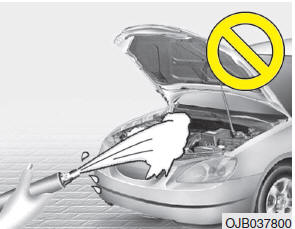
CAUTION
- Washing the engine compartment with water, including with high-pressure equipment, may cause failure of the electrical circuits in the engine compartment.
- Never allow water or other liquids to come into contact with the electrical/electronic components inside the vehicle, as this may cause damage to them.
Waxing
Wax the vehicle after the water has been removed from the paint.
Always wash and dry the vehicle before waxing.
Use a good-quality liquid wax or paste and follow the manufacturer's instructions closely. Wax all metal surfaces to protect them and to keep them shiny.
Removing oil, tar or similar substances with scraper-type removal tools usually strips the wax from the protective layer. In that case, be sure to re-wax these areas, even if the rest of the vehicle surface does not need waxing.
CAUTION- Wiping the body with a dry cloth to remove dust and similar dirt will scratch the vehicle's paint layer.
- Do not use steel wool, abrasive cleaners or strong detergents containing strongly alkaline or caustic agents on chrome-plated or anodized aluminum parts. This may damage the protective coatings and cause discoloration or deterioration of the paint finish.
Repairing Paint Damage
Deep scratches or dents caused by stones on painted surfaces must be repaired immediately. The exposed metal surface quickly corrodes, which may lead to costly repairs.
NOTE If the vehicle has been damaged and any metal part needs to be repaired or replaced, make sure the body repair shop uses anti-corrosion materials.
Care of Bright Metal Surfaces
- To remove tar or insects that have been deposited while driving on the road, use a tar remover, not a scraper or other sharp tool.
- To protect bright metal surfaces against corrosion, coat them with a layer of wax or chrome protective agent and polish to a high gloss.
- In winter and in coastal areas, coat bright metal parts with a thicker layer of wax or protective substance. If necessary, cover the parts with non-corrosive petroleum jelly or another protective agent.
Underbody Care
Corrosive materials used for snow and ice removal and for dust control may accumulate on the underbody. If they are not removed in time, accelerated corrosion may occur on underbody components such as fuel lines, frame, floor and exhaust system, even if they have been coated with a corrosion protection agent.
Thoroughly wash the underbody and wheel housings with lukewarm or cold water once a month, after off-road driving, and at the end of each winter season.
Pay special attention to these areas of the vehicle, as it is difficult to see whether they are covered with mud and dirt. Soaking dirt without removing it completely will do more harm than good. The lower edges of the doors, suspension arms and frame members have drain holes that must not be dirty or blocked. Water collecting in these places may cause corrosion.
WARNING After washing the vehicle, check the brakes at low speed to make sure braking performance has not decreased due to water. If braking performance has decreased, dry the brakes by applying them lightly while driving forward at low speed.Care of Aluminum Wheels
Aluminum wheels are coated with a clear protective layer.
- Do not use any abrasive cleaners, polishes, solvents or wire brushes to clean aluminum wheels.
- Only use mild soap solutions or neutral detergents to clean these parts. After cleaning, rinse these parts thoroughly with water. Also remember to clean the wheels after driving on roads covered with salt.
Protecting the Vehicle Against Corrosion
Protecting the Vehicle from Corrosion
We manufacture high-quality vehicles using the latest design solutions and manufacturing technologies. However, this is only part of our work. For the vehicle to be resistant to corrosion over the long term, the vehicle owner's cooperation and help are also required.
Most Common Causes of Corrosion
The most common causes of vehicle corrosion are:
- Salt from salted roads, dirt and moisture that collect under the vehicle.
- Loss of paint or protective coating caused by impacts from stones or gravel, abrasion, or minor scratches and dents that expose the metal surface, which then corrodes at an accelerated rate.
Areas of Accelerated Corrosion
If you live in an area where your vehicle is regularly exposed to materials that cause accelerated corrosion, protecting the body against corrosion is especially important.
Other common causes of accelerated corrosion include: salt from salted roads, chemicals used for dust control, ocean air and industrial pollution.
Moisture Promotes Corrosion
Moisture creates conditions that favor corrosion. For example, corrosion occurs faster at high air humidity, especially at temperatures well above freezing. Under these conditions, corrosive material remains in contact with the vehicle surfaces because the moisture evaporates slowly.
Driving on muddy surfaces contributes especially to accelerated corrosion, because mud dries slowly and keeps moisture in contact with the vehicle. Even after it dries, it may still contain moisture and cause accelerated corrosion. High temperatures also accelerate corrosion of parts that are not adequately ventilated, which prevents moisture from being removed from them. For all these reasons, it is very important to keep the vehicle clean, free of mud and free of deposits of other materials. This applies not only to visible surfaces but to the entire underbody of the vehicle.
How Can Corrosion Be Prevented?
Corrosion can be prevented by following these recommendations:
Keep the vehicle clean
The best way to prevent corrosion is to keep the vehicle clean and avoid contact with materials that accelerate corrosion.
It is especially important to pay attention to the underside of the vehicle.
- If you live in an area where conditions favor corrosion, for example where roads are salted in winter, near the ocean, in areas with heavy industrial pollution, acid rain, etc., take special care to prevent corrosion. In winter, blow out the underbody with compressed air at least once a month to make sure the underside surfaces are clean when winter is over.
- When cleaning the underside of the vehicle, pay special attention to the areas behind the bumpers and other hidden places. Make sure to thoroughly clean the vehicle.
Keep the garage clean
Do not store your vehicle in a damp, poorly ventilated garage.
This creates conditions that favor corrosion. This can happen especially when you wash the vehicle in the garage, or drive it into the garage while it is still wet and covered with snow, ice or mud. Even in a garage with central heating, accelerated corrosion can occur if it is not well ventilated to remove moisture.
Keep the paint and protective coatings in good condition
Scratches or chips in protective coatings should be covered with touch-up paint as soon as possible to reduce the risk of corrosion.
If bare metal is exposed, it is recommended that you have a paint shop repair the paint coating.
Bird droppings: Bird droppings are highly corrosive and can damage painted surfaces within a few hours. Always remove bird droppings immediately after you notice them.
Do not neglect the vehicle interior
Moisture can collect under carpets and floor mats and cause corrosion. For this reason, check the surfaces under the mats at regular intervals to make sure the carpets are dry. Pay particular attention to these areas if you carry fertilizers, cleaning materials or chemicals in the vehicle. They must only be carried in suitable containers, and all spills must be removed immediately by rinsing the spilled material with clean water. After rinsing the surfaces with water, dry them thoroughly.
Test yourself
A quick Kia Rio YB quiz: every answer comes with an explanation and a link to the manual page.