Checking the Automatic Transmission Fluid Level
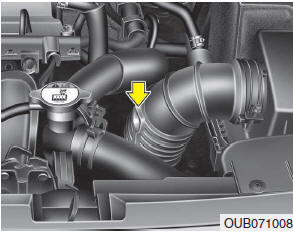
The automatic transmission fluid level should be checked regularly.
Park the vehicle on level ground, apply the parking brake, and check the fluid level using the following procedure.
- Place the shift lever in N (Neutral) and make sure the engine is idling.
- Once the transmission has warmed up sufficiently (fluid temperature 70–80°C (158–176°F), for example after about 10 minutes of normal driving), move the shift lever through all positions, then place it in "N (Neutral)" or "P (Park)".
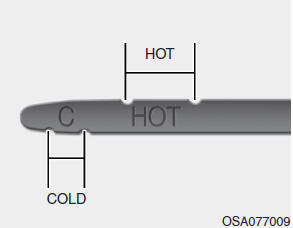
- Make sure the fluid level is within the "HOT" range on the dipstick.
This means the engine, radiator, radiator hose, exhaust system, etc. are very hot. Take special care during these operations to avoid burns.
CAUTION- A low fluid level may cause the transmission to slip. A fluid level that is too high may cause the fluid to foam, lead to fluid loss, and cause the transmission to malfunction.
- Using a non-recommended fluid may cause the transmission to malfunction and be damaged.
NOTE The "C" (COLD) scale is for reference only and must not be used to determine the transmission fluid level.
NOTE New automatic transmission fluid is red. Red dye is added so that it can be identified at the factory and distinguished from engine oil and antifreeze.
The red dye, which is not an indicator of fluid quality, loses its color after some time.
During vehicle operation, the automatic transmission fluid gradually becomes darker. After some time, the color of the fluid may disappear completely and the fluid may turn light brown. For this reason, the automatic transmission fluid should be replaced by an authorized Kia dealer in accordance with the recommendations in the periodic maintenance schedule at the beginning of this chapter.
Use only the specified automatic transmission fluid. (See "Recommended lubricants and capacities" in Chapter 8.)
Replacing the automatic transmission fluid
The automatic transmission fluid should be replaced by an authorized Kia dealer in accordance with the recommendations in the periodic maintenance schedule at the beginning of this chapter.
Test yourself
A quick Kia Rio YB quiz: every answer comes with an explanation and a link to the manual page.