Tire Pressure Monitoring System
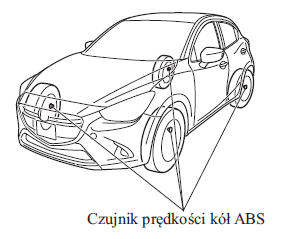
The Tire Pressure Monitoring System (TPMS) monitors the air pressure in all four tires. If the air pressure in any tire is too low, the system warns the driver by illuminating the tire pressure warning light in the instrument cluster and sounding a chime. This system monitors tire pressure indirectly, using data transmitted by the ABS wheel speed sensors.
For the system to operate correctly, it must be activated at specific tire pressure values (the values are shown on the tire pressure label). To activate the system, follow the procedure.
See "Activating the Tire Pressure Monitoring System" on page 4-147.
The warning light flashes when a malfunction occurs in the system.
See the section "Warning and Indicator Lights" on page 4-41.
CAUTION
- In low ambient temperatures, check the pressure of each tire, including the spare tire (if equipped), once a month and inflate to the value recommended by the vehicle manufacturer on the vehicle placard or tire pressure label. (If your vehicle has tires of a different size than those specified on the vehicle placard or tire pressure label, you should find out the correct pressure for those tires.)
To improve safety, your vehicle is equipped with a Tire Pressure Monitoring System (TPMS), which uses a warning light to indicate that the pressure in one or more tires is too low. When the tire pressure warning light comes on, stop as soon as possible, check the tires, and inflate them to the required pressure if necessary. Driving on underinflated tires can cause them to overheat and, as a result, be damaged. Low tire pressure increases fuel consumption and accelerates tread wear, and may also make the vehicle harder to steer and stop.
The TPMS does not replace proper tire maintenance. You must continue to check and inflate the tires even if the pressure is not yet low enough to turn on the TPMS warning light.
Your vehicle is also equipped with a system that indicates a TPMS malfunction.
This system is linked to the tire pressure warning light. When the system detects a malfunction, the light will flash for about one minute, then stay on continuously. This will repeat every time the vehicle is started until the malfunction is corrected. While the malfunction indicator is active, the system may not detect or warn of low tire pressure. TPMS malfunctions can occur for many reasons, including installing alternative tires or wheels that prevent the TPMS from working correctly. After replacing one or more tires or wheels, check that the system does not indicate a TPMS malfunction, to confirm that the recommended or alternative tires and wheels allow the TPMS to function properly.CAUTION
Because the TPMS detects small changes in tire condition, the warning may be issued sooner or later in the following cases:
The size, manufacturer, or type of the tires differs from the specifications.
The size, manufacturer, or type of a tire differs from the other tires, or the tires have significantly different levels of tread wear.
Run-flat tires, studless tires, winter tires, or tires with snow chains fitted are used.
A temporary spare tire is in use (the TPMS warning light may flash and then stay on continuously).
The tire has been repaired using an emergency tire puncture repair kit.
The tire pressure is too high compared with the specifications, or the pressure has suddenly dropped for some reason, for example because a tire burst while driving.
The vehicle is driven at a speed lower than 15 km/h (including when the vehicle is stopped), or the driving time is shorter than 5 minutes.
The vehicle is driven on extremely uneven or slippery, icy roads.
Sudden steering inputs and rapid acceleration/deceleration are repeated, as during aggressive driving on winding roads.
Excessive load is applied to one of the tires, for example by loading heavy luggage on one side of the vehicle.
The tire pressure value specified in the specifications was not entered during system activation.
Activating the Tire Pressure Monitoring System
For the system to operate correctly in the following situations, it must be activated.
- Tire pressure has been adjusted.
- Tires have been rotated.
- A tire or wheel has been replaced.
- The battery has been replaced or has completely discharged.
- The tire pressure monitoring system warning light is on.
Activation procedure
1. Park the vehicle in a safe location and firmly apply the parking brake.
2. Wait until the tires have cooled, then adjust the pressure in all four (4) tires to the value shown on the tire pressure label located on the driver's side center pillar (with the door open).
See "Tires" on page 9-10.
3. Turn the ignition switch to ON.
4. With the vehicle parked, press and hold the TPMS SET button, and check that the tire pressure warning light in the instrument cluster flashes twice and a single chime sounds.

CAUTION
If you perform the activation procedure without adjusting the tire pressure, the system will not be able to detect normal tire pressure and may not turn on the tire pressure monitoring system warning light even if the pressure is low, or it may turn the light on when the tire pressure is correct.
If you press the button while driving, the system will not be activated.
Test yourself
A quick Mazda 2 quiz: every answer comes with an explanation and a link to the manual page.