GENERAL INFORMATION
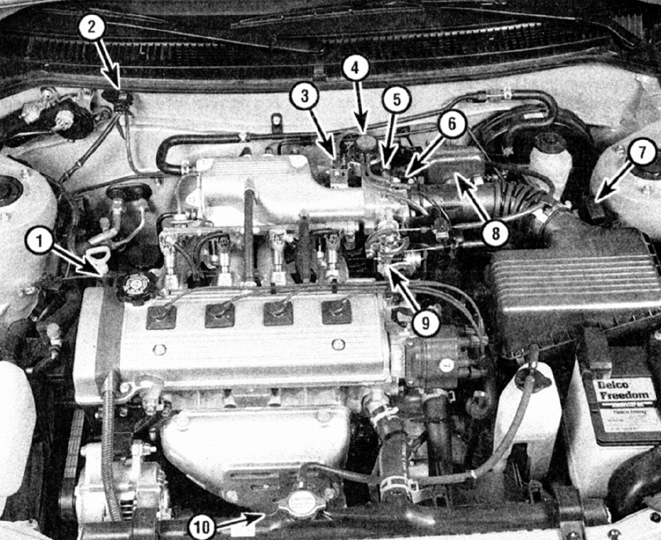
Emission Control and Engine Management System Components (for engines 1.8 L) 1. Crankshaft position sensor
2. Manifold absolute pressure sensor (MAP sensor)
3. EGR solenoid valve
4. EGR vacuum switching valve
5. EGR valve
6. Throttle position sensor
7. Diagnostic connector
8. Intake manifold resonator
9. Idle air control valve (IAC)
10. Oxygen sensor

VECI Label
The VECI label provides important information such as the type of emission control system installed on the vehicle, idle speed, and ignition timing settings.
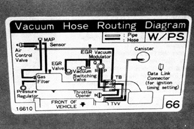
Vacuum Hose Routing Diagram
The label also contains the vacuum hose routing diagram.
The vehicles covered in this Manual are equipped with several exhaust emission control systems. The specific emission control configuration depends on the market where the vehicle is sold (see figure Emission Control and Engine Management System Components (for engines 1.8 L)). These systems include:
– Positive crankcase ventilation system (PCV system);
– Evaporative emission control system (EVAP system);
– Exhaust gas recirculation system (EGR system);
– Three-way catalytic converter (TWC);
– Electronic fuel injection system (EFI system).
The sections of this chapter consist of a general description, descriptions of inspection procedures that can be performed by the owner, and descriptions of replacement procedures for these systems' components (where replacement is possible).
Before concluding that the emission control system is faulty, carefully check the operation of the fuel system (see Section 5) and the ignition system (see Subsection 3.3.4). Diagnosing some emission control devices requires specific skills, special tools and equipment.
If it turns out that the system cannot be checked and repaired by yourself, contact a dealer service department or a specialized repair shop.
This does not mean, however, that servicing and repairing the emission control system is a complicated and inaccessible procedure. You can quickly and easily perform many checks and periodic maintenance procedures on the systems yourself using a standard set of tools and measuring instruments.
* The most common cause of emission control system malfunctions is loose or damaged electrical connectors or vacuum hoses, so check these components first.
Strictly observe all precautions specified in this Chapter. Note that the appearance and location of the devices on your vehicle may differ from those shown in the photographs due to annual changes made by the manufacturer. Vehicles sold in some regions are equipped with an emission control information label (VEC label) and a vacuum hose routing diagram attached to the underside of the hood (see figure Emission control information label and figure Vacuum hose routing diagram). The label contains the standard values for the main harmful substances released into the atmosphere and a description of the adjustment procedure for various units. The vacuum hose routing diagram with the designation of emission control system components is also provided. When servicing the engine or emission control systems, always check the label values against the latest applicable standards.
Test yourself
A quick Toyota Corolla quiz: every answer comes with an explanation and a link to the manual page.