Starting and Stopping the Engine – Troubleshooting
Starting and Stopping the Engine – Indicator Lights
Malfunction Indicator Lamp
 If it illuminates while the engine is running, the onboard diagnostic system has detected a malfunction in the vehicle emissions control system.
If it flashes, this may indicate engine misfire. Excessive exhaust gas temperature can damage the catalytic converter or other vehicle components. Avoid rapid acceleration and braking, and have your vehicle checked as soon as possible.
Powertrain Warning Lamp
 If it illuminates while the engine is running, this indicates a transmission or all-wheel drive system fault. If it flashes while driving, reduce vehicle speed immediately. Avoid rapid acceleration and braking, and have your vehicle checked as soon as possible.
If both lamps illuminate while the engine is running, stop the vehicle as soon as it is safe to do so. Continuing to drive your vehicle may result in reduced power or engine stall. Turn the ignition off and try to restart the engine. Have your vehicle checked as soon as possible.
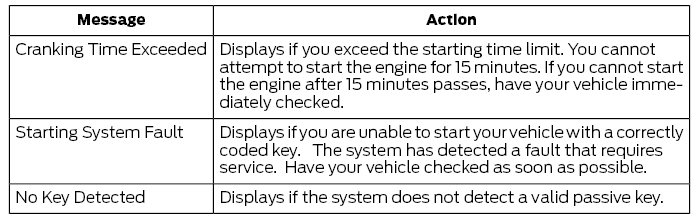
Engine Start and Stop – Information Messages
Engine Start and Stop – Frequently Asked Questions
Why is the engine idle speed high when I start the engine?
The engine idle speed immediately after starting is optimized to minimize vehicle emissions and maximize cabin comfort and fuel economy.
Why does the engine not start?
You can only attempt to start the engine for a limited period of time before the starting system temporarily shuts down. If you exceed the initial limited time, a message may appear and you must not attempt to start the engine for at least 15 minutes.
Why do I notice different driving characteristics?
If you disconnect the battery, your vehicle may exhibit some unusual driving characteristics for approximately 8 km (5 miles) after you reconnect it. This is because the engine control system must relearn itself with the engine. You may disregard any unusual driving characteristics during this period.
Why can't I start the engine?
If you cannot start the engine after 3 attempts, wait 10 seconds and perform the following:
Vehicles Without a Push Button Start
- Fully press the brake pedal.
- Fully depress the accelerator pedal and hold it there.
- Turn the key to the III position and wait until the engine stops cranking.
- Release the accelerator pedal.
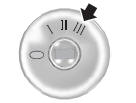
- Turn the key to the III position.
Vehicles with Push Button Start
- Fully press the brake pedal.
- Fully depress the accelerator pedal and hold it there.
- Press the ignition switch.
- Release the accelerator pedal.
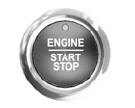
- Press the ignition switch.
Why does the system not detect the intelligent key?
If the system does not detect the intelligent key and you cannot start the engine, place the intelligent key against the push button start switch in the backup position and press the push button start switch to start the engine.
Test yourself
A quick Ford Escape quiz: every answer comes with an explanation and a link to the manual page.