Front and Rear Brake Assemblies
Front Brake Assemblies
PROCEDURE
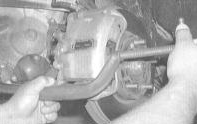
1. Using a C-clamp, push the piston into the caliper cylinder to provide the necessary clearance for installing the new, thicker pads. As the piston is pushed into the caliper, the brake fluid level in the master cylinder reservoir will rise. Make sure the fluid does not overflow; if necessary, remove the excess.
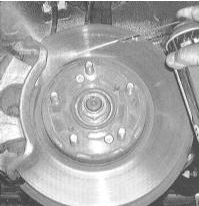
2. Before removing components, thoroughly clean them with a specialized cleaner. Then follow the instructions shown in the illustrations below.
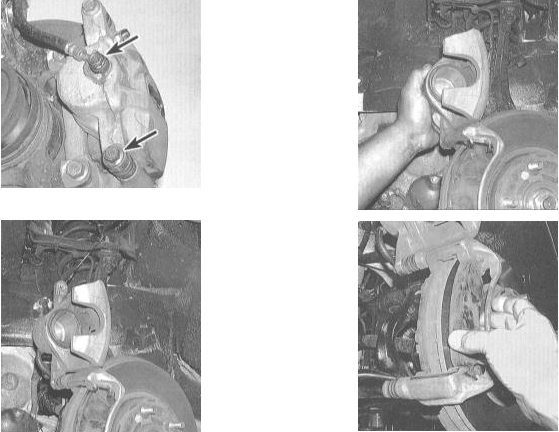

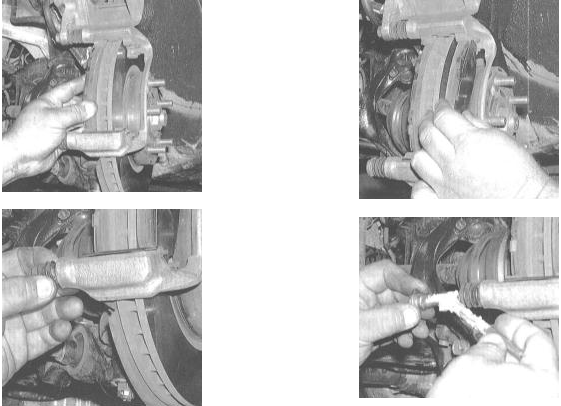
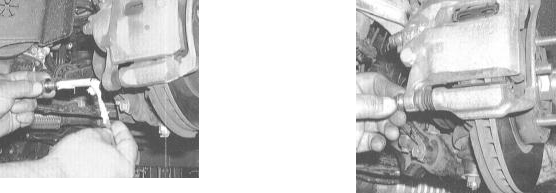
Rear Brake Assemblies
PROCEDURE
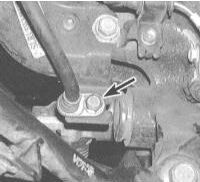
1. Clean the brake assemblies with a specialized cleaning agent. Then follow the instructions shown in the illustrations below, and proceed to the procedure described in step 1 below.
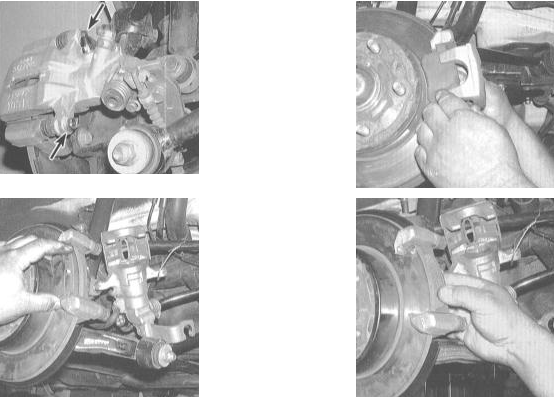
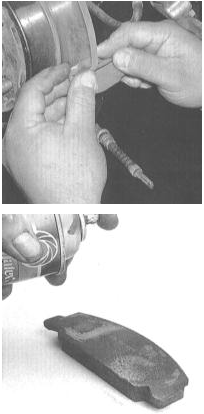
2. Apply anti-squeal compound to the back of the new pads. The product instructions are usually printed on the side of the can.
3. Install the shims on the pads.
4. Install the pad retainers in the caliper anchor bracket. Apply a thin layer of high-temperature grease to the pad retainers.
5. Install the new brake pads with shims into the caliper anchor bracket.
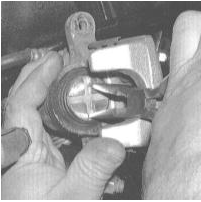
6. Using locking pliers, rotate the piston and push it into the caliper cylinder to provide the necessary clearance for installing the new brake pads.

7. First push the piston fully into the cylinder bottom, then turn it back out just enough so that, when installing the inner pad, the tab on its back side engages one of the recesses on the end face of the piston. Make sure the piston rotation does not deform the piston boot.
Front and Rear Brake Assemblies
PROCEDURE
1. Install the wheels, lower the vehicle to the ground, and tighten the wheel nuts to the specified torque (refer to Specifications in the Maintenance and Tune-Up chapter).
2. Depress the brake pedal several times / apply the parking brake lever (if the rear pads were replaced) to seat the pads against the disc.
3. Check the brake fluid level and top up if necessary (refer to the Maintenance and Tune-Up chapter). Before driving the vehicle normally, make sure the brake system functions properly.
Test yourself
A quick Honda Accord quiz: every answer comes with an explanation and a link to the manual page.