Inspection and Replacement of Brake Lines and Hoses
PROCEDURE
1. Approximately every six months, with the vehicle raised, inspect all flexible hoses connecting the steel brake lines to the wheel brake units for cracks, signs of damage to the protective cover, fluid leaks, bulges, and other damage. Hoses are a critical and most vulnerable part of the brake system, so inspect them thoroughly using a flashlight and a small mirror. If any questionable signs are found, the suspect hose must be replaced.
2. Replacement steel and flexible brake lines are available from the vehicle manufacturer's authorized service dealer and from authorized automotive accessory stores.
Never use any tubing other than genuine parts specifically designed for installation in your vehicle's brake circuit.
3. When installing brake lines, make sure they are routed at least 20 mm away from moving or vibrating body, suspension, or steering components.
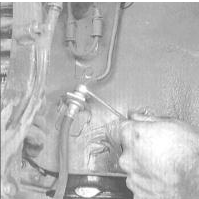
4. To disconnect the fitting connections between the flexible hoses and the steel hydraulic lines, use special flare nut wrenches.
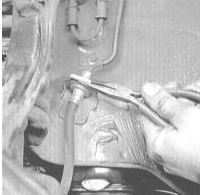
5. After loosening the nut, remove the retainer and release the brake hose from the support bracket.

6. To disconnect the brake hose from the caliper, unscrew the banjo bolt and discard its old sealing washers (washers must always be replaced during installation).
7. Disconnect the two hoses using standard open-end wrenches. When joining the components, make sure the hoses are not twisted.
8. Rigid brake lines are usually secured along their entire length by special clips. When removing a line, make sure it is released from all clips. Always replace any damaged clips when installing the lines on the vehicle.
9. When replacing brake lines, make sure the replacement components exactly match the dimensions of the old sections removed from the vehicle. Never replace steel tubing with copper tubing!
10. When installing steel tubing, make sure it is securely retained in all provided brackets, clamps and clips. Do not route the tubing too close to moving suspension and steering components.
11. After installing new hydraulic line sections, check the brake fluid level in the master cylinder reservoir. Adjust as necessary. Bleed the brake system (refer to Brake System Bleeding). Make sure the brakes function properly before operating the vehicle.
Test yourself
A quick Honda Accord quiz: every answer comes with an explanation and a link to the manual page.