Bleeding the Hydraulic Brake System Using a Scan Tool
Any hydraulic system operates normally when air has been removed from it.
PROCEDURE
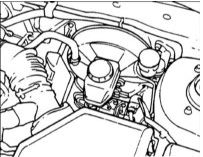
1. Remove the cap from the brake fluid reservoir.
Recommended brake fluid: DOT 3
Brake fluid dissolves paint, plastic and wire insulation. If brake fluid gets on painted surfaces or components, flush them immediately with plenty of water.
Do not depress the brake pedal during pressure bleeding.
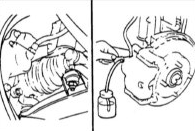
2. Remove the cap from the bleeder valve and connect one end of a transparent hose to it, placing the other end into a glass container of sufficient capacity, half filled with brake fluid.
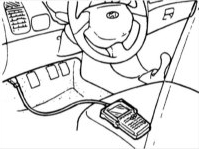
3. Connect the scan tool to the diagnostic connector located under the instrument panel.
4. Select the appropriate parameter according to the scan tool operation manual.
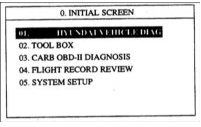
Observe the maximum ABS operating time when operating the scan tool to prevent the pump motor from burning out.
1) Select the vehicle manufacturer.
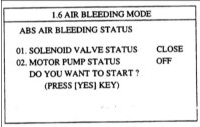
2) Select the vehicle model.
3) Select the ABS test mode.
4) Select the bleeding method.
5) Press "YES" to activate the pump motor and solenoid valve.
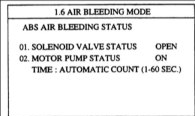
6) Wait 60 seconds before performing the air bleeding operation, otherwise the pump motor may be damaged.
5. Slowly depress the brake pedal several times. With the brake pedal depressed, loosen the bleeder screw with a wrench and wait until brake fluid without air bubbles flows out. Tighten the bleeder screw and release the brake pedal.
6. Repeat step 5 to bleed air from the brake calipers/wheel cylinders of the remaining wheels.
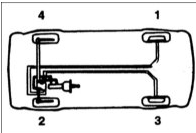
7. Tighten the bleeder screw.
Torque: 7–9 N·m
Test yourself
A quick Hyundai Accent quiz: every answer comes with an explanation and a link to the manual page.