Checking the coolant level
 Removing the radiator
cap
- Never attempt to remove the radiator cap while the engine is running or when the engine is hot. Doing so may damage the engine cooling system and may cause serious injury from hot coolant or steam being expelled under pressure.
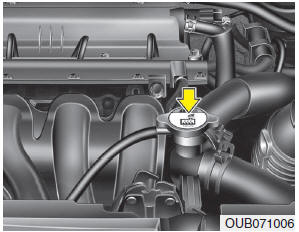
- Stop the engine and wait until it has cooled down. When removing the radiator cap, always take the utmost care. Wrap the cap in a thick towel and slowly turn it counterclockwise (anticlockwise) to the first stop.
After the pressure in the cooling system has been released, wait a moment. Only when you are completely sure that the coolant in the radiator is not under pressure, press down on the cap through the thick towel and continue turning it counterclockwise until it comes off the radiator.
- Even when the engine is no longer running, do not remove the radiator cap or the drain plug until the engine and radiator have cooled down. Even after the engine has stopped, hot pressurised coolant and steam may be expelled, causing serious personal injury.

The electric motor (cooling fan) is controlled by the engine coolant temperature, coolant pressure and vehicle speed. It may sometimes run even when the engine is switched off. When working near the cooling fan blades, take special care not to be injured by the moving blades. Once the engine coolant temperature has dropped, the electric motor switches off automatically. This is not a sign of a malfunction.
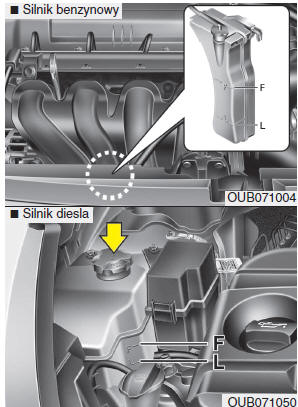
Check the condition and connections of all cooling system hoses and heater hoses. Replace any swollen or worn hoses. The coolant level, when the engine is cold, should be between the F (Full) and L (Low) marks on the sides of the reservoir tank.
If the coolant level is low, add the appropriate amount of distilled (demineralised) or soft water to ensure protection against freezing and corrosion.
The coolant level should be at the F (Full) mark, but must not exceed this mark.
If frequent coolant top-ups are needed, contact an authorised Kia dealer to have the cooling system inspected.
Recommended engine coolant
- When topping up coolant in the vehicle, use only distilled (demineralised) water or soft water and never mix hard water with genuine coolant.
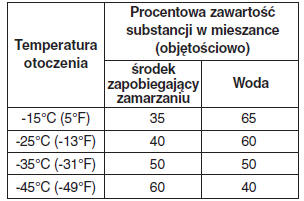
The percentage content of the components in the mixture is given in the table below.
WARNING

Radiator cap
Never remove the radiator cap when the engine and radiator are hot. Hot, scalding coolant and pressurized steam in the radiator may spray out and cause serious injury.
Test yourself
A quick Kia Rio YB quiz: every answer comes with an explanation and a link to the manual page.