Replacing the Engine Oil and Oil Filter
GENERAL INFORMATION
CAUTION
Prolonged skin contact with used engine oil is quite hazardous. Use a protective cream and wear gloves while performing this procedure. Change clothing immediately if it becomes soaked with oil.Frequent engine oil changes are the main preventive maintenance procedure available to the home mechanic. Over time, oil becomes diluted and contaminated, which leads to premature engine wear.
Engine oil can be extracted with a special probe (available at service stations) through the dipstick tube. After this, the system generally must be refilled with oil.
Do not dispose of used oil with household waste or in any other way. This may cause environmental contamination.
It is advisable to attach a tag showing the oil brand and viscosity to the engine when changing the oil.
Using oils of different types adversely affects engine operation. It is also not recommended to mix different brands of oil. Engine oils of the same type and brand but different viscosities may be mixed when necessary, in particular during the intermediate season.
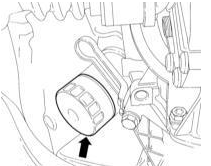 6.9 Unscrew the oil filter with a strap wrench or HAZET 2171-1 tool.
1. Gasoline Engine
Required tools: · Inspection pit or vehicle lift with support stands (if oil is not extracted by suction). · Socket for removing the drain plug. · Special filter removal tool (filter wrench, strap wrench, or HAZET 2171-1 tool). · Oil collection container (if oil is not extracted by suction) with a capacity of at least 5 L.
Required parts and consumables: · Only if oil is not extracted by suction: new aluminum or copper sealing washer for the drain plug (sometimes supplied together with the oil filter). · Oil filter. For the diesel engine, the filter cartridge and two filter cover O-rings are required. · Approximately 4.5 L of engine oil. Use oil approved by AUDI, refer to Specifications.
Removing Engine Oil
PROCEDURE
1. Diesel engine: loosen the mounting bolts and remove the oil filter housing cover. The oil will then drain from the filter housing into the oil pan.
2. Remove the engine oil using a suction device through the oil level dipstick tube.
3. If no oil extraction device is available, drain the oil. To do this, park the vehicle on a level surface. Safety Note
There is a risk involved when lifting and supporting the vehicle on stands! Therefore, first read the subsection Jacking Up the Vehicle.
4. Remove the lower engine compartment cover, refer to the subsection Removal and Installation of Lower Engine Compartment Cover.
5. Place a container under the oil pan to collect the used oil.
6. Unscrew the drain plug from the oil pan and drain the oil completely.
CAUTION
If the used oil contains a large amount of metal shavings and wear particles, this indicates seizure damage, for example, in the crankshaft bearings and connecting rod bearings. To prevent damage after the repair, thoroughly clean the oil galleries and hoses. Additionally, replace the oil cooler, if equipped.7. Then install the drain plug with a new sealing washer. Do not exceed the tightening torques specified in the Specifications, otherwise leaks and damage may occur.
8. Lower the vehicle onto its wheels. Oil Filter Replacement Gasoline Engine
9. Remove the oil filter. A special tool is available for this, for example, the HAZET 2171-1 strap wrench.
1. Collect the dripping oil with a rag.
10. Clean the oil filter flange on the engine block with fuel. If necessary, remove any remaining filter seal.
11. Coat the rubber sealing ring on the new oil filter with a thin layer of clean engine oil.
12. Screw the new oil filter on by hand. If the filter seal contacts the engine block, turn the filter an additional 1/2 turn. Follow the instructions printed on the filter. Diesel Engine
13. Unscrew cover -1- on the filter housing, for example, with a strap wrench or VW tool.
3417.
14. Replace the filter element -4- and the O-rings -2- and -3- on the filter cover.
15. Screw on the oil filter cap and tighten it to 25 N·m. Engine oil filling 16.
CAUTION
When starting a turbodiesel for the first time after an oil change, make sure the engine first runs at idle until the oil pressure warning lamp goes out. Only increase engine speed after the required oil pressure has been reached. If the accelerator is pressed while the warning lamp is still on, the turbocharger may be damaged due to insufficient oil supply.17. Remove the cap and pour fresh oil into the filler opening on the cylinder head.
CAUTION
It is recommended to first fill in 0.5 L less oil. Warm up the engine and after a few minutes check the oil level with the dipstick, and top up if necessary. Remove any excess oil, as otherwise the engine seals and catalytic converter may be damaged.18. The oil level is normal if it is within range (b). If the oil is within range (a), add oil up to mark (c) (refer to the accompanying illustration).
19. After the test drive, check the drain plug and oil filter for leaks, and add oil carefully if necessary.
20. Three minutes after switching off the engine, check the oil level again. Add or drain oil as necessary.
21. Install the engine compartment undercover. Refer to the subsection Removal and Installation of Engine Compartment Undercover.
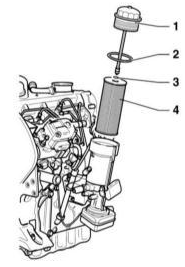 Oil Filter Replacement. Diesel Engine
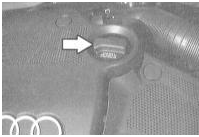 Filler Cap on Cylinder Head Cover
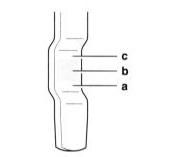 Oil level must be between the MAX and MIN marks (zone B)
Test yourself
A quick Audi A3 quiz: every answer comes with an explanation and a link to the manual page.