Differential Fluid Replacement
Required tools and parts:
a) 10 mm and 12 mm socket wrenches for the filler and drain plugs.
b) Two aluminum sealing washers A22 x 27
PROCEDURE
1. Before starting, drive the vehicle a few kilometers to warm up the differential fluid, then raise the vehicle and securely support it on stands.
2. Place a drain pan, rags, newspapers and a socket wrench under the vehicle. Since the fluid will be hot, wear rubber gloves to prevent burns.
3. Remove the filler plug from the differential; this is the upper of the two plugs.
2. Unscrew the filler plug (1) with a socket wrench. Refer to the accompanying illustration.
4. If a small amount of oil flows out, the level is normal and the transaxle is sealed. Otherwise, check with your finger whether the oil level reaches the lower edge of the opening.
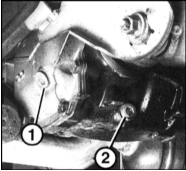
If there is significant oil leakage, determine the cause and correct it.
* Place a container under the differential, then loosen the drain plug (2); this is the lower of the two plugs.
3. Carefully unscrew the drain plug until it is removed from the housing.
7. Allow all the fluid to drain into the drain pan. The drain plug is magnetic and attracts metal particles. Wipe the debris off the plug. Install the plug with a new sealing washer and tighten it to 50 N·m.
8. Install the drain plug and tighten it securely.
9. Fill the differential with differential fluid.
* Transaxle oil is fairly thick. Therefore, do not add all the oil at once. Take a break and place a container to catch any overflow.
10. Install the filler plug with a new sealing washer and tighten it securely to 50 N·m.
11. Lower the vehicle to the ground. After driving the first few kilometers, check the drain plug for leaks.
Test yourself
A quick BMW 1 quiz: every answer comes with an explanation and a link to the manual page.