Specifications
Fuel and Lubricant Types and Capacities
Fuel
Gasoline Engines
Unleaded gasoline not lower than AI-95 (vehicles with catalytic converter).
Unleaded or leaded gasoline not lower than AI-95 (vehicles without catalytic converter).
Gasoline not lower than AI-91 may be used; however, engine power is reduced and fuel consumption increases.
Diesel Engines
Automotive (not marine or boiler) summer or winter diesel fuel with sulfur content not exceeding 0.5%. Do not use biodiesel fuel or rapeseed oil methyl ester.
Preheating fuel in the filter prevents fuel from thickening while the vehicle is in motion.
Do not use special agents to reduce fuel viscosity.
When outside air temperature drops below -9°C, add kerosene to summer diesel fuel (in % of total volume).

When outside air temperature drops below -20°C, add a viscosity reducing agent or kerosene to winter diesel fuel (in % of total volume).

As an exception, up to 30% of low-octane gasoline (unleaded for vehicles with catalytic converter) may be added to diesel fuel.

Engine Oil
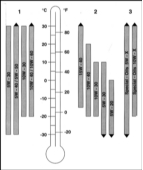
Oil Viscosity Chart for Various Temperatures
1 — Vehicles with diesel engine: BMW 525 tds
2 — Vehicles with gasoline engine: BMW 520i, 528i, 535i, 540i
3 — Vehicles with diesel or gasoline engine: BMW special oil grades

Engine oil must meet both classifications - ACEA: A3-96 and ACEA: B3-96, or CCMC-G5 and CCMC-PD2.
Oil viscosity is designated by the SAE classification. Oil selection is determined by the average air temperature for the season. Use the chart in the accompanying illustration to correctly select the SAE viscosity grade. Brief excursions of the actual air temperature beyond the lower or upper limit of the indicated range are permissible.

The difference between the Min and Max marks on the oil level dipstick is approximately 1 L.
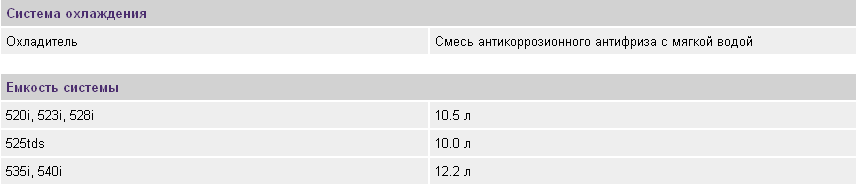
Frost Protection
To increase frost protection down to -35°C, drain the coolant and fill with antifreeze concentrate in the following amount:

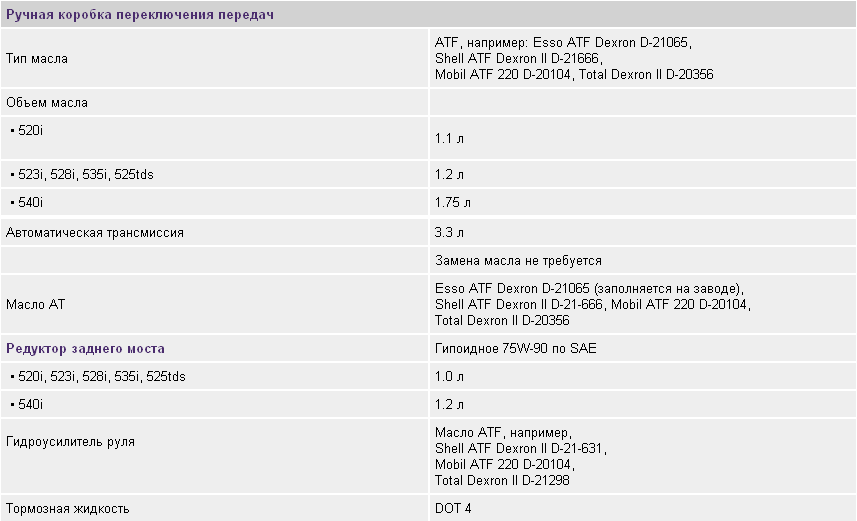
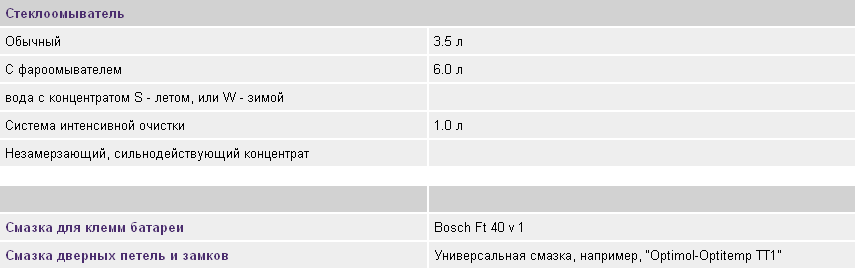
Engine
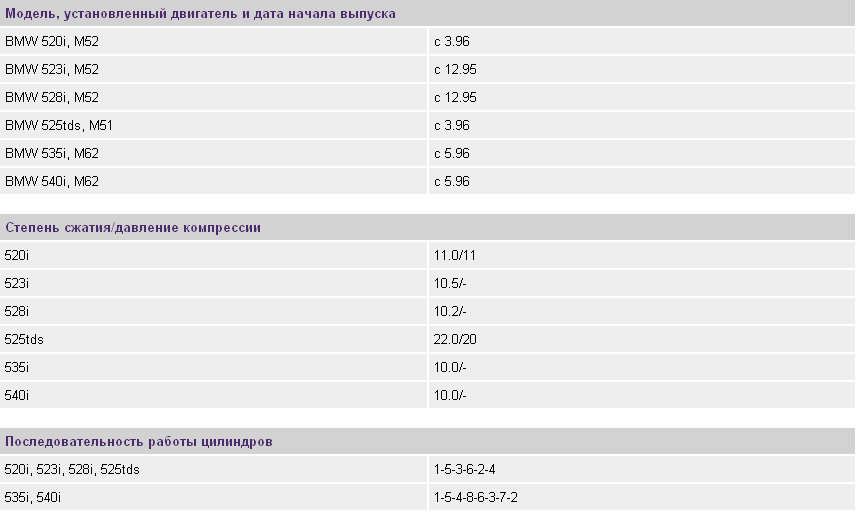
General Data

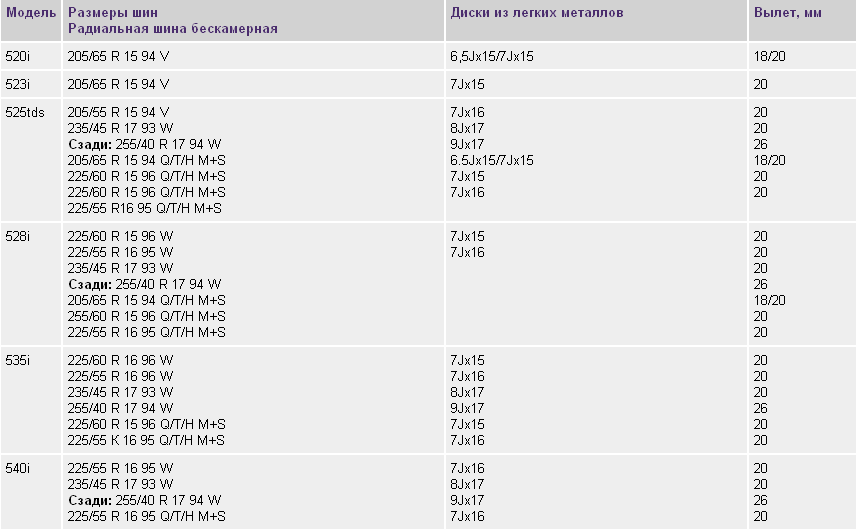
Wheel and Tire Sizes, Air Pressure
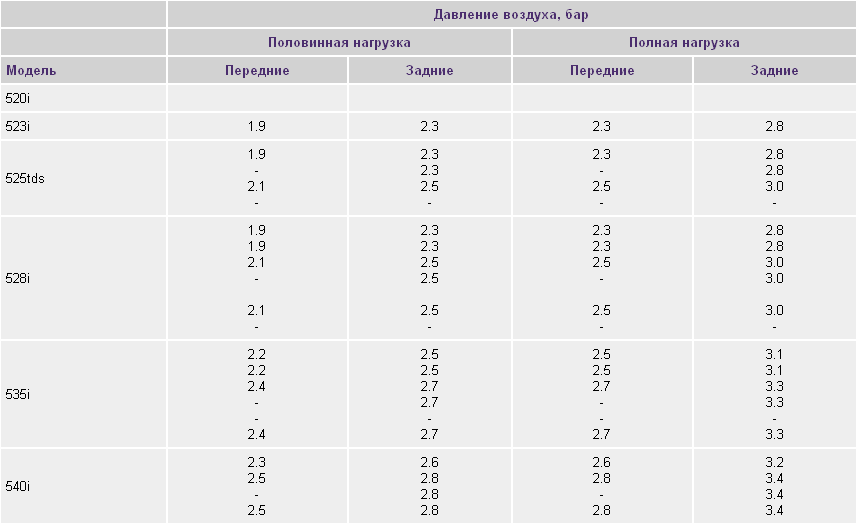
- The specified air pressure applies to cold tires. The increase in tire air pressure caused by heating during driving, 0.2 - 0.4 bar, need not be taken into account. When using winter tires, vehicle speed must be reduced.
*Due to new tire and wheel models, they may be fitted to earlier model vehicles. Consult an authorized service station before fitting them.
a) When driving in a sporty manner, it is recommended to increase front and rear tire air pressure by 0.2 bar. The starting pressure is the pressure specified for the various load conditions.
b) When towing a trailer, set tire air pressure according to the "Full Load" condition.
c) Air pressure values are indicated on the label on the driver's door pillar.
*In accordance with established regulations, tire tread depth must not wear below 1.6 mm. The entire tread surface must have a depth of at least 1.6 mm. It is recommended to replace summer tires at 2 mm tread depth and winter tires at 4 mm tread depth.
Tire and Wheel Designation
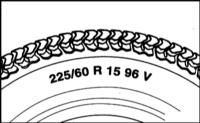
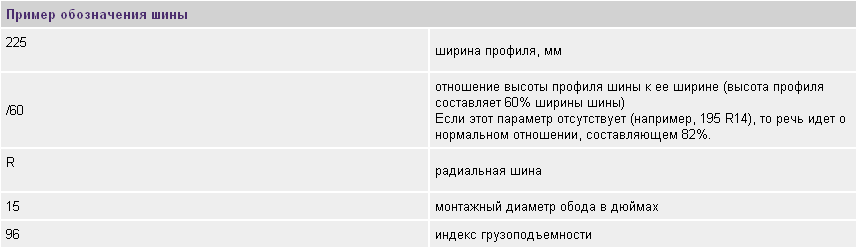
* If M+S is marked between parameters 15 and 96, the tire has a winter tread pattern.

Speed Rating

Tire Manufacturing Date
The tire manufacturing date is shown as a manufacturer's code.
Example: DOT CUL2 UM8 286 < TUBELESS
DOT - Department of Transportation (US Department of Transportation)
CU - manufacturer code
L2 - tire size
UM8 - tire version
286 - manufacturing date - 38th work week of 1997
< - decade symbol (1990 - 1999)
TUBELESS - tubeless tire (TUBETYPE - tube tire)
Wheel designation example: 7Jx15:
7 - rim width in inches
J - rim height and profile marking (B - lower flange shape)
x - one-piece wheel designation
15 - rim diameter in inches
* If the word "reinforced" is at the end of the tire marking, the tire is of reinforced construction.

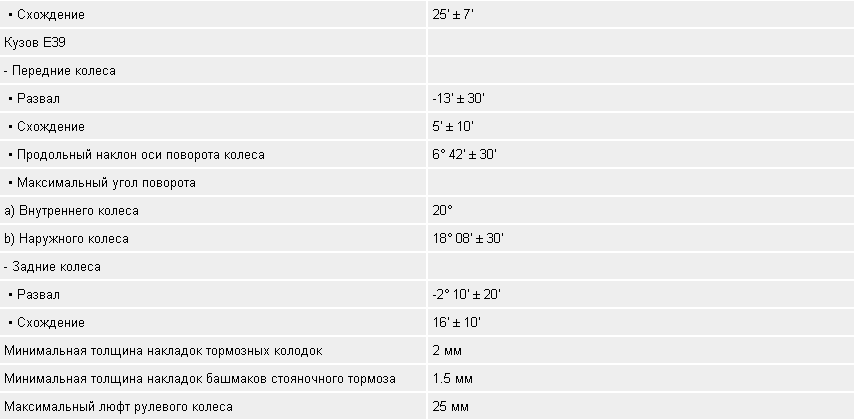
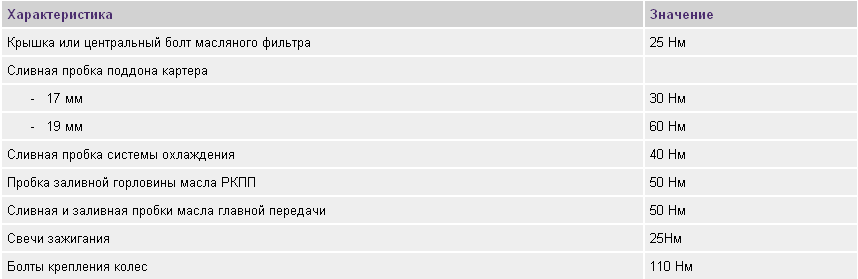
Threaded Connection Tightening Torques
Fastener tightening torques are given in the text of the Chapter and in some illustrations*.
Test yourself
A quick BMW 1 quiz: every answer comes with an explanation and a link to the manual page.