ISG System (Idle Stop & Go)
Components and Components Location
COMPONENT LOCATION
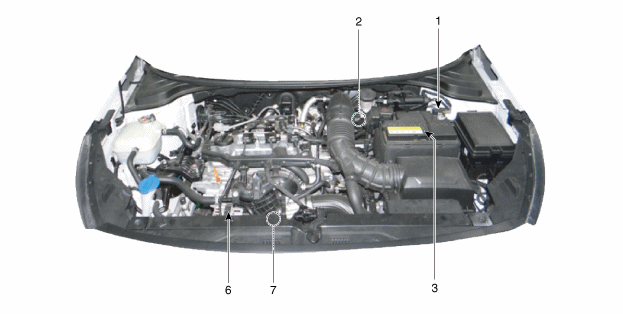
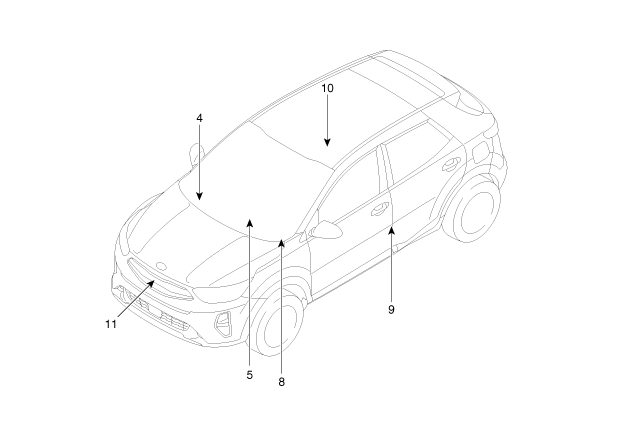
| 1. Battery Sensor 2. Brake Booster Vacuum Pressure Sensor (BBVPS) 3. AGM Battery 4. DC-DC Converter [200 W] 5. ISG Switch 6. Generator |
7. Starter 8. Brake Switch 9. Door Switch 10. Child Safety Door Lock Switch 11. Hood Switch |
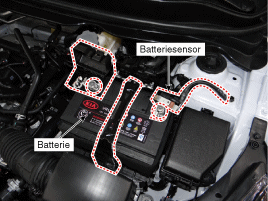
| 1. Battery Sensor 3. AGM Battery |
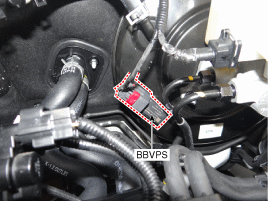
2. Brake Booster Vacuum Pressure Sensor (BBVPS) |
 |
 |
| 4. DC-DC Converter [200 W] | 5. ISG Switch |
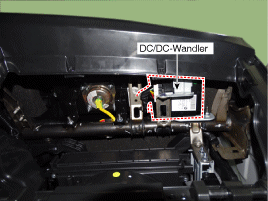 |
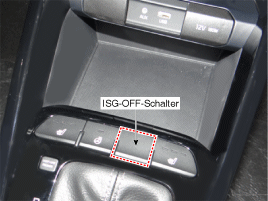 |
| 6. Alternator | 7. Starter |
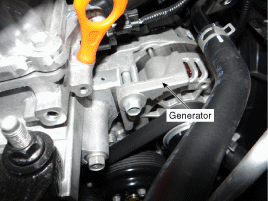 |
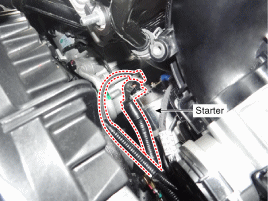 |
| 8. Brake Switch | 9. Door Switch |
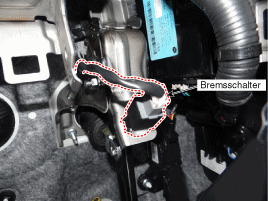 |
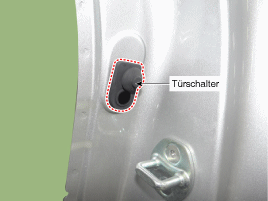 |
| 10. Child Safety Door Lock Switch | 11. Hood Switch |
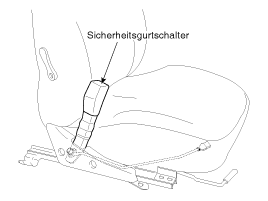 |
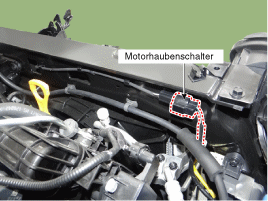 |
Description and Operation
Description
The Idle Stop & Go (ISG) function automatically stops the engine when the vehicle is stationary and restarts the engine as soon as the brake pedal is released. This reduces not only fuel consumption but also exhaust emissions. The Idle Stop & Go (ISG) function has built-in sensitivity adjustment for safety and driving comfort. The engine does not stop when certain safety and comfort conditions are not met (for example, if the engine oil is still too cold, the battery charge level is too low, or the outside air temperature is below 3 °C). The function is deactivated by pressing the ISG OFF switch on the lower instrument panel. Example situation: the engine stops when you are stopped at a red traffic light or driving in stop-and-go traffic.
HOW IT WORKS
B
Method:
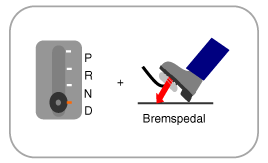
Automatic engine stop function: D range + brake pedal depressed.
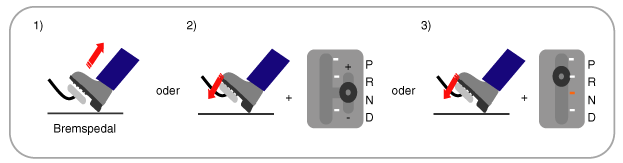
Automatic engine restart function
(1) Brake pedal released.
(2) Brake pedal depressed + manual shift range (sport mode)
(3) Brake pedal depressed + reverse range
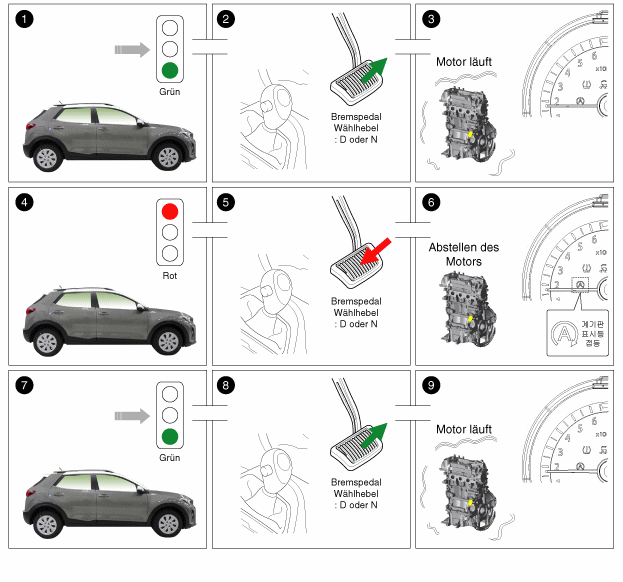
Vehicle is moving.
Shift lever is in D. Brake pedal is not depressed.
Engine is running (vehicle is moving).
Driver brakes until the vehicle comes to a complete stop.
Shift lever is in D. Brake pedal is depressed.
Engine stops. The "AUTO STOP" indicator illuminates on the instrument cluster.
The driver wants to continue driving.
| 8th. | Shift lever is in D. Brake pedal is not depressed. |
The engine restarts. The "AUTO STOP" indicator turns off.
or
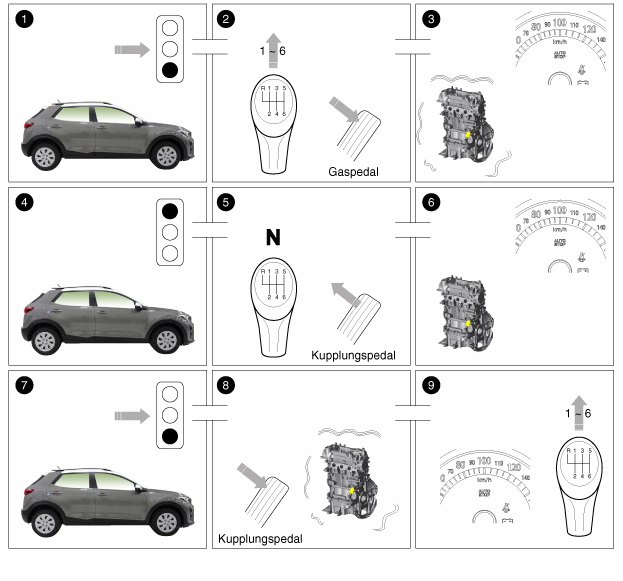
Vehicle is moving.
gear is engaged. Accelerator pedal is depressed.
Engine running.
Driver brakes until the vehicle comes to a complete stop.
The driver shifts into neutral and releases the clutch pedal.
Engine stops. The "AUTO STOP" indicator illuminates on the instrument cluster.
The driver wants to continue driving.
| 8th. | The driver depresses the clutch pedal. The engine starts. |
The shift lever can be moved to a driving position and the vehicle can continue. The "AUTO STOP" indicator turns off.
Schematic diagrams
ISG Function Activation Conditions (A)
1. Auto Stop or Auto Restart Status
▶ When all of the following conditions are met
| COMPONENTS LOCATION | Condition | NOTICE |
| ISG OFF | Outside | ISG OFF Switch Indicator -> OFF |
| Climate Control System | Outside air temperature from -2 to 35 °C | |
| Engine Coolant Temperature | Above 30 °C | |
| Brake Vacuum | Below -35 kPa | |
| Driver's Door, Seat Belt, Hood | Closed | |
| Emergency Vehicle Status (TPS/CKP/CMP/WTS/Vehicle Speed Signal) |
Operation | DPF regeneration prohibited |
| Air Conditioner | Operation | |
| Battery sensor [SOC: above 78% Temperature: 2 ~ 55 °C] |
Operation | |
| ISG-Related Part Malfunction | Not Applicable | |
| Vehicle speed | Input less than 0 km/h after more than 8 km/h | ISG System Locked below 8 km/h |
| ACCELERATOR | Outside | Automatic Engine Stop Function |
| Brake Switch | A | Automatic Engine Stop Function |
| Outside | Automatic Engine Stop Function | |
| Band Status | N (Neutral) / D | Automatic Engine Stop Function |
| P / 1 / 2 | Automatic Engine Stop Function |
2. Restriction Conditions for Auto Stop or Auto Restart
▶ When any of the following conditions are met, the ISG system does not operate properly.
| COMPONENTS LOCATION | Conditions | NOTICE |
| ISG switch | A | ISG OFF Switch Indicator Status |
| Emergency Service Status (TPS/CKP/CMP/WTS/vehicle speed signal, etc.) |
Dissatisfaction | DPF regeneration prohibited |
| Driver's door, seat belt, hood status | Open | |
| Brake Vacuum | Above -35 kPa | |
| A/C status | Dissatisfaction | |
| Battery sensor (SOC: above 78%, temperature: 2 ~ 60 °C) |
Dissatisfaction | |
| ISG system error | Occurs | |
| steering wheel | The greater the angle | |
| Air Conditioner | A/C ON, FATC above 6, MTC above 3 | |
| DEF | Defrost switch ON | |
| etc. | Downhill slopes, rapid uphill climbs | |
| Activate EPS |
3. Forced Restart Conditions (if any of the following conditions are not met)
| COMPONENTS LOCATION | Conditions | NOTICE |
| Safety conditions | Low brake system pressure | Above -35 kPa |
| Low Battery Voltage | Maintain electrical load for 3 minutes | |
| Active windshield defroster | ||
| When inertia speed reaches 1.5 km/h | ||
| Open the door or unfasten the driver's seat belt | Brake pedal depressed | |
| Open the hood, start the engine | ||
| Stop time too long | After 300 s | |
| Vehicle stopped on a steep downhill | ||
| Comfort conditions | A/C ON, FATC above 6, MTC above 3, or HVAC performance unsatisfactory | |
| ISG OFF button active |
4. Restricted Conditions for Auto Stop Operation
| Conditions | Condition | NOTICE |
| Driver's door, seat belt, hood status (brake not applied) | Open | Starting is possible only with the "ignition switch or engine start button" |
| CAN error (TCU, FATC/instrument cluster) | Occurs | |
| EMS status (TPS/CKP/CMP/WTS/vehicle speed signal) | Dissatisfaction |
ISG Function Activation Conditions (M/T)
After each engine start, the function is automatically activated and enters standby mode. The ISG OFF switch can be used to manually deactivate this function until the next start. Turn the ignition off. When the switch is pressed, the indicator light illuminates.
1. Idle stop condition (Idle → Stop)
▶ General condition: Neutral position and clutch pedal released
| Prerequisites |
| Engine coolant temperature is not too low (above 45 °C). |
| No DPF regeneration |
No interlock conditions for activation or engine failure
|
| Battery charge level is sufficiently high. |
| No fault in communication line - LIN, CAN |
| Vehicle speed below 5 km/h |
| Vehicle speed above 10 km/h at least once after key-on or from standby mode |
| ISG OFF switch OFF |
| Driver seat belt, driver door and hood are closed. |
| Battery temperature from 2 to 55 °C. |
| Brake booster pressure is not too low. |
| Fan not at maximum. |
2. Idle Stop Restart Conditions (Stop → Start)
▶ General condition: Neutral position and clutch pedal depressed
| Prerequisites |
No interlock conditions for activation or engine failure
|
| No fault in communication line - LIN, CAN |
| Driver seat belt and driver door or hood are closed. |
| Engine off, then gear shift (in gear → neutral) and clutch pedal operated. |
3. Auto start condition (Stop → Start)
The engine starts automatically without driver intervention in the following cases:
▶ General condition: Neutral position and clutch pedal released
| Prerequisites |
No interlock condition for activation
|
| Brake booster vacuum sensor value too low. |
| When the battery charge level is too low. |
| After a certain period of time has elapsed following A/C activation. |
| Vehicle speed above 5 km/h when descending a hill. |
| Fan at maximum. |
Test yourself
A quick Kia Stonic quiz: every answer comes with an explanation and a link to the manual page.