Fuel supply system
Components and Components Location
COMPONENT LOCATION
Fuel Tank and Filler Neck
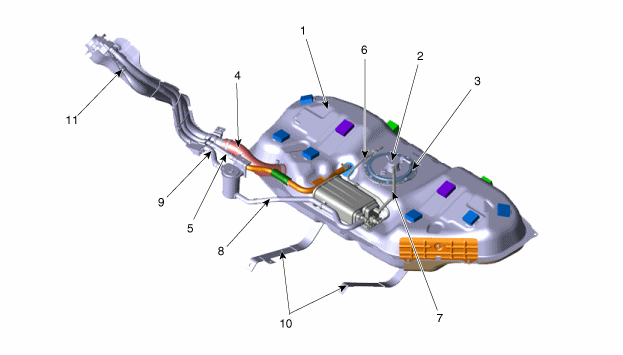
| 1 2 3. Fuel Pump Cover 4. Fuel Hose 5. Height Adjustment Tube 6. Vapor Hose (Charcoal Canister → Intake Manifold) |
7. Vapor Hose (Charcoal Canister ↔ Fuel Tank) 8. Vapor Hose (Charcoal Canister → Air Cleaner) 9. Vapor Hose (Air Cleaner → Air Pressure) 10. Fuel Tank Strap 11. Filler Neck |
Fuel Pump
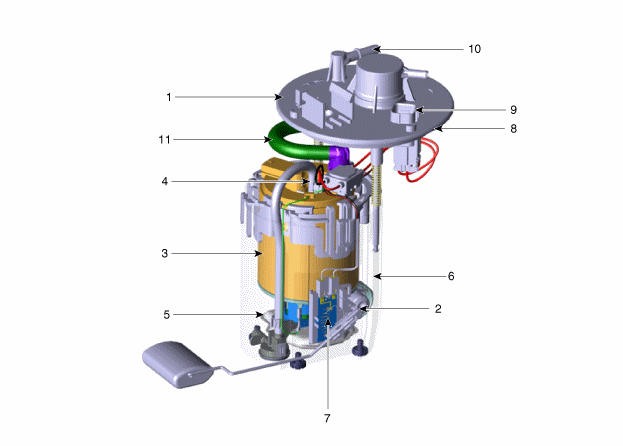
| 1. Cylinder Head 2. Fuel Pressure Regulator 3. FUEL FILTER 4. Engine Fuel Pump 5. Pre-Filter 6. Container Cover |
7. Fuel Level Sensor 8. Fuel Pump Plate Gasket 9. Engine Fuel Pump and Sensor Connector 10. Fuel Supply Connection 11. Fuel Supply Tube |
High Pressure Fuel Hose
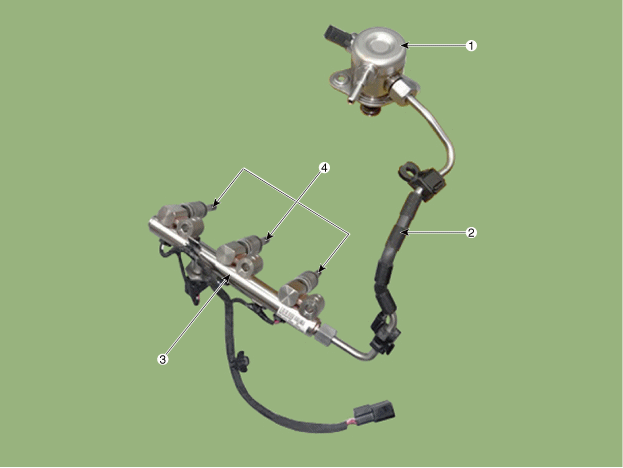
| 1. High-Pressure Pump 2. High-Pressure Fuel Line |
3. Supply Line 4. Injector |
Schematic diagrams
Schematic diagrams
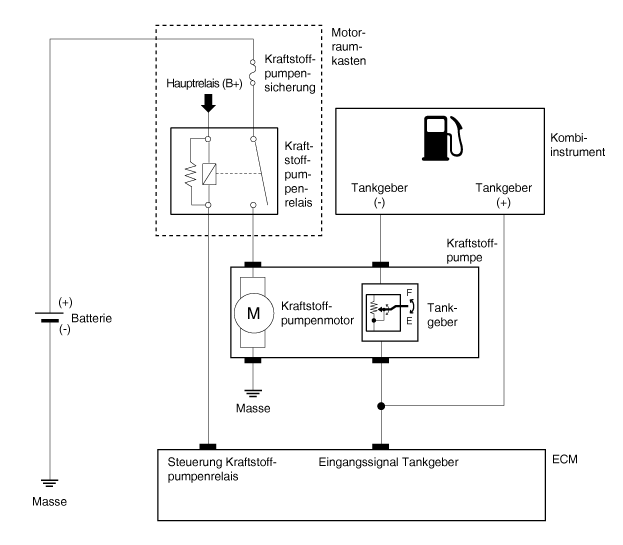
Fuel Pressure Inspection (Low-Pressure System)
CHECK FUEL PRESSURE
Release the residual pressure in the fuel line.
(See Fuel Supply - "Relieving Residual Pressure in the Fuel Line")
Install the special service tool.
Disconnect the tank filler hose from the supply line.
Install the special tool for measuring fuel pressure between the tank filler hose and supply line (see figure below).
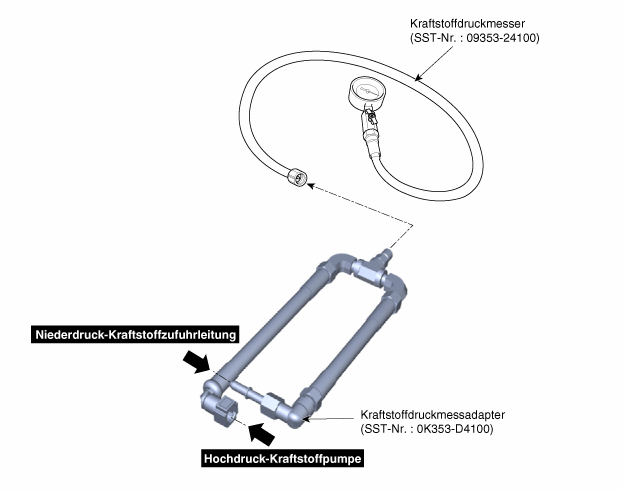
With the ignition ON, check the fuel supply line, supply line and SST components for fuel leakage at the connections.
Measure the fuel pressure.
Start the engine and measure fuel pressure at idle.
Fuel Pressure: 480 ~ 520 kPa (4.9 ~ 5.3 kgf/cm²)
Fuel
CapCause Component Too Low Fuel Filter Clogged FUEL FILTER Leakage Fuel Pressure Regulator Too High Fuel Pressure Control Valve Stuck Fuel Pressure Regulator Stop the engine and check whether the fuel pressure gauge reading changes.
Standard Value: After the engine is stopped, fuel pressure should be maintained for approximately 5 minutes.
Fuel Pressure
(After Engine Stop)Cause Component
PartFuel pressure drops slowly Injector Leakage INJECTOR Fuel pressure gradually drops Check whether the fuel pump valve is stuck in the open position. Fuel Pump Turn the ignition off.
Release the residual pressure in the fuel line.
(See Fuel Supply - "Relieving Residual Pressure in the Fuel Line")
End of Test
Remove the special service tool from the tank filler hose and supply line.
Connect the fuel hose to the supply line.
residual pressure in fuel line
Residual Pressure in Fuel Line
Turn the ignition switch OFF and disconnect the negative (-) battery cable.
Remove the fuel pump fuse (A).
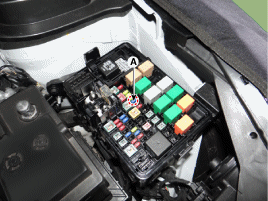
Reconnect the battery negative (-) cable.
Run the engine for 1 minute to reduce the pressure in the low-pressure line.
Turn off the engine.
Disconnect the quick-connect coupling of the low-pressure line from the high-pressure pump. When disconnecting the fuel line, cover the opening with a rag and catch the draining fuel.
Start the engine and let it idle until it stalls. The pressure here should be below 30 psi.
| 8th. | Proceed with maintenance and repair work. When opening the high-pressure system, cover the opening with a rag and collect the leaking fuel. |
Install removed parts in the reverse order of removal. Start the engine and make sure it runs properly; check for fuel leaks.
When finished, clear the trouble codes on KDS (using the procedure described above for setting the trouble code).
Test yourself
A quick Kia Stonic quiz: every answer comes with an explanation and a link to the manual page.