Radiator
Components and Components Location
COMPONENTS LOCATION
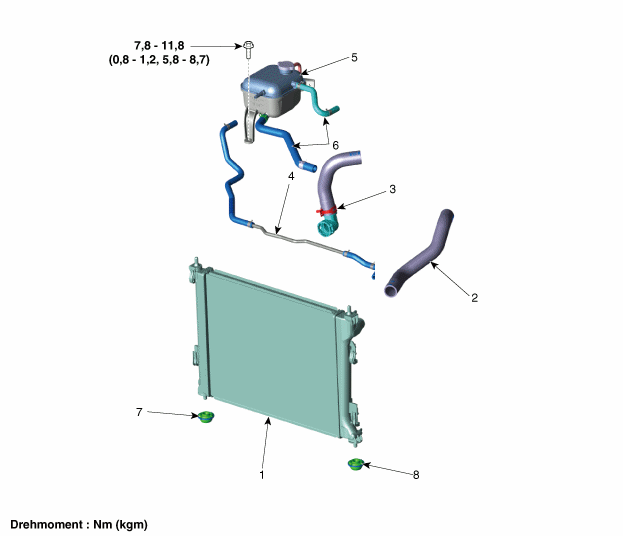
| 1. Condenser 2. Radiator upper hose 3. Radiator lower hose 4. Coolant line and hose |
5. Reserve tank 6. Reserve tank hose 7. Radiator lower support [D] 8. Radiator lower support [G] |
repair procedures
Installation and Removal
Disconnect the negative terminal from the battery.
Remove the engine undercover.
(Refer to Engine and Transaxle - "Under Hood")
Drain the engine coolant.
(Refer to Cooling System - "Engine Coolant")
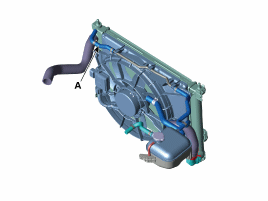
Disconnect the hose (A) and the pipe from the reserve tank, then disconnect the hose from the cooling fan.
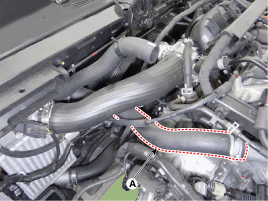
Disconnect the upper radiator hose (A).
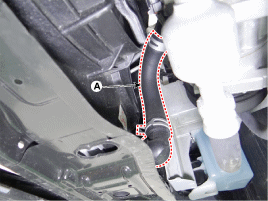
Disconnect the radiator lower hose (A).
Remove the front bumper.
(Refer to Body (Interior and Exterior) - "Front Bumper")
| 8th. | Remove the horn. (Refer to Body Electrical - "Horn") |
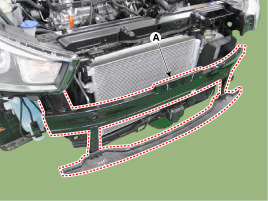
Remove the front bumper reinforcement (A).
Unscrew the mounting screw (A).
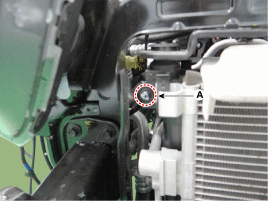
Remove the protective cover (A) from the air intake.
Tightening torque: 3.9 - 5.9 N·m
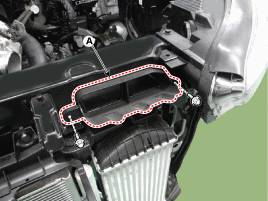
Remove the radiator upper bracket (A).
Tightening torque: 7.8~11.8 N·m
(LH)
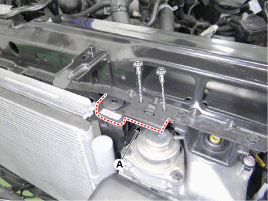
(RH)
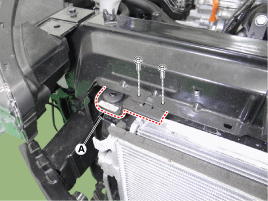
Remove the grille cover (A).
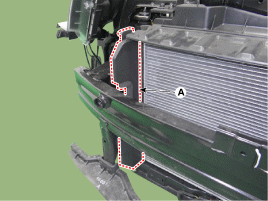
Remove the upper grille cover (A).
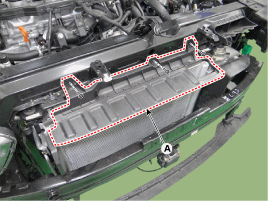
Disconnect the condenser, then remove the radiator (A).
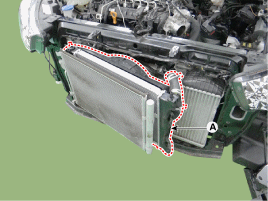
Installation is the reverse of removal.
Fill the cooling system with coolant.
(Refer to Cooling System - "Engine Coolant")
Start the engine and check for leaks.
Check the coolant level again.
TEST
RADIATOR CAP
Remove the radiator cap, wet the sealing ring with coolant, then attach it to the tester.
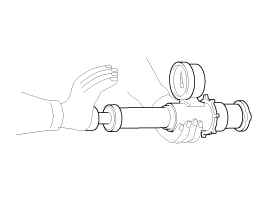
Specified pressure: 93.26 - 122.58 kPa
(0.95–1.25 kgf/cm²)
Monitor the pressure drop.
If there is a pressure drop, replace the radiator cap.
RADIATOR LEAK TEST
Wait until the engine cools down. Carefully remove the radiator cap and add coolant as necessary. Then connect the pressure tester to the radiator hose.
Install the pressure gauge on the radiator and check the pressure at 93.16 – 122.58 kPa (0.95 – 1.25 kgf/cm²).
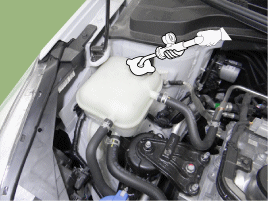
Check for coolant leakage and pressure drop.
Remove the pressure tester from the radiator and unscrew the radiator cap.
Test yourself
A quick Kia Stonic quiz: every answer comes with an explanation and a link to the manual page.