Recommended cold tire inflation pressures
Check all tire pressures (including the spare tire) every day when the tires are cold. "Cold tires" means the vehicle has not been driven for at least the last three hours, or has been driven no more than 1.6 km (one mile).
Maintaining the recommended pressures is necessary to achieve the best ride quality, best vehicle handling and minimum tire wear.
The recommended tire pressures can be found in the "Tires and wheels" section in Chapter 8.
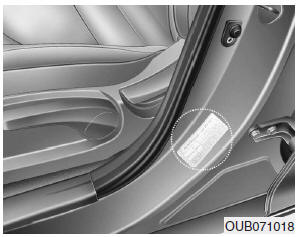
All technical data (dimensions and pressures) can be found on the label attached to the vehicle.
WARNING - Insufficient tire pressure Very low tire pressure, or excessively high pressure, may cause a significant rise in temperature, leading to tire blowout, tread separation and other serious tire damage, resulting in loss of vehicle control, which may cause serious injury or death. This risk increases on hot days and when driving at high speed for extended periods. CAUTION- Low tire pressure also leads to premature wear, poor vehicle handling and higher fuel consumption.
Wheels may also become deformed. Always maintain the correct tire pressure. If a wheel requires frequent inflation, have it checked by an authorized Kia dealer.
- Excessive tire pressure, on the other hand, results in an uncomfortable ride, excessive wear in the center of the tread, and a greater risk of damage caused by road obstacles.
- With warm tires, the pressure normally exceeds the recommended cold tire pressure by 28 to 41 kPa (4 to 6 psi). However, do not release air from warm tires to adjust the pressure, as the pressure will then be too low.
- Make sure the valve caps are installed. If they are not, dirt or moisture may enter the valve core and cause air to leak from the tire. If a valve cap is missing, obtain a new one as soon as possible.
This may result in loss of vehicle control and cause injury.
CAUTION - Tire pressure Always observe the following guidelines:- Check tire pressure when the tires are cold (after the vehicle has been parked for at least three hours, or after driving no more than 1.6 km (one mile) since the vehicle was started).
- Check the spare tire pressure each time you check the pressure of the other tires.
- Never overload the vehicle. Take care not to overload the roof rack if the vehicle is equipped with one.
- Using worn or old tires may lead to accidents. If the tread is severely worn or the tires are damaged, replace them with new ones.
Test yourself
A quick Kia Rio YB quiz: every answer comes with an explanation and a link to the manual page.