K114 Continuously Variable Transmission
Precautions
In this manual: K114 Continuously Variable Transmission
~3min read
PRECAUTION
IGNITION SWITCH TERMS
HINT:
The type of ignition switch used varies depending on vehicle specifications. The terms listed in the table below are used in this section.
Term | Ignition Switch (Position) | Engine Switch (Condition) |
|---|---|---|
Ignition Switch in OFF position |
LOCK |
OFF (Locked) |
Ignition Switch in ACC position |
ACC |
ON (ACC) |
Ignition Switch in ON position |
ON |
ON (IG) |
Starting the engine |
START |
ON (Starting) |
PRECAUTION
CAUTION:
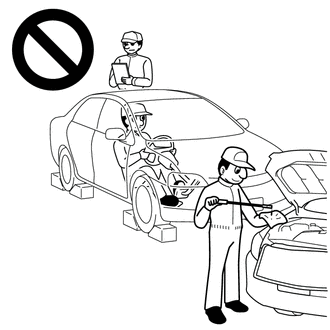
- Do not perform a stall test when anyone or any objects are near the vehicle.
- The vehicle may move suddenly, which could result in a serious accident.
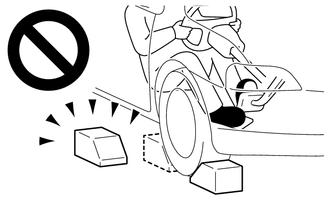
- Do not perform a stall test if a wheel chock is not in the correct position.
- The vehicle may move suddenly, which could result in a serious accident.
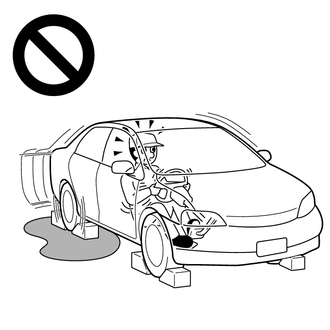
- Do not perform the stall test on a slippery or low-friction surface, as the wheels may slip.
- The vehicle may move suddenly, which could result in a serious accident.
- Be sure to wear protective goggles when blowing compressed air.
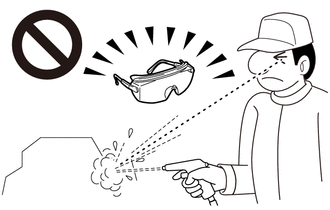
- CVT fluid may enter your eyes and could cause blindness.
NOTICE:
- If the continuously variable transaxle (CVT) assembly or ECM is replaced, be sure to perform memory reset.
- Performing memory reset will erase the learned values of the yaw and acceleration sensor (deceleration sensor zero point calibration) and CVT fluid pressure (CVT fluid pressure calibration). Be sure to perform memory reset, deceleration sensor zero point calibration and CVT fluid pressure calibration if any of the parts in the following table have been replaced.
Click here

- Continuously variable transaxle assembly
- ECM
- Oil pressure sensor
- Airbag sensor assembly (yaw and acceleration sensor)
- Before removing transaxle components, remove all sand, dirt and other foreign matter from the detection area on the outside of the transaxle. Make sure no foreign matter contaminates the inside of the transaxle when parts are removed or installed, and when removing and installing the transaxle.
- When disassembling light alloy parts such as the transaxle case, do not pry with a screwdriver or similar tool. It is recommended to tap the parts with a plastic hammer to separate them.
- Do not wear cloth gloves or use rags when handling parts during removal, disassembly or installation of the transaxle. It is recommended to wear synthetic gloves to prevent cloth fibers from entering the transaxle.
- Removed parts must be reinstalled in order, so take the necessary precautions to protect them from dirt.
- Apply genuine Toyota CVT FE fluid to all sliding surfaces and rotating parts.
- Before installing O-rings and oil seals, coat them with genuine Toyota CVT FE fluid and take care not to damage them.
- Take care not to damage the sealing surfaces of the components, as this may cause oil leaks.
- Before applying sealant, remove all traces of old sealant and thoroughly clean the surfaces using a residue-free solvent.
- Genuine Toyota CVT FE fluid is recommended.
- Do not subject parts such as sensors to impact. Replace parts with new ones if they are dropped or subjected to a severe impact.
Was this page helpful?