Child Restraint System (Van, Minibus) (if equipped)
Children riding in the vehicle must sit in the rear seat and must be restrained to minimize the risk of injury in a crash, sudden stop, or sudden maneuver. According to road traffic accident statistics, children are safer when seated in a child restraint on the rear seats than in the front seat. Older children should use the seat belts provided.
The law requires you to use child restraint systems. If small children are riding in your vehicle, you must use a child restraint system (child seat).
In a crash, children may be injured if they are not properly secured in a child restraint. Small children and infants must use a child seat or infant seat.
Before buying a child restraint system, make sure it fits your vehicle's seat and seat belts and is suitable for your child.
Follow all manufacturer's instructions when installing a child restraint system.
• The child restraint system must be installed in the rear seat.
Never install a child seat or infant seat in the front seat. If a crash occurs and the passenger-side airbag inflates, it may result in serious injury or death to an infant or child in a child restraint. Therefore, install the child restraint only in the rear seat of the vehicle.
• Since the seat belt or child restraint system may become hot if left in a closed vehicle, always check the seat cover and buckle before placing a child in it.
• When the child restraint system is not in use, secure it with the seat belt so that it cannot fall forward during a sudden stop or crash.
• Children who are too large for a child restraint system must sit in the rear seat and be secured with the available lap/shoulder belts.
• Always make sure the shoulder portion of the outboard lap/shoulder belt rests across the middle of the shoulder, not on the neck. Moving the child closer to the center of the vehicle may help achieve a good belt fit. The lap portion of the lap/shoulder belt or the center seat lap belt must always be positioned as low as possible on the child's hips and as snug as possible.
• If the seat belt does not fit properly, we recommend using an approved booster seat on the rear seat to raise the child's seating height so the belt fits the child correctly.
• Never allow children to stand or kneel on the seat.
• Do not use a cradle or child restraint that hangs over the seatback; they do not provide adequate protection in a crash.
• Never hold a child in your arms in a moving vehicle. In an accident or sudden stop, this may cause serious injury to the child. Holding a child in a moving vehicle does not protect the child in a crash, even if the person holding the child is wearing a seat belt.

Installation on the Center Rear Seat
Use the center rear seat belt to secure the child restraint system, as shown in the illustration. After installing the child restraint system, push the seat forward and backward and from side to side to make sure it is securely held by the seat belt.
If the child seat moves, readjust the length of the seat belt.
Then, if equipped, insert the hook of the strap into the holder and tighten it to secure the system. Before installing the system in the vehicle, read the manufacturer's instructions for the system.

Installation on the Outboard Rear Seats
To install a child restraint system on an outboard rear seat, pull the shoulder/lap belt out of the retractor.
Install the child restraint system, fasten the seat belt buckle, and let the seat belt retract any slack. Make sure the lap portion of the belt fits snugly against the child seat, and the shoulder portion is positioned so that it does not contact the child's head or neck. After installing the child restraint system, try to move it in all directions to make sure it is installed securely.
If you need to tighten the belt, pull more webbing toward the retractor.
When you unfasten the seat belt buckle and let the belt retract, the retractor automatically returns to its normal state, allowing the emergency locking function to operate in a crash.
• Before installing a child restraint, read the manufacturer's instructions supplied with the child restraint.
• If the seat belt does not function properly, have the system checked immediately by an authorized Hyundai dealer.
Never install a child restraint on the front passenger seat. If an accident occurs and the passenger airbag deploys, it may cause serious injury or death to an infant or child in the child restraint. Always install the child restraint on a rear seat of your vehicle.
Child Restraint Compatibility Chart Use child restraint systems that have passed official testing and are suitable for your child.
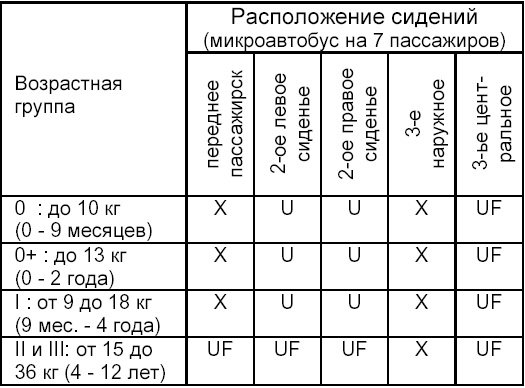
Child Restraint Compatibility Chart
U: Suitable for universal-category child restraints in this weight group. UF: Suitable for universal-category forward-facing child restraints in this weight group. X: Seating position not suitable for children in this weight group.
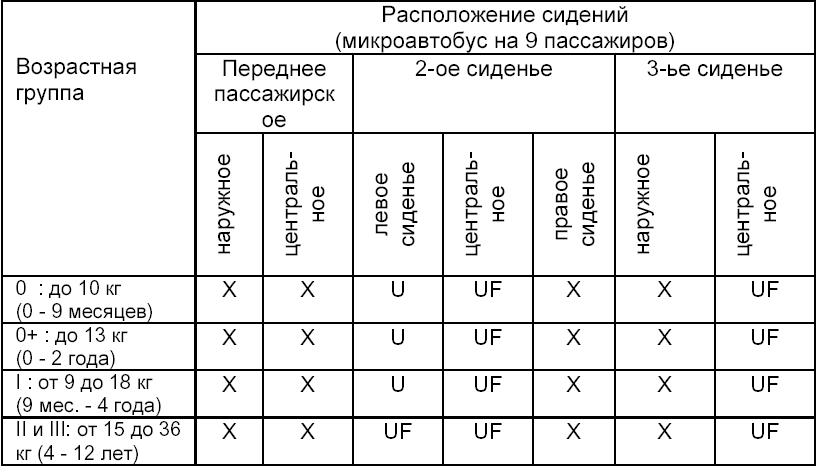
Child Restraint Compatibility Chart

Child Restraint Compatibility Chart
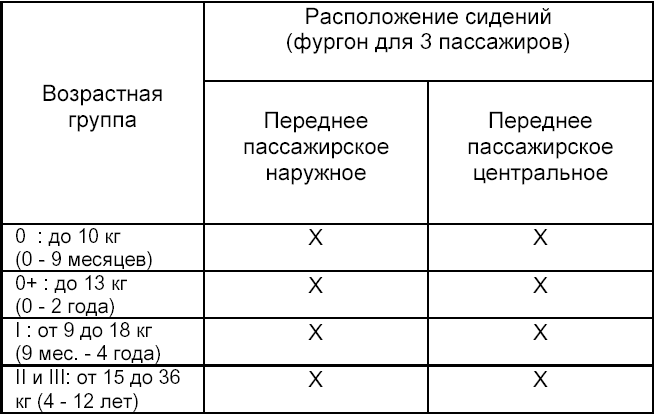
Child Restraint Compatibility Chart
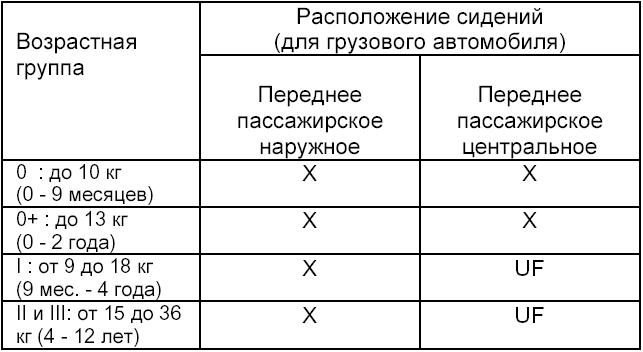
Child Restraint Compatibility Chart
Test yourself
A quick Hyundai H1 quiz: every answer comes with an explanation and a link to the manual page.