Supplemental Restraint System (SRS) Airbag (if equipped)
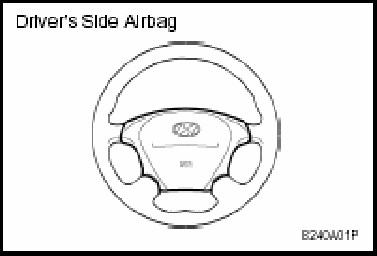
Driver's Airbag
Your Hyundai is equipped with a supplemental restraint system (airbag). The system is identified by the letters "SRS AIRBAG" on the airbag cover in the steering wheel and on the passenger-side instrument panel cover above the glove box.
The Hyundai SRS consists of airbags installed behind covers in the center of the steering wheel and in the passenger-side instrument panel above the glove box.
(The purpose of the SRS is to provide additional protection for the driver and/or front passenger, together with the seat belt system, in the event of a frontal impact of sufficient severity.)
Carefully read the SRS information on the labels on the back of the sun visor and in the glove box.
• As the name implies, the SRS is designed as a supplemental system to the three-point seat belt system and cannot replace it. Therefore, always wear the seat belts whenever the vehicle is in motion. In addition, the airbags inflate only in certain frontal collisions of sufficient severity to pose a risk of injury to the vehicle occupants.
• The SRS deploys the airbags only when the impact is severe enough and the angle of impact is less than 30° to the vehicle's longitudinal centerline. The SRS does not deploy in side, rear, or rollover impacts. In addition, the airbags deploy only once. Therefore, the seat belts must always be worn.
• For maximum protection in all types of accidents, all occupants, including the driver, should always wear their seat belts, regardless of whether an airbag is installed at their seating position, to minimize the risk of serious injury or death in an accident. While the vehicle is in motion, do not sit too close to or lean toward the airbag.
• To provide protection in a collision, the SRS airbag system must deploy very quickly.
If an occupant is not in the proper position because the seat belt is not worn, the airbag may strike the occupant with considerable force, resulting in serious or fatal injury.
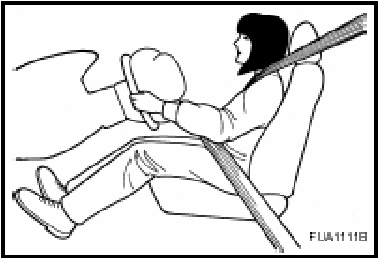
SRS Components and Functions
The SRS consists of the following components:
• Driver's airbag
• Passenger's airbag
• SRS warning light (SRI)
• SRS control module (SRSCM)
The SRSCM constantly monitors all components while the ignition switch is in the "ON" position to determine whether the frontal or near-frontal impact is severe enough to deploy the airbags.
The SRI warning light on the instrument cluster will flash for approximately 6 seconds after the ignition switch is turned to the "ON" position or after the engine is started, and then the SRI will go off.
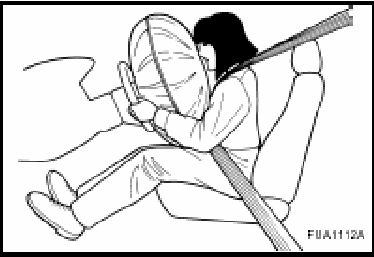
The airbag modules are located in the center of the steering wheel and in the passenger-side instrument panel above the glove box.
When the SRSCM detects a severe impact to the front of the vehicle, it automatically initiates inflation of the airbags.

After deployment, the seams pre-cut directly into the soft cover separate under the pressure of the inflating airbag. Further opening allows the airbags to fill completely with air.
A fully inflated airbag, in combination with a properly worn seat belt, slows the forward movement of the driver or passenger, reducing the risk of head and chest injury.
After full inflation, the airbag immediately begins to deflate, allowing the driver a forward field of vision.

Passenger's Airbag
 CAUTION:
When installing a liquid air freshener container inside the vehicle, do not place it near the instruments or the airbag cover surface. If the air freshener leaks onto the instruments, airbag, or blower, it may damage them. If the air freshener does leak onto these items, wash it off immediately with water.

Inflated Driver's and Passenger's Airbags
• When the SRS deploys, a loud noise and fine dust may be present in the vehicle. This is normal and not harmful. However, the fine dust produced when the airbag inflates may cause skin irritation. After an accident in which the airbags have deployed, be sure to thoroughly wash your hands and face with warm water and mild soap.
• The SRS can operate only when the ignition switch is in the "ON" position. If the SRS SRI does not come on, stays on continuously, flashes for 6 seconds after the ignition switch is turned to "ON" or after the engine is started, or comes on while driving, the SRS is not functioning properly. If this occurs, have your vehicle inspected by a Hyundai dealer immediately.
• Before replacing a fuse or disconnecting the battery terminal, turn the ignition switch to the "LOCK" position or remove the ignition key. Never remove or replace the airbag fuse(s) while the ignition switch is in the "ON" position. Failure to observe this warning will cause the SRI warning light to illuminate.
Test yourself
A quick Hyundai H1 quiz: every answer comes with an explanation and a link to the manual page.