Fuel filler door
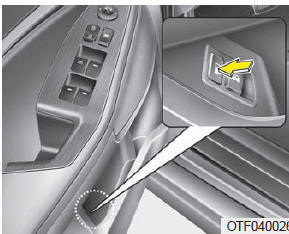
Opening the Fuel Filler Door
The fuel filler door must be opened from inside the vehicle by pulling the fuel filler door release lever.
NOTICE
If the fuel filler door does not open because it is frozen, tap or gently press on the door to break the ice and free it. Do not force the door open.
If necessary, spray a de-icing fluid around the door (do not use engine coolant antifreeze), or park the vehicle in a warm place and let the ice melt.
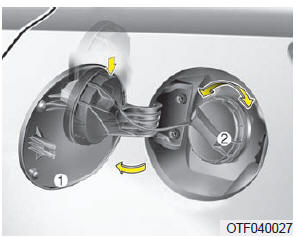
- Switch off the engine.
- To open the fuel filler door, pull the release lever.
- Open the fuel filler door (1) fully.
- To remove the fuel cap (2), turn it counterclockwise.
- Refuel.
Closing the Fuel Filler Door
- To install the fuel cap, turn it clockwise until it clicks once. This indicates that the cap is properly tightened.
- Close the fuel filler door and push it lightly to make sure it is fully closed.
- Pressurized fuel may spray out and splash onto clothing and skin, creating a risk of fire and burns. Always remove the fuel cap carefully and slowly. If the cap releases vapor or makes a hissing sound, wait until the release stops before opening the cap fully.
- Do not top off the tank after the fuel pump nozzle has automatically shut off.
- Always make sure the fuel cap is properly installed to prevent fuel spillage in the event of an accident.
- Gasoline vapors are dangerous. Before refueling, always turn off the engine. Do not smoke, and eliminate any sparks or flames near the filling point.
- Never operate the vehicle without the fuel cap in place. Flammable vapors or gasoline could leak out and create a dangerous situation in the event of a collision or pileup.
 " indicator will come on.
WARNING - Hazards while refueling
Motor fuel is a flammable liquid. When refueling, follow these guidelines carefully. Failure to follow these guidelines may expose you to serious injury, severe burns, or even death from fire or explosion.
- Read and follow all warnings at the gas station.
- Before refueling, locate the emergency fuel shutoff switch, if equipped, at the gas station.
- Before touching the fuel nozzle, eliminate any risk of dangerous static discharge by touching another metal part of the engine, at a safe distance from the filler neck, the pump nozzle, or any other source of gasoline.
- Do not get back into the vehicle after you have started refueling, as you could generate a static discharge by touching, rubbing, or sliding against items or fabrics (polyester, satin, nylon, etc.) that can build up static electricity. A static discharge can ignite gasoline vapors and cause rapid combustion. If you must get back into the vehicle, you should again eliminate any risk of dangerous static discharge by touching a metal part of the vehicle, away from the filler neck, the pump nozzle, or any other source of gasoline.
- If you use a portable container, make sure to ground the container before filling it. A static discharge from the container can ignite fuel vapors and cause a fire. Once you start refueling, stay in contact with the vehicle until refueling is complete.
Use only plastic containers designed for transporting and storing fuel.
Electrical current or electrical interference from a cell phone could ignite fuel vapors and cause a fire.
- Be sure to refuel as described under "Fuel Requirements" in Chapter 1.
- If the fuel cap must be replaced, use only a Kia cap or the equivalent specified for your vehicle. An improper cap can cause serious malfunction of the fuel system or the emissions control system.
- Do not spill gasoline on the exterior surfaces of the vehicle. Any gasoline spill can damage painted surfaces.
- After refueling, make sure the fuel cap is securely installed to prevent fuel spillage in the event of an accident.
Test yourself
A quick Kia Optima DL3 quiz: every answer comes with an explanation and a link to the manual page.