Towing
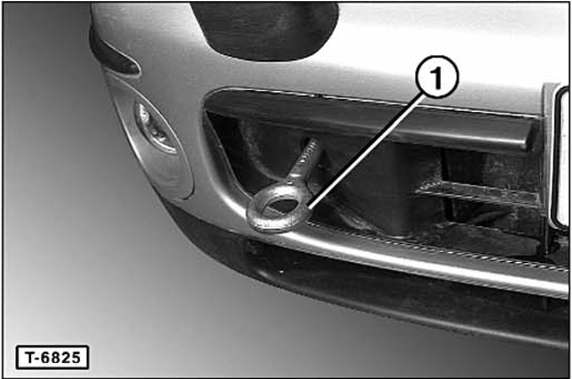
Rear towing eye

The towing eye is located with the onboard tools and, if required, is screwed into the hole at the front right - 1 - or at the rear right - 2 -. Depending on the model, the rear hole may be covered with a plastic flap.
Switch the ignition on so that the steering wheel is not locked, the brake lights work and the horn and windshield wipers can be operated.
Put the transmission in neutral; on vehicles with automatic transmission, move the selector lever to position "N".
Switch on the hazard warning lights on both the towing and the towed vehicle.
Since the brake booster and power steering only work with the engine running, the brake pedal and steering wheel must be operated with greater force when the engine is not running!
Using a towing bar is recommended.
The risk of rear-end collision is high when using a towing rope. A towing rope should be elastic to protect both the towing and the towed vehicle. Only use synthetic fiber ropes or ropes with elastic intermediate links.
Maximum towing speed: 50 km/h! Maximum towing distance: 25 kilometers!
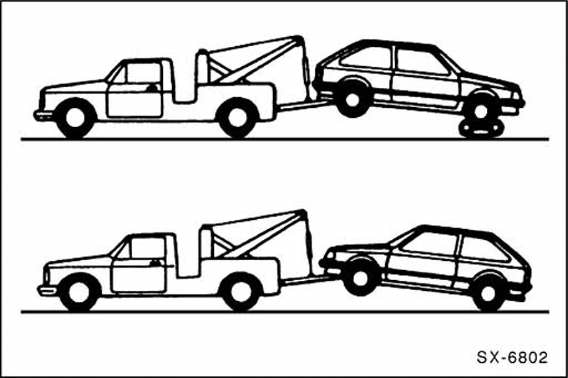
For long distances, lift the front of the vehicle with a tow truck or load the vehicle onto a flatbed truck.
Without transmission oil, the vehicle may only be towed with the drive wheels raised.
Warning: The Bravo/Brava must not be towed by bump-starting, as this risks damaging the catalytic converter.
Bump-starting is also not possible on vehicles with automatic transmission.Test yourself
A quick Fiat Bravo quiz: every answer comes with an explanation and a link to the manual page.