Powertrain
Leak Check. Diagnosis and Testing
In this manual: Powertrain
16steps
~101min
4/5difficulty
1special tools
Done 0 of 16
Leak Check
- With the vehicle in NEUTRAL, raise the vehicle on a hoist.
Refer to: Jacking and Lifting - Overview (100-02 Jacking and Lifting, Description and Operation). - Inspect the gasket and sealing surfaces for leaks.
- Trace the transmission fluid leak to its highest point.
- Clean the suspected leak area.
- Lower the vehicle.
- Remove the transmission fluid fill plug.
- Add leak detection dye to the transmission fluid. Use 1 fl oz (30 ml) of dye solution for every 4 qt (3.8 L) of transmission fluid.
- Road test the vehicle for a minimum of 1 mile, with at least one TCC application.
- With the vehicle in NEUTRAL, raise the vehicle on a hoist.
Refer to: Jacking and Lifting - Overview (100-02 Jacking and Lifting, Description and Operation). - If the leak source is obvious, repair as necessary.
- After repair, clean the affected area.
Torque Converter Housing Leak
Add 1 fl oz (30 ml) of leak detection dye solution for every 4 quarts (3.8 L) of transmission fluid.
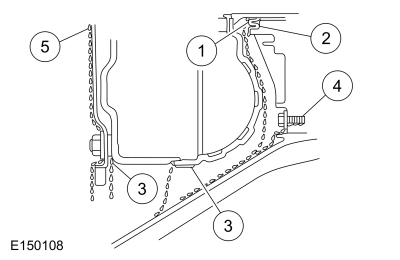
- Leaks from the torque converter housing can originate from several locations. The paths by which transmission fluid reaches the bottom of the torque converter housing are shown in the illustration. The following 5 steps correspond to the numbers in the illustration.
- A transmission fluid leak past the torque converter hub seal lip will tend to travel along the drive hub and onto the rear of the torque converter. Except in cases of complete seal failure, a transmission fluid leak past the seal lip will be deposited on the inner side of the torque converter housing only, near the outside diameter of the housing.
- A transmission fluid leak along the outside diameter of the torque converter hub seal and housing will follow the same path as fluid leaking past the inside diameter of the torque converter hub seal.
- A transmission fluid leak from the weld seam of the torque converter cover or the torque converter stud-to-flexplate weld will appear on the outside diameter of the torque converter at the rear of the flexplate and on the torque converter housing only next to the flexplate. If the torque converter stud-to-flexplate weld is suspected of leaking, remove the torque converter and perform a pressure test.
- A transmission fluid leak from the bolts inside the torque converter housing will run down the rear of the torque converter housing. The leak may be due to loose or missing bolts.
- Engine oil leaks from the rear main oil seal.
- Remove the torque converter.
- Using black light, inspect the torque converter housing. Check for traces of dye on the pump bolts, the pump seal, and the torque converter hub seal. Repair as necessary.
- If the leak source is not obvious, continue with this procedure to check the torque converter for leaks.
- Place the torque converter in an arbor press. Support the torque converter on the mounting pads.
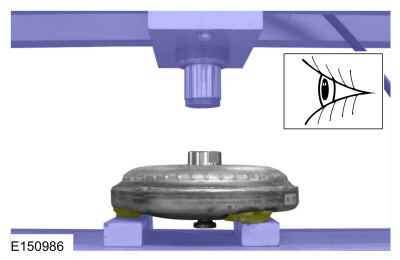
- Install the torque converter leak detector (307-421) into the torque converter hub.
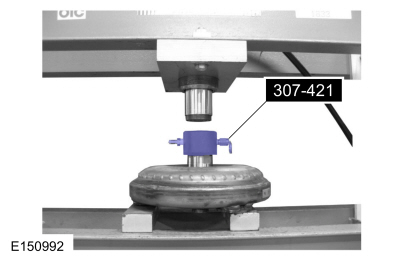
- Secure the press. Apply sufficient force with the press to seal the torque converter leak detector (307-421) into the torque converter hub.
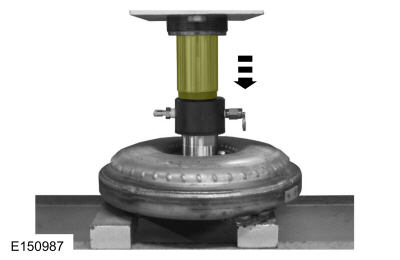
- Connect the compressed air supply to the torque converter leak detector (307-421).
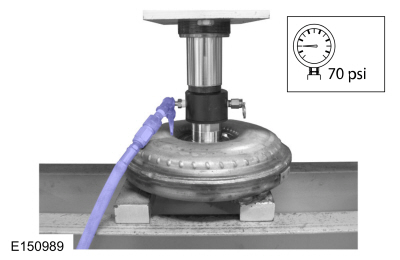
- Inspect the welds and seams of the torque converter hub for leaks while applying air to the valve. A soap solution may be applied around these areas to aid diagnosis. If any leaks are present, install a new torque converter.
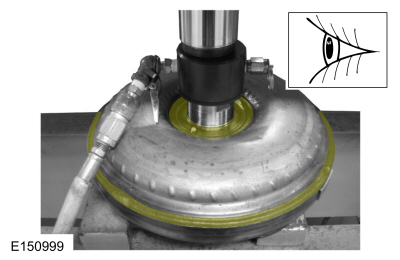
- Inspect the stud or mounting pad and the balance weight for leaks. Inspect the welds. A soap solution may be applied around these areas to aid diagnosis. If leaks are present, install a new torque converter.
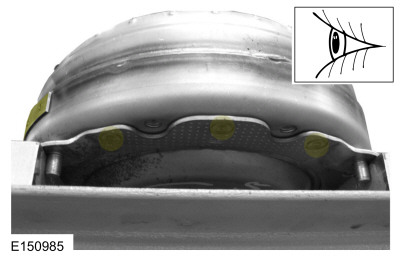
- After repairing leaks, remove any remaining transmission fluid dye from the serviced areas.
TCC Hydraulic Circuit Leak Paths
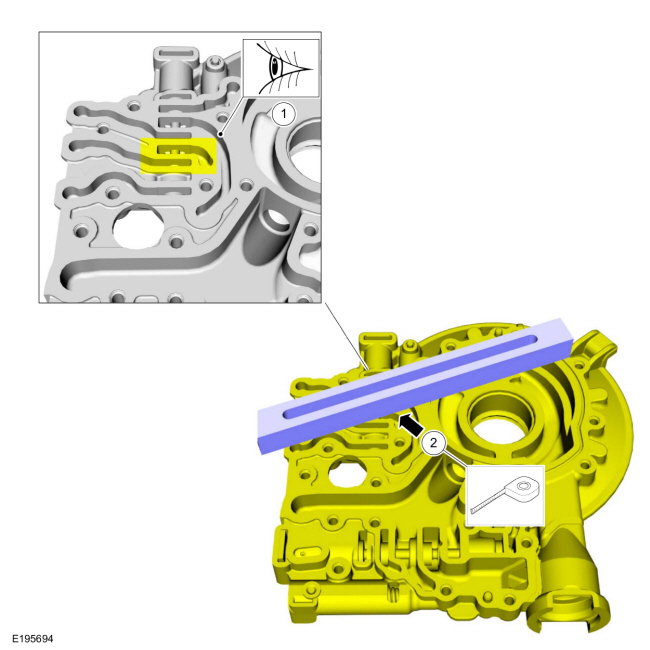
- Inspect the aluminum pump body near the TCC regulator valve for scratches or contamination.
- Using a straightedge, inspect the aluminum pump body near the TCC regulator valve for surface distortion that could cause internal pressure leaks. Inspect the hydraulic passages for blockage.
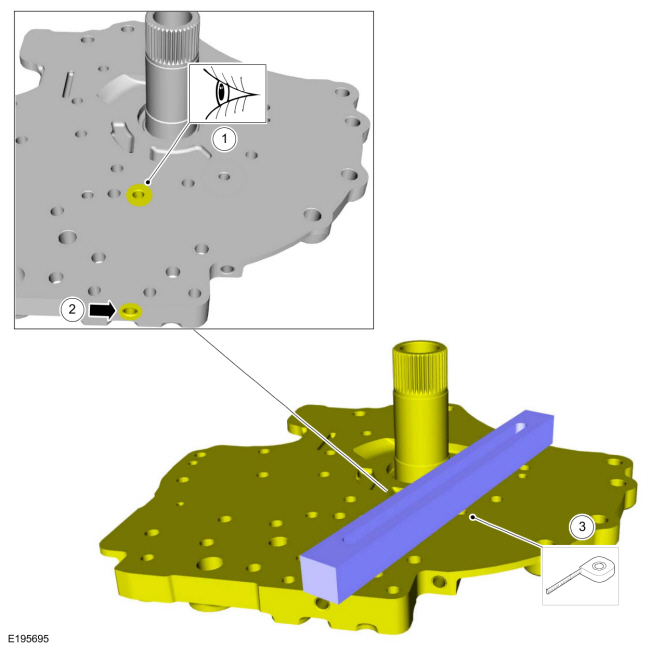
- Inspect the stator support hydraulic passage for scratches or blockage.
- Inspect the stator support cup plug and make sure it is installed correctly, not loose, and not missing.
- Using a straightedge, inspect the stator support hydraulic passage for surface distortion that could cause internal pressure leaks. Inspect the hydraulic passages for blockage.
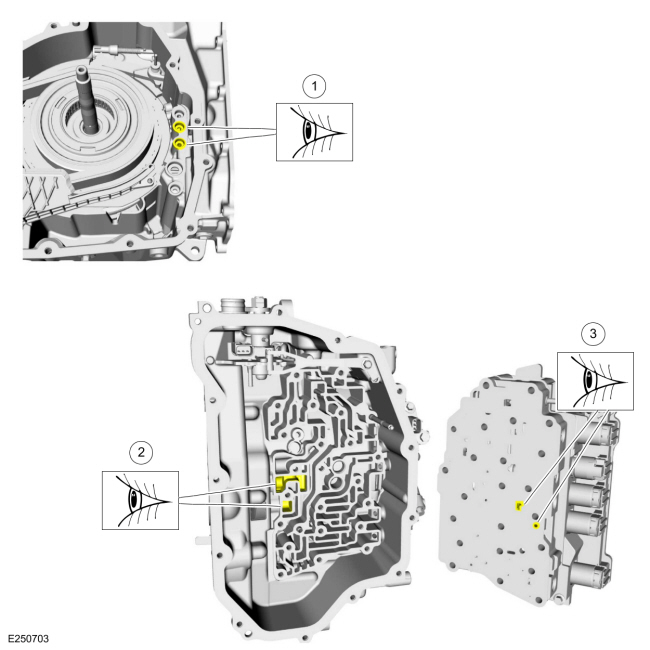
- Inspect the hydraulic passages and the pump-to-transmission case seals.
- Inspect the transmission case and the main control hydraulic passages.
- Inspect the main control hydraulic passages.
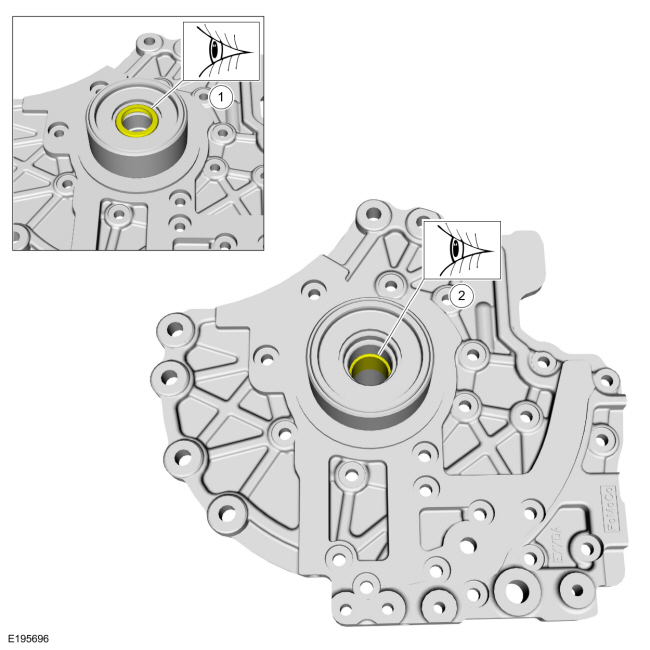
- Inspect the turbine shaft seal on the stator support for wear or damage that could cause leaks.
- Inspect the turbine shaft support bushing for wear or scoring that could cause pressure leaks.
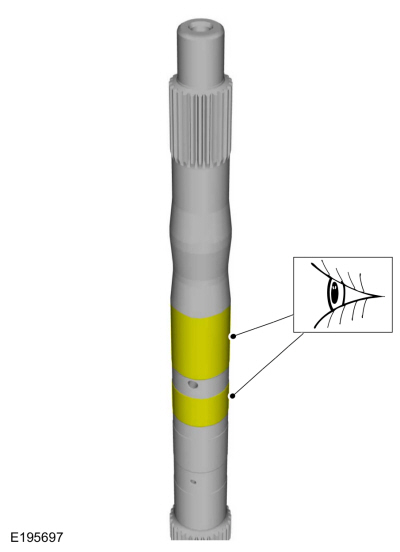
- Inspect the turbine shaft seal and the shaft support bushing sealing surfaces on the turbine shaft for wear or scoring that could cause pressure leaks.
Test yourself
A quick Ford Fusion quiz: every answer comes with an explanation and a link to the manual page.
Was this page helpful?