Fuel Line Inspection and Replacement
See the warnings at the beginning of the Fuel System Pressure Relief section.
PROCEDURE
1. Before servicing the fuel lines or their threaded connections, relieve the fuel system pressure (refer to Fuel System Pressure Relief section).
2. The fuel lines of the fuel system are routed between the fuel tank and the engine compartment. The steel tubes and flexible fuel hoses are secured to the underbody by clips and screw fasteners. Each time the vehicle is raised for any purpose (for example, to inspect or replace exhaust system components), take the opportunity to check the condition of the fuel lines and their connections. Carefully inspect all fuel hoses and tubes for cracks, kinks, deformation and other damage.
3. If signs of internal contamination or restricted flow are found, remove the affected section of the fuel line and blow it out with compressed air. Be sure to also check the condition of the fuel pump inlet strainer (refer to Fuel Pump Removal and Installation section).
Steel Tubes
PROCEDURE
1. Use only high-strength steel tube sections from established manufacturers as replacement parts.
2. Note that copper and aluminum tubes cannot withstand the vibration loads that occur during vehicle operation.
3. Remember that fuel lines on models equipped with a fuel injection system must withstand high internal pressure.
4. Metal tube sections equipped with threaded connector fittings are often available from genuine automotive accessory dealers. When loosening and tightening threaded connections, use two wrenches to prevent the mating part from turning. Be sure to check the condition of the sealing O-rings used for the connections. Replace worn or mechanically damaged O-rings immediately. Use only genuine parts as replacement components whenever possible.
Flexible Hoses
When replacing fuel hoses, use only genuine components rated for high internal pressure.
Flexible fuel hoses must be routed at least 10 cm (4 in) away from exhaust system components and at least 25 cm (10 in) away from the catalytic converter. Make sure the fuel lines do not contact body components or suspension components. The minimum allowable clearance is 6.3 mm (0.25 in).
Removal and Installation
PROCEDURE
1. Relieve the fuel system pressure (refer to Fuel System Pressure Relief section).
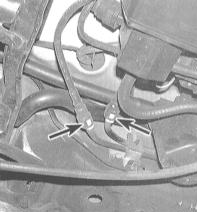
2. Release the fuel line section to be removed from the intermediate retaining clips securing it to the underbody. Note: Quick-connect fittings are not serviceable. If a quick-connect fitting fails, the affected line section must be replaced as an assembly.
3. Install in the reverse order of removal. Be sure to replace the O-rings on the threaded connections. Before snapping on quick-connect fittings, make sure the locking tabs are properly aligned with the mating grooves.
Repair
Damaged fuel line sections (tubes or hoses) must be removed and replaced with new genuine parts.
Test yourself
A quick Honda Accord quiz: every answer comes with an explanation and a link to the manual page.