Fuel Pump Pressure Test
PROCEDURE
1. Remove the fuel pulsation damper (see Relieving Fuel System Pressure section) and install the pressure gauge adapter fitting in its place.

2. Without starting the engine, turn the ignition switch on. Make sure the A/C is off. The fuel pump will run for a couple of seconds; fuel pressure should rise (check the gauge reading) and stabilize.
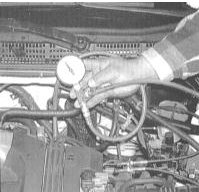
3. Start the engine and warm it up at idle to normal operating temperature. Compare the pressure gauge reading with the Specifications. Now disconnect the vacuum hose from the fuel pressure regulator. The pressure gauge reading should rise immediately, again to the value specified in the Specifications.
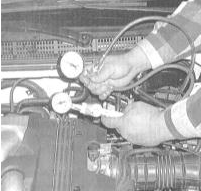
4. If the pressure does not rise when the vacuum hose is disconnected, use a hand-operated vacuum pump to apply a vacuum of 305 ÷ 355 mm Hg to the regulator. If the pressure now drops, check the vacuum source for proper operation. Otherwise, replace the regulator.
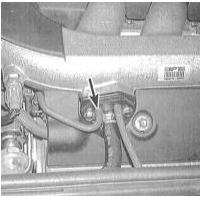
5. If the fuel pressure measurement results are outside the permissible range, perform the following checks:
a) If the pressure is excessively high, check the vacuum supply to the regulator. Vacuum level should change with engine speed. If vacuum is present, check the condition and patency of the fuel return hose/pipe. If the return line is in good condition, replace the regulator.
b) If the pressure is excessively low, replace the fuel filter to eliminate the possibility of clogging. The filter is built into the fuel pump/fuel level sender assembly and is removed together with it (see Fuel Pump Removal and Installation). If replacing the filter does not correct the situation, install a shut-off valve in the line between the regulator and the fuel return line. (Instead of a valve, a length of flexible hose can be installed, which can easily be pinched off with pliers or a clamp.) Start the engine and slowly close the valve or pinch the hose. If the pressure rises above 3.3 kgf/cm², replace the regulator (see Fuel Pressure Regulator Removal and Installation). CAUTION: Do not allow the pressure to rise above 4.2 kgf/cm². Do not pinch the fuel return line itself to avoid the risk of damage.
c) If the pressure remains excessively low even with the return line closed, check the injector(s) for leaks (see Fuel Pipe and Fuel Injector Removal and Installation). Also check the fuel pump for proper operation.
6. After completing the check, relieve the fuel system pressure (see Fuel System Pressure Relief) and disconnect the pressure gauge.
Test yourself
A quick Honda Accord quiz: every answer comes with an explanation and a link to the manual page.