Oil Pump
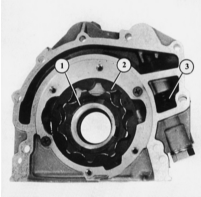
Oil pump of 5-cylinder engine.
1 – inner rotor; 2 – outer rotor; 3 – relief valve.
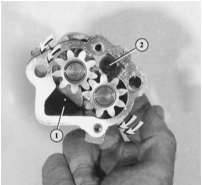
The removed oil pump of the 4-cylinder engine consists of two intermeshing gears (arrows indicate the directions of rotation). Engine oil is drawn in through chamber (1), and pressurized oil passes through the pressure chamber (2) to the lubrication points in the engine.
At full load, 30 L of oil pass through the engine per minute:
In the 4-cylinder engine, the intermediate shaft mentioned above drives the distributor shaft, which transmits rotation to the oil pump.
In the 5- and 6-cylinder engines, the oil pump is located at the front of the crankshaft, in the direction of travel, and is driven directly by it.
The operating principle of the oil pumps also differs between the various Audi engines.
The 4-cylinder engine is equipped with a gear-type oil pump. Two meshing gears of identical size simply transfer oil from the intake side to the pressure side.
The 5- and 6-cylinder engines are lubricated by an Eaton-type rotor oil pump. Here the outer rotor is located inside the inner rotor (both are rotors). Due to the special shape and the offset arrangement of the inner rotor, new cavities form continuously as both rotors turn together, and in these cavities a reduced pressure prevails. The rotating rotors draw oil to the outlet side of the pump and from there into the lubrication passages.
Test yourself
A quick Audi 80 quiz: every answer comes with an explanation and a link to the manual page.