Tire Markings
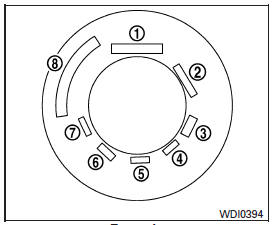
Example
U.S. federal law requires tire manufacturers to provide standardized information on the sidewall of all tires. This information identifies and describes the tire's key characteristics and also provides the Tire Identification Number (TIN) for safety standard certification. The Tire Identification Number can be used to identify the tire in the event of a recall.

Example
Tire size (example: P215/65R15 95H)
- P: The "P" indicates that the tire is designed for passenger vehicles (this information is not shown on all tires).
- Three-digit number (215): this number indicates the tire width in millimeters, measured from sidewall to sidewall.
- Two-digit number (65): this number, known as the aspect ratio, indicates the ratio of the tire's height to its width.
- R: The "R" identifies a radial tire.
- Two-digit number (15): this number is the wheel or rim diameter in inches.
- Two- or three-digit number (95): this number represents the tire's load index. It indicates the weight each tire can carry. This information may not appear on all tires, as it is not required by law.
- H: The tire's speed rating. Do not drive the vehicle at speeds above the tire's rated speed.
Example
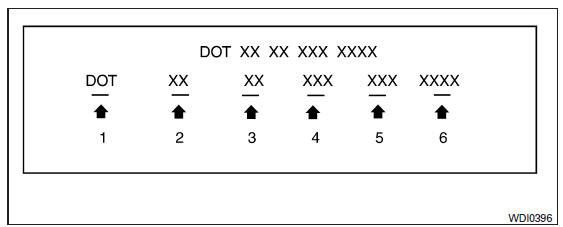
Tire Identification Number (TIN) for a new tire (example: DOT XX XX XXX XXXX)
- DOT: "Department of Transportation" (U.S. Department of Transportation). The symbol may be placed above, below, or to the left or right of the Tire Identification Number.
- Two-digit code: manufacturer identification.
- Two-digit code: tire size.
- Three-digit code: tire type code (optional).
- Three-digit code: date of manufacture.
- Four digits representing the week and year the tire was manufactured. For example, the digits 3103 represent the 31st week of 2003. If you cannot see these numbers, look for them on the other sidewall of the tire.
Tire Construction and Materials
The number of plies or layers of rubber-coated fabric in the tire. Tire manufacturers must also state the materials used in the tire, including steel, nylon, polyester, and others.
Maximum Permissible Inflation Pressure
This number indicates the maximum air pressure that can be applied to the tire. Never exceed the maximum permissible inflation pressure.
Maximum Load
This number indicates the maximum load in kilograms and pounds that the tire can carry. When replacing the vehicle's tires, always use a tire with the same maximum load rating as the tires originally installed at the factory.
Terms "tubeless" (without inner tube) and "tube type" (with inner tube)
Indicates whether the tire requires an inner tube ("tube type") or not ("tubeless").
"Radial" term
The term "radial" is present if the tire construction is radial.
Manufacturer or brand name
The manufacturer name or brand is indicated.
Other tire terminology
In addition to the many terms defined in this chapter, the "Outward-facing sidewall" is (1) the white sidewall, which has white lettering or shows the manufacturer, brand or model name molded in relief compared with the same marking on the other sidewall of the tire, or (2) the outer sidewall of an asymmetric tire, one side of which must always face outward when mounted on a vehicle.
Test yourself
A quick Nissan Altima quiz: every answer comes with an explanation and a link to the manual page.