Tire pressure
Tire Pressure Monitoring System This vehicle is equipped with a Tire Pressure Monitoring System (TPMS). It monitors the pressure of all tires except the spare tire.
When the Low Tire Pressure Warning Light comes on and the message "Low Tire Pressure - Add Air" appears on the multi-function display, one or more of your tires are significantly under-inflated.
The tire pressure monitoring system is only active when the vehicle is driven at speeds above 25 km/h. In addition, this system may not detect a sudden drop in tire pressure (for example, a tire blowout while driving).
For more information, refer to the sections "Low Tire Pressure Warning Light" in the "Instruments and Controls" chapter, "Tire Pressure Monitoring System" in the "Starting and Driving" chapter, and "Flat Tire" in the "In Case of Emergency" chapter.
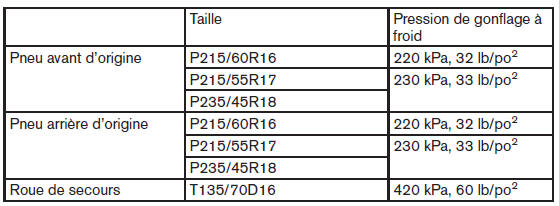
Tire Inflation Pressure Check your vehicle's tire pressure often (including the spare tire) and always before a long trip. The recommended tire pressure is shown on the FMVSS/NSVAC certification label or on the tire and loading information label under "Cold Tire Pressure". The tire and loading information label is located on the center pillar on the driver's side.
Tire inflation pressures should be checked regularly because:
- most tires naturally lose some air over time;
- tires can lose air suddenly if they run over potholes or other objects, or if the vehicle hits a curb while parking.
Tire inflation pressures should be checked when the tires are cold. Tires are considered COLD if the vehicle has been parked for three hours or more or has been driven less than 1.6 kilometers (1 mile) at moderate speed.
The "Tire Pressure Monitoring System with Easy Inflation Alert" provides visual and audible signals outside the vehicle when inflating tires to the recommended COLD tire pressure. For more information, refer to the "Tire Pressure Monitoring System with Easy Inflation Alert" section in the "Starting and Driving" chapter.
Improper tire pressure, including underinflation, can reduce tire life and affect your vehicle's handling.
WARNING
- Underinflated or overinflated tires can burst and cause an accident.
- The Gross Vehicle Weight Rating (GVWR) is shown on the FMVSS/NSVAC certification label.
The vehicle's load index is shown on the tire and loading information label. Do not load your vehicle beyond its capacity.
Overloading your vehicle can reduce tire life, compromise safe vehicle operation through premature tire failure or poor handling, and cause serious accidents. Loading beyond the specified capacity may also cause other vehicle components to fail.Tire and Loading Information Label

- Seating capacity: maximum number of occupants that can be seated in the vehicle.
- Original tire size: the size of the tires originally installed on the vehicle at the factory.
- Cold tire pressure: inflate the tires to this pressure when they are cold. Tires are considered COLD if the vehicle has been parked for three hours or more, or has been driven less than 1.6 km (1 mile) at moderate speed.
Checking tire pressure
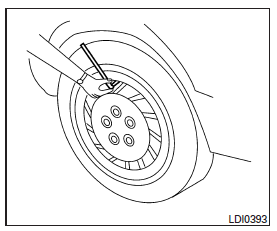
- Remove the valve stem cap from the tire.
- Press the tire pressure gauge straight onto the valve stem. Do not press too hard or push the valve stem to the side, or air will escape. If you hear air escaping while checking the pressure, reposition the gauge to eliminate the leak.
- Remove the tire pressure gauge.
- Read the tire pressure on the gauge stem and compare it to the specification shown on the tire and loading information label.
- Inflate the tire if necessary. If the tire is overinflated, briefly press the valve core pin with the end of the gauge stem to release pressure.
Test yourself
A quick Nissan Altima quiz: every answer comes with an explanation and a link to the manual page.