Wheels and Tires
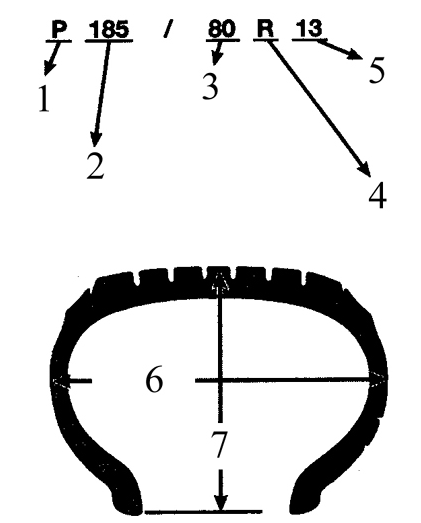
Metric Tire Size Coding
1. Tire type (P – passenger, T – temporary spare, C – commercial)
2. Tire section width (in millimeters) (185, 195, 205, etc.)
3. Aspect ratio (tire section height to section width) (70, 75, 80)
4. Tire construction (R – radial, B – bias-belted,
D – diagonal)
5. Rim diameter (in inches) (13, 14, 15)
6. Tire section width
7. Tire section height
All vehicles described in this manual are equipped with radial metric tires with steel or textile cords. Using tires of other sizes or types may significantly affect handling and ride comfort. Do not install tires of different types on the vehicle, for example radial and bias-ply, as this may seriously affect vehicle handling. It is recommended to replace both tires on the front or rear axle at the same time. If only one tire is replaced, make sure the new tire is the same size, type and tread pattern as the other.
Since tire pressure has a great effect on vehicle handling and tire wear, tire pressure must be checked at least once a month or before long trips (see Subsection 2.4).
Replace the wheel if it is bent or deformed, if the tire leaks air, if the wheel bolt holes are elongated, if the wheel is rusted, out of round, or if the wheel nuts cannot be tightened sufficiently. Repairing the wheel by welding or peening is not recommended.
Wheel balance is important for vehicle handling, braking and high-speed driving. Unbalanced wheels can impair handling and reduce tire life. When a new tire is mounted on a rim, the wheel must be balanced at a workshop with the necessary equipment.
Test yourself
A quick Toyota Corolla quiz: every answer comes with an explanation and a link to the manual page.