Washing the vehicle
Washing your Volkswagen ID.3 vehicle regularly prevents exposure to contamination, which may damage the paint.
Matte-finish vehicles require special care due to the particular properties of the paint.
To ensure that your vehicle is washed correctly and appropriately, note the following information→ , → .
WARNING
After the vehicle has been washed, the braking efficiency may be delayed due to damp or( in the winter) icy brake discs and brake pads. This will increase the braking distance. This can cause a loss of vehicle control, accidents, and serious or fatal injuries.
Press the brake pedal carefully several times to dry the brakes and clear the ice from them, as long as the visibility, weather, road, and traffic conditions permit.
NOTICE
Improper car washes can increase the risk of severe Volkswagen ID.3 vehicle damage.
Always follow the steps described for vehicle care and cleaning.
Always follow the manufacturer's instructions.
Do not wash the vehicle in direct sunlight.
NOTICE
Wet vehicle components may freeze in cold weather, which will stop them from working properly.
In cold weather, never direct a jet of water at locks, doors, or the trunk lid.
Removing stubborn dirt on matte paint
Soak insects or bird excrement that have adhered to the surface immediately with water and spray with a special cleaner for matte paint.
Remove tar splashes on the paint surface with commercially available tar removers. Residue must not be removed by intensive rubbing.
Remove tree resin and rust particles with special cleaner for matte paint and a cleaning clay bar. Slide the cleaning clay bar over the affected areas without pressing down on it.
Spray grease and fingerprints with matte paint finish spray and rub with a soft microfiber cloth.
Automatic car washes
If your Volkswagen ID.3 vehicle has matte paint, never select a wash program with wax or drying aids.
If your vehicle has matte paint, only use textile car washes, never brush car washes.
For vehicle with decorative and protective decals, never use a wash package with hot wax.
Choose car washes without brushes.
Also ensure that the underside of the vehicle is washed regularly and thoroughly to remove any residue.
Observe the information provided by the car wash operator, particularly with regard to attachments on the Volkswagen ID.3 vehicle, e.g. spoilers →
 .
The windows are closed and the outside mirrors are folded in.
The anti-roll function must be deactivated .
The electronic parking brake is switched off.
Vehicles with steering lock: If the vehicle is mechanically towed in the car wash, the steering must not be locked (→ Steering) .
The windshield wiper and the rain/light sensor (→ Rain/light sensor) are switched off.
Auto Hold is switched off.
If applicable: the roof antenna has been removed.
NOTICE
Car washes which mechanically scan contours may damage the Volkswagen ID.3 vehicle and attachments, e.g. spoiler.
Follow the information provided by the car wash operator, especially if there are attachments on the vehicle.
Pressure washers
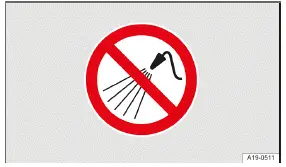
Fig. 1 Warning sign: Do not use pressure washers in the marked area.
Never use rotating nozzles. Observe the manufacturer's instructions.
Only use water up to maximum +60 ºC (+140 ºF).
Move the water jet evenly with a distance of at least 50 cm (20 inches) between the spray nozzle and all parts of the Volkswagen ID.3 vehicle.
Do not direct the water at the same spot for a long period of time.
If possible, do not direct the water straight at sensitive vehicle components, e.g. rubber seals, side windows, glossy trims, tires, sensors, camera lenses, decorative and protective decals.
Never clean icy or snow-covered door windows with a pressure washer.
Hand washing
Individual contaminations on the paint can be removed with a cleaning clay bar.
Clean dust and large dirt deposits from the Volkswagen ID.3 vehicle with plenty of water.
If your vehicle has matte paint, remove insects, grease spots and fingerprints with a special cleaner for matte paint. Apply the product using a microfiber cloth with gentle pressure.
Clean the vehicle with a soft sponge, a washing glove, or a washing brush with light pressure. Start at the roof, and continue to work from the top down. Only use a cleansing shampoo on stubborn dirt.
If your vehicle has matte paint, clean from top to bottom with a neutral cleansing shampoo and a microfiber cloth. Wash the microfiber cloth thoroughly at frequent intervals.
Clean the wheels and side members with a clean sponge.
Rinse with plenty of water.
Let the Volkswagen ID.3 vehicle air dry. Remove water residue with a leather cloth.
Notes on the high-voltage system
Before washing the vehicle, end the charging process and fully close the charging socket.
Pay attention to the safety warning for the pressure washer→  .
WARNING
Using a pressure washer incorrectly may damage the high-voltage system and the 12 V vehicle electrical system.
This can cause accidents and serious injuries or death.
Never point the jet of the pressure washer directly at the orange high-voltage cables, at components of the highvoltage system or at the 12 V vehicle electrical system.
NOTICE
Washing the Volkswagen ID.3 vehicle incorrectly can damage the paint surface and destroy the matte paint finish.
Never use washing programs with wax treatment.
Only use cleaning agents free of solids and abrasives, such as cleansing shampoos or insect removers, for cleaning purposes.
Do not use insect sponges or rough sponges.
NOTICE
The plenum chamber drain can be blocked by leaves and dirt. Water that cannot drain may leak into the Volkswagen ID.3 vehicle interior and cause damage.
Remove leaves and other loose objects with a vacuum or by hand.
Have the area under the perforated cover cleaned at regular intervals by an authorized Volkswagen dealer or authorized Volkswagen Service Facility.
Ensure that large amounts of water do not collect in the plenum chamber, for example if you use a pressure washer.
Only wash the vehicle in facilities specifically designed for that purpose. This will reduce the risk of water contaminated with oil from entering the sewer system.
- Exterior care and cleaning
- Care and cleaning of the vehicle interior
Exterior care and cleaning
The following overview gives recommendations for cleaning and caring for individual Volkswagen ID.3 vehicle components.
NOTICE
Incorrect cleaning and care can cause Volkswagen ID.3 vehicle damage.
Always follow the manufacturer's instructions.
Never use cleaning objects that are too hard or abrasive.
Door windows, glass surfaces
Remove wax residue, for example from care products, with a suitable glass cleaner or the Volkswagen Genuine cleaning cloth.
Remove snow with a hand brush.
Remove ice with a plastic scraper. When doing so, scrape in one direction only.
Defrost the ice with a suitable deicer or Volkswagen Genuine deicer.
Clean wiper blades or change them if necessary.
Paint
Always treat surfaces with extreme care to prevent paint damage.
Treat light contaminants, for example deposits, insects, and cosmetics, immediately with a clean soft towel and a mild soap solution of maximum two tablespoons of neutral soap in a liter of water, or with a cleaning clay bar.
Dampen rust spots with soap solution. Then remove with a cleaning clay bar.
Have corrosion removed by suitably qualified professionals. Volkswagen recommends contacting an authorized Volkswagen dealer or authorized Volkswagen Service Facility.
In the event of paint damage, consult suitably qualified professionals and have the paint damage repaired.
Volkswagen recommends contacting an authorized Volkswagen dealer or authorized Volkswagen Service Facility.
A preservation treatment protects the Volkswagen ID.3 vehicle paint. When water no longer clearly beads up and drips ofcf lean vehicle paint, the vehicle should be retreated with a wax protectant if not earlier
For matte paint, use a soft sponge to apply a special wax for matte paint to the cleaned vehicle. Remove excess wax with a microfiber cloth.
Even if a wax protectant is applied regularly in an automatic car wash, Volkswagen recommends protecting the Volkswagen ID.3 vehicle paint at least twice a year with a suitable hard wax or Volkswagen Genuine hard wax.
Polishing is only needed if the appearance of the vehicle paint is poor and a shiny finish can no longer be achieved using protectants.
Never polish matte-finish surfaces. The surface will be permanently damaged by the paint shining.
Plenum chamber, hood space
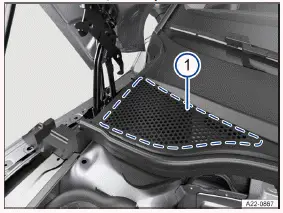
Fig. 1 Between the hood space and windshield: Plenum chamber (general example).
Perforated cover of the water box.
WARNING
Working in the hood space carries a risk of accident and fire. Serious injuries may occur.
Always note the necessary actions and the safety precautions every time before working in the hood space (→ In the engine compartment) .
If you are not familiar with this type of work, arrange for it to be done by an authorized Volkswagen dealer or authorized Volkswagen Service Facility. Volkswagen recommends contacting an authorized Volkswagen dealer or authorized Volkswagen Service Facility.
NOTICE
The plenum chamber drain can be blocked by leaves and dirt. Water that cannot drain may leak into the Volkswagen ID.3 vehicle interior and cause damage.
Have the area under the perforated cover regularly cleaned by an authorized Volkswagen dealer or authorized Volkswagen Service Facility qualified in this respect → fig. 1 (1) . Volkswagen recommends contacting an authorized Volkswagen dealer or authorized Volkswagen Service Facility.
Remove leaves or other loose objects with a vacuum or by hand→ fig. 1 , →
 .
Always have the hood space cleaned by an authorized Volkswagen dealer or authorized Volkswagen Service Facility qualified in this respect. Volkswagen recommends contacting an authorized Volkswagen dealer or authorized Volkswagen Service Facility.
Water introduced manually into the plenum chamber, for example with a pressure washer, can cause considerable Volkswagen ID.3 vehicle damage.
Sensors, camera lenses
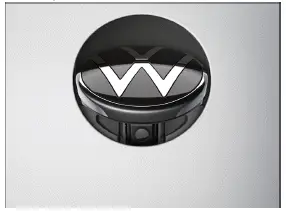
Fig. 2 In the rear of the vehicle: Rear View Camera system in the Volkswagen emblem (general example).
Clean the area in front of the sensors or the camera with a soft cloth and solvent-free cleaning solution.
Clean sensitive surfaces of the rain/light sensor and the camera window on the windshield as you wouldw indows and glass surfaces (depending on the equipment).
Remove snow with a hand brush.
Never use warm or hot water.
Defrost the ice with a suitable deicer or Volkswagen Genuine deicer.
Cleaning the Rear View Camera system
Switch the ignition on.
Move the selector lever to R.
Set the electronic parking brake.
Clean the camera lens.
Decorative and protective decals
Remove contaminants as described for paint. For matte decorative decals, use a suitable plastic cleaner or a Volkswagen Genuine plastic cleaner.
Treat the Volkswagen ID.3 vehicle every three months with liquid hard wax. The vehicle must be free of dirt and dust before treating. Apply using only clean, soft microfiber cloths. Do not use hot wax, even in a car wash.
Hard contaminants: remove gently with ethyl alcohol and then wash with warm water.
The durability and coloring on decorative and protective decals can be affected by environment conditions, such as sunlight, moisture, air pollution, stone chips, etc. Decorative decals may show signs of wear and aging after approximately one to three years, and protective decals after approximately two to three years. In very hot climates, the decorative decals may fade slightly within one year and the protective decals within two years.
Trims made out of chrome-plated plastic, aluminum or stainless steel
Clean surfaces with a suitable chrome and aluminum product or Volkswagen Genuine chrome and aluminum products.
Chrome-plated trims can be protected with a suitable hard wax or Volkswagen Genuine hard wax.
Headlights, taillights
Use a soft sponge saturated with a mild soap solution of maximum two tablespoons of neutral soap in a liter of water to remove dirt. Do not use cleaning solutions containing alcohol and/or solvents.
Remove stubborn dirt with a suitable chrome and aluminum product or Volkswagen Genuine chrome and aluminum products.
Wheels
Remove contaminants and road salt with plenty of water.
Clean dirty alloy wheels with a suitable rim cleaner or with Volkswagen Genuine rim cleaner. Volkswagen recommends applying a suitable hard wax or Volkswagen Genuine hard wax to the rims every three months.
Repair damaged protective paint layers immediately with a paint pen. If necessary, contact an authorized Volkswagen dealer or authorized Volkswagen Service Facility. Volkswagen recommends contacting an authorized Volkswagen dealer or authorized Volkswagen Service Facility.
Remove brake dust with a suitable rim cleaner or Volkswagen Genuine rim cleaner.
Door lock cylinder
Defrost the door lock cylinder with a suitable door lock deicer or Volkswagen Genuine deicer.
Do not use any door lock deicers with degreasing substances.
Care and cleaning of the vehicle interior
The following overview gives recommendations for cleaning and caring for individual Volkswagen ID.3 vehicle components.
NOTICE
Incorrect cleaning and care can cause vehicle damage.
Always follow the steps described for vehicle care and cleaning.
Do not use steam cleaners, brushes, hard sponges, etc.
Have tough spots removed by an authorized Volkswagen dealer or authorized Volkswagen Service Facility.
Door windows
Clean the door window with a glass cleaner.
Wipe the door windows dry with a clean chamois or a lint-free cloth.
Textiles, microfiber, leatherette
Regularly remove dirt particles that adhere to the surface with a vacuum cleaner so that the material is not permanently damaged by scrubbing.
Remove contaminants with a suitable interior cleaner or Volkswagen Genuine interior cleaner.
For grease-based contaminants such as oil, use a suitable interior cleaner or Volkswagen Genuine interior cleaner.
Blot away the dissolved grease or dye with an absorbent towel. If necessary, treat afterwards with water.
For contaminants, for example from pens or nail polish, use a suitable interior cleaner or Volkswagen Genuine interior cleaner. If necessary, treat afterward with a mild soap solution of maximum two tablespoons of neutral soap in a liter of water.
Never use leather cleaners, solvents, floor polish, shoe polish, paint remover, or other similar substances.
Never use pressure washers, steam cleaners or cooling sprays.
Natural leather
Remove fresh dirt with a cotton cloth and a mild soap solution of maximum two tablespoons of neutral soap in a liter of water. Do not let any fluids seep into the cracks.
For contaminants, for example from pens or nail polish, use a suitable leather cleaner or Volkswagen Genuine leather cleaner.
Treat dried spots with a suitable leather cleaner or with Volkswagen Genuine leather cleaner.
Remove any fresh spots of grease such as oil with an absorbent cloth.
Apply leather care to seats regularly and each time you clean. If leaving the Volkswagen ID.3 vehicle parked for long periods of time, you should cover the leather to protect it from direct sunlight.
Never treat leather with solvents, floor polish, shoe polish, paint remover, or other similar substances.
Plastic parts
Clean with a soft, damp cloth.
If a mild soap solution of maximum two tablespoons of neutral soap in a liter of water cannot remove stubborn stains, use a solvent-free plastic cleaner or Volkswagen Genuine plastic cleaner, if necessary.
Trims, decorative trims made out of chrome, aluminum or stainless steel
Clean using a clean, soft towel and mild soap solution of maximum two tablespoons of neutral soap in a liter of water, in a dust-free area.
Treat anodized surfaces with a suitable chrome and aluminum product or Volkswagen Genuine chrome and aluminum products.
Controls
Use a soft brush to remove large dirt deposits as well as any dirt that is difficult to reach.
Use a clean, soft cloth and a fairly mild soap solution of maximum two tablespoons of neutral soap in a liter of water. Fluids must not enter into the controls.
Displays and screens
Do not clean the instrument cluster display and the Infotainment system screen when they are dry.
Turn off the Infotainment system temporarily to clean it.
Use a suitable cleaning cloth or Volkswagen Genuine cleaning cloth with some water, suitable glass cleaner, or an LCD cleaner.
NOTICE
The head-up display may be dislodged from the guide rails during cleaning or be damaged by cleaning agents.
Never apply too much pressure when cleaning the head-up display.
Clean the head-up display only using a mild cleaning agent and a soft, clean cloth.
Rubber seals
Clean with a soft, lint-free cloth and plenty of water.
Treat regularly with a suitable rubber care product or Volkswagen Genuine rubber care product.
Safety belts
Unreel the safety belt completely and leave the belt unreeled.
Remove large spots of dirt with a soft brush.
Clean the safety belt with a mild soap solution of maximum two tablespoons of neutral soap in a liter of water.
Let the belt webbing dry completely, then allow the belt to retract.
WARNING
Improper cleaning of safety belts, anchorages and automatic safety belt retractors can cause damage and impair their function. This may result in serious injuries or death in the event of an accident.
Never alter the safety belts for cleaning purposes.
Never use chemical products to clean the safety belts and their components.
Do no use any corrosive fluids, solvents, or sharp objects.
Do not allow fluids and objects to enter the safety belt buckle.
Let the safety belt dry after cleaning before allowing it to retract completely.
Wood trims
Clean with a soft cloth and fairly mild soap solution of maximum two tablespoons of neutral soap in a liter of water.
Cleaning the seat covers
If dye from clothing such as denim stains the seat covers, this is not considered a defect in the Volkswagen ID.3 vehicle upholstery. If you want to clean the seat covers yourself, be aware that airbag system components and electrical connectors are installed in the seat covers. Incorrect cleaning or moisture may damage these components or cause them to malfunction. This may then cause damage elsewhere in the vehicle's electrical system →  .
Depending on the equipment, electrical components and connectors may be installed in the seat surface with seat heating, which can be damaged by incorrect cleaning or handling. This can also result in damage to other areas of the Volkswagen ID.3 vehicle electrical system.
Never use pressure washers, steam cleaners or cooling sprays.
Never soak seat covers.
Never switch on seat heating to dry the seats.
Do not use detergent pastes or mild detergent solutions.
If there is uncertainty, contact suitably qualified professionals for assistance. Volkswagen recommends contacting an authorized Volkswagen dealer or authorized Volkswagen Service Facility.
WARNING
Cleaning and caring for Volkswagen ID.3 vehicle components incorrectly can irreparably damage and impair the vehicle's safety equipment, such as the airbag modules. This may cause serious injuries in the event of an accident.
Always use approved or recommended cleaning solution.
Never use cleaning solutions that contain solvents.
Clean and maintain vehicle components only according to the manufacturer's instructions.
Needless to say, it is easier to see signs of wear and dirt caused by normal usage on bright materials in the Volkswagen ID.3 vehicle interior. These signs of use are unavoidable and also indicate the unavoidable deterioration caused by normal usage. Please follow the corresponding care instructions.