Switching the Front Passenger's Front Airbag On and Off
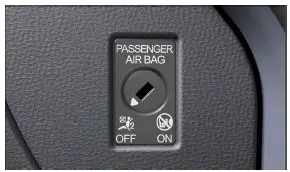
Fig. 1 In the instrument panel on the passenger's side: key switch to switch on and off the front passenger's front airbag.
The front passenger's front airbag must be switched off when installing a rear-facing child restraint in the front passenger seat! Observe country-specific specifications regarding use of child restraints on the front passenger seat (→ Child restraints) .
It is not possible to switch off the front passenger's front airbag in all countries. If there is no key switch in the vehicle, the front passenger's front airbag can only be deactivated by suitably qualified professionals. Volkswagen recommends contacting an authorized Volkswagen dealer or authorized Volkswagen Service Facility.
- Front passenger's front airbag enabled
- How to Recognize that the Front Passenger's Front Airbag is Switched Off
Front passenger's front airbag enabled
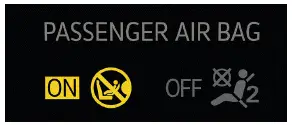
Fig. 2 In the roof console: Indicator light for the activated front passenger's front airbag.
 The yellow indicator light for the activated front passenger's front airbag comes on for about 60 seconds after switching on the ignition or after switching on the front passenger's front airbag with the key switch → fig. 2 and then automatically turns off.
The front passenger's front airbag is switched on.
Check whether the front passenger's front airbag must remain switched on.
Front passenger's front airbag switched off

Fig. 3 In the roof console: indicator light for the switched off front passenger's front airbag
 The yellow indicator light stays on → fig. 3 . The front passenger's front airbag is switched off.
Check whether the front passenger's front airbag should remain switched off, for example if using a child restraint in the front passenger seat.
Switching on the front passenger's front airbag
Switch the ignition off.
Open the front passenger door of Volkswagen ID.3.
Fully fold out the key bit of the vehicle key.
Or: Remove the emergency key from the vehicle key (→ Vehicle key) .
Insert the key bit into the key switch until you feel resistance for a second time→ fig. 1 .
The key bit is not fully inserted when doing so→
 .
Turn the remote control vehicle key or emergency key to the
 position without applying significant force.
Pull the vehicle key out of the key switch and fold in the key bit→
 .
Or: Pull the emergency key out of the key-switch, and put it back into the remote control vehicle key→
 .
Close the front passenger door of the Volkswagen ID.3.
The yellow PASSENGER AIR BAG
 indicator light will come on and turn off after approximately 60 seconds (→ Indicator light standard airbag system)
Check that the yellow PASSENGER AIR BAG indicator light
 does not come on (→ Indicator light standard airbag system) when the ignition is switched on.
Switching Off the Front Passenger's Front Airbag
Switch the Volkswagen ID.3 ignition off.
Open the front passenger door.
Fully fold out the key bit of the vehicle key.
Or: Remove the emergency key from the vehicle key (→ Vehicle key) .
Insert the key bit into the key switch until you feel resistance for a second time→ fig. 1 .
The key bit is not fully inserted when doing so→
 .
Turn the remote control vehicle key or emergency key to the
 position without applying significant force.
Pull the Volkswagen ID.3 vehicle key out of the key switch and fold in the key bit→
 .
Or: Pull the emergency key out of the key-switch, and put it back into the remote control vehicle key→
 .
Close the front passenger door.
The yellow PASSENGER AIR BAG
 indicator light will come on permanently when the ignition is switched on (→ Indicator light standard airbag system) .
How to Recognize that the Front Passenger's Front Airbag is Switched Off
If the front passenger's front airbag is switched off, this is only indicated by the yellow PASSENGER AIR BAG  indicator light being permanently on (→ Indicator light standard airbag system) .
If the front passenger's front airbag is deactivated and the yellow PASSENGER AIR BAG indicator light does not stay on permanently or comes on together with the yellow
 indicator light in the instrument cluster display, there may be a malfunction in the airbag system. Therefore, no child restraint system may be installed on the front passenger seat for safety reasons. The front passenger's front airbag could be deployed if there is an accident →
 .
DANGER
Read and heed the important safety instructions for the front passenger's front airbag (→ Child restraints) .
If an airbag is deactivated in the event of an accident, persons on the front passenger seat may suffer severe or fatal injuries. For that reason, the front passenger's front airbag may only be switched off in special circumstances.
Switch off the front passenger's front airbag only if a rear-facing child restraint is fitted in the front passenger seat in exceptional circumstances. Switch the front passenger's front airbag back on once the rear-facing child restraint in the front passenger seat is no longer being used.
Only deactivate the front passenger's front airbag if, in exceptional circumstances, the front passenger backrest is folded down, depending on the vehicle equipment. Switch the front passenger's front airbag back on as soon as the front passenger backrest is folded back.
To avoid damage to the airbag system, only switch the front passenger's front airbag on and off with the ignition switched off.
● As the driver, always ensure the key switch is in the correct position.
WARNING
If there is a malfunction in the airbag system, the airbag may not deploy correctly or at all, or it may deploy unexpectedly. This could cause severe or fatal injuries.
In the event of a malfunction, have the airbag system checked by suitably qualified professionals. Volkswagen recommends contacting an authorized Volkswagen dealer or authorized Volkswagen Service Facility.
If there is a malfunction in the airbag system, never fit a child restraint in the front passenger seat and remove any child restraints already installed there.
WARNING
If the remote control vehicle key or emergency key remain inserted in the key switch while driving, vibration may cause the vehicle key or emergency key to inadvertently turn in the key switch and may activate the front passenger's front airbag. The front passenger's front airbag could trigger unintentionally, which could cause severe or fatal injuries.
Always remove the vehicle key or emergency key from the key switch before switching on the ignition.
NOTICE
If the key bit is not properly inserted, it could damage the key-operated switch when it turns.
Insert the key bit into the key switch until you feel resistance for a second time.
NOTICE
If the vehicle key or emergency key is inserted in the key switch when the front passenger door is closed, this may damage the door trim panel, instrument panel, key switch, vehicle key and emergency key.
Always remove the vehicle key or emergency key from the key switch before closing the front passenger door.
Introduction
Child restraints reduce the risk of injury in the event of an accident. Always transport children in child restraints.
Please note:
Child restraints are categorized differently depending on the size, age and weight of the child.
Child restraints can be secured in the vehicle using various securing systems.
For safety, always install child restraints on the rear seats (→ Child restraints) .
Volkswagen recommends using child restraints from the Volkswagen accessory catalog. These child restraints are developed and verified for use in Volkswagen vehicles.
For additional information about the child restraints from the accessory catalog, contact your authorized Volkswagen dealer or authorized Volkswagen Service Facility or visit the Volkswagen website.
WARNING
Unsecured or improperly secured children may suffer serious injury or death in the event of sudden driving or braking maneuvers or an accident.
Children under the age of 12 or less than 150 cm (around 4 ft 11 in) tall must always be transported in a suitable child restraint when riding in the vehicle. Observe any regulations specific to the country where you are driving.
Always secure children in a suitable child restraint. Child restraints must correspond to the size, age and weight of the child.
Observe the specifications of the child restraint manufacturer for fastening the child restraint in the vehicle and securing the child in the child restraint.
Never secure more than one child in a single child restraint.
Never under any circumstances drive with children or babies on the driver's or a passenger's lap.
Never allow a child to sit in a child restraint unsupervised.
Never allow children to be unsecured in the vehicle, stand or kneel on the seats, or be in an incorrect seating position while driving. This especially applies to children riding in the front passenger seat. In the event of an accident, children and other passengers could be fatally injured.
For the child restraint to offer the maximum protection, it is especially important to route the safety belt correctly. Always follow the specifications from the child restraint manufacturer for routing the safety belt correctly. Safety belts that are fastened incorrectly can cause injuries, even during minor accidents.
Replace the child restraint after an accident because there could be damage that is not visible.
Follow all warning and information for vehicles with an N1 certificate (→ N1 certificate) .