Fuses
GENERAL INFORMATION
The vehicle's electrical circuits are protected by a combination of fuses, circuit breakers and fusible links. A blown fuse can easily be identified by inspecting its transparent plastic housing.
Carefully inspect the fuse for signs of blowing. If the fuse looks normal but a fault is still suspected, check continuity between the blade terminals protruding from the housing.
REPLACEMENT
PROCEDURE
1. Before replacing a fuse, always switch off the corresponding consumer and the ignition.
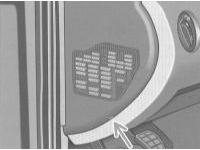
2. The fuses are located in the fuse box on the left end of the instrument panel, behind the cover.
3. Open the cover: insert a screwdriver with a flat tip into the gap from below (arrow in illustration) and pry the cover open.
4. The fuse layout diagram is located on the inside of the fuse box cover.
5. Additional fuses are located on the relay panel, on the auxiliary relay carrier behind the relay panel, and in the battery holder.
6. On vehicles with a diesel engine, the glow plug preheating fuse is located in the fuse box on the battery.
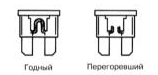
7. A blown fuse is indicated by a melted metal strip.

8. Remove the plastic clips from the inside of the cover and take out the faulty fuse.
9. Insert a new fuse with the same amperage rating. The rated current is marked on the back of the fuse handle. In addition, the fuse handle is color-coded, which also indicates the rated current.
10. Reinstall the fuse box cover.
11. If the new fuse blows again after a short time, check the corresponding electrical circuit.
12. Never replace a fuse with wire or similar material, as this may cause serious damage to the electrical system.
13. It is recommended to always carry spare fuses in the vehicle.
Test yourself
A quick Audi A3 quiz: every answer comes with an explanation and a link to the manual page.