Fuses
Fuse Replacement
To protect electrical connections and components from short circuits and overloads, individual circuits are protected by fuses.
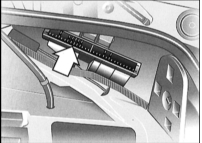
The fuses are located in the fuse box in the glove box.
PROCEDURE
1. Before replacing a fuse, always switch off the corresponding component.
2. Open the glove box and turn the two white clips 90° to the left. This releases and lowers the fuse box. The fuse layout is shown on the label under the fuse panel that slides out.
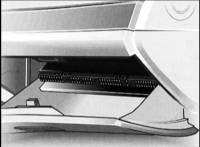
3. A blown fuse is indicated by a melted metal strip.
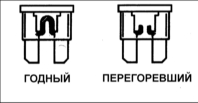
4. Remove the faulty fuse. The fuse box contains a red plastic fuse puller.
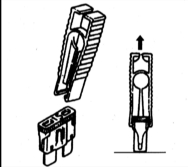
5. Insert a new fuse of the same amperage in place of the blown fuse.
6. If the new fuse blows again after a short time, inspect the corresponding electrical circuit.
7. Never replace a fuse with wire or any similar material, as this may cause serious damage to electrical components.
8. It is recommended to carry spare fuses in the vehicle. The fuse box has special empty spaces for storing them.
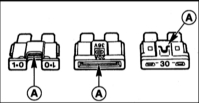
9. The rated current of the fuse is marked on its plastic body. In addition, a specific body color corresponds to a specific amperage.
A - melting wire
Fuse color coding is given in the Specifications.
10. Lift the fuse box cover upward and turn the clips to the right.
Additional fuses are located in the luggage compartment behind the right side trim panel.
The fuse for the positive battery cable is located above the battery in a separate box.
On vehicles equipped with a towing hitch, the trailer light circuit auxiliary fuse block is installed behind the right luggage compartment trim panel.
Fuse Locations
Fuse locations depend on vehicle equipment and model year. Fuse locations are shown in the glove box under the fuse panel cover and on the back side of the right luggage compartment side trim panel. Fuse ratings and functions are given in the Specifications.
Test yourself
A quick BMW 1 quiz: every answer comes with an explanation and a link to the manual page.