Fuses
The vehicle electrical circuits are protected by a combination of fuses, circuit breakers and fusible links. A blown fuse can be easily identified by visual inspection of its transparent plastic body. Carefully inspect the fuse for signs of blowing. If the fuse appears normal but a fault is still suspected, check continuity between the blade terminals protruding from its body.
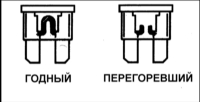
Blown fuses of this type can be identified by visual inspection.
When replacing fuses, make sure the replacement matches the original in type. Fuses rated for different amperages may look identical, so pay special attention to the markings. Replacing a blown fuse with one of a lower, and especially a higher, amperage rating is not recommended. Each electrical circuit requires a different level of protection. Make sure the marking on the fuse body matches the amperage rating for the circuit.
If the replacement fuse blows immediately, do not continue replacing it. First identify and correct the cause of the blown fuse. In most cases this is a short circuit in the circuit wiring caused by a broken or damaged wire insulation.
Test yourself
A quick BMW 1 quiz: every answer comes with an explanation and a link to the manual page.