Spark plug technology
The spark plug consists of the center electrode, the insulator with housing, and the ground electrode. The center electrode is gas-tight in the insulator, and the insulator is firmly connected to the housing. The ignition spark jumps between the center and ground electrodes to ignite the air-fuel mixture. Starting readiness, idle quality, acceleration, and top speed depend on the spark plug. Therefore, do not deviate without good reason from the spark plug type specified by the factory, which is determined among other things by the heat range number.
The heat range number indicates the degree of thermal load capacity of a spark plug. The higher the heat range number of a plug, the greater its thermal load capacity.
The spark plug can therefore dissipate heat better, which prevents harmful pre-ignition (engine knocking). However, a spark plug with a high heat range has the disadvantage that its self-cleaning temperature is also higher. It therefore tends to foul more quickly, especially when the engine often does not reach its operating temperature while driving (city traffic, short trips in winter). As a rule, "cold" spark plugs are used in "hot" engines, i.e. in engines that are required to produce high output.
The copper core (Cu) in the center electrode and, even more so, the silver center electrode increase thermal conductivity and therefore heat-load capacity.
The heat range code is included in the spark plug code.
The code breaks down as follows:
Bosch spark plugExample: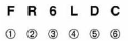
W = thread M14 x 1.25 with gasket seat, SW 21; F = thread M14 x 1.25 with gasket seat, SW 16; M = thread M18 x 1.5 with gasket seat, SW 25; H = thread M14 x 1.25 with taper seat, SW 16; D = thread M18 x 1.5 with taper seat, SW 21; SW = wrench size.
R = with resistor, for interference suppression. The function of the ignition system is not affected.
Heat range code. The heat range scale runs from 06 ("cold") to 13 ("hot").
@ L = thread length 19 mm, projected firing end (5 mm distance from the plug edge).
D = 2 ground electrodes, T = 3 ground electrodes, Q = 4 ground electrodes.
= Center electrode material: no code = Cr-Ni alloy, C = Ni-Cu composite, E = nickel-yttrium, P = platinum, S = silver.
Beru spark plug Example: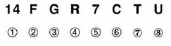
14 = thread M14x1.25.
F = with gasket seat.
G = sliding spark plug.
R = with resistor, for interference suppression. The function of the ignition system is not affected.
Heat range code. The heat range scale runs from 06 ("cold") to 13 ("hot").
C = thread length 19 mm, normal firing end.
A = triangular ground electrode, T = multi-pole ground electrodes, D = 2 ground electrodes.
Center electrode material: U = Ni-Cu composite, P = platinum, S = silver.
Test yourself
A quick Fiat Bravo quiz: every answer comes with an explanation and a link to the manual page.