Hydraulic Brake System
* Wear safety glasses when bleeding the brake system. If brake fluid gets into your eyes, rinse them immediately with water and consult a physician.
Bleeding
Bleeding the brake system is necessary to remove all air that may have entered the system when hoses, pipes, the caliper or the master cylinder were removed or installed.
If air has entered the brake system due to excessive lowering of the brake fluid level in the reservoir or disconnection of the brake pipes from the master cylinder, you will probably need to bleed all four brakes.
If a brake hose or pipe was disconnected at only one wheel, bleed only the caliper or wheel cylinder at that wheel.
If a brake hose was disconnected at a fitting located between the master cylinder and any of the brakes, bleed the brake that the hose leads to.
PROCEDURE
1. Remove residual vacuum from the vacuum booster by depressing the brake pedal several times with the engine off.
2. Remove the cap from the master cylinder reservoir and fill the reservoir with brake fluid. Install the cap.
* Constantly monitor the brake fluid level in the reservoir while bleeding the brakes, and add brake fluid as necessary so that air does not enter the master cylinder.
3. You will need an assistant, a supply of fresh brake fluid, a clean plastic container partially filled with brake fluid, a rubber or plastic tube approximately 4.76 mm in diameter to fit over the bleeder valve, and a wrench to open and close the bleeder valve.
4. Begin bleeding the brake system at the rear wheel on the side farthest from the master cylinder. Loosen the bleeder valve slightly, then tighten it just enough to seal the opening, but so that it can be easily loosened.
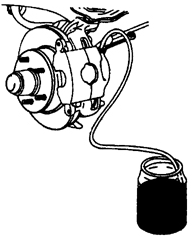
5. Attach one end of the hose to the bleeder valve and place the other end of the hose into a container with brake fluid. Air leaving the system will be visible as bubbles in the hose and in the container. Before moving to the next wheel, remove all air from the brake system of this wheel.
6. Have an assistant slowly depress the brake pedal several times to build pressure in the system, then hold it in the depressed position.
7. With the brake pedal depressed, open the bleeder valve just enough to allow brake fluid to flow through the hose. Watch for bubbles exiting the end of the hose submerged in brake fluid. When the fluid flow stops after a few seconds, close the valve and have the assistant release the brake pedal.
8. Repeat steps 6 and 7 until brake fluid flowing from the hose is free of air bubbles. Then tighten the bleeder valve and proceed to bleed the brake on the diagonally opposite front wheel, then the second rear wheel, and finish by bleeding the brake on the remaining front wheel. Check the brake fluid level in the master cylinder reservoir frequently.
9. Never reuse old brake fluid. It contains moisture, which causes corrosion of brake system components.
10. Fill the master cylinder reservoir with brake fluid after bleeding is complete.
11. Check brake operation. The pedal should become firm when depressed and should not sink. If necessary, repeat the entire brake bleeding procedure.
* Do not drive the vehicle if you are unsure of the condition of the brake system.
Test yourself
A quick Toyota Corolla quiz: every answer comes with an explanation and a link to the manual page.