Anti-lock Brake System (ABS)
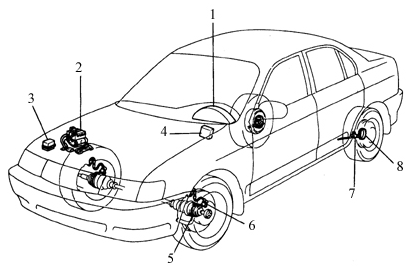
Anti-lock Brake System (ABS) Component Location 1. ABS Warning Light
2. ABS Actuator
3. Control Relay
4. ABS Electronic Control Unit (ECU)
5. Sensor Rotor
6. Front Wheel Speed Sensor
7. Rear Wheel Speed Sensor
8. Sensor Rotor
The Anti-lock Brake System (ABS) is designed to maintain vehicle steerability and stability and to provide optimal deceleration during hard braking under most road conditions. This is accomplished by monitoring the rotational speed of each wheel and regulating the brake fluid pressure at each wheel. This prevents the wheels from locking.
SYSTEM COMPONENTS
Actuator
The ABS actuator consists of a hydraulic pump and four solenoid valves. The pump generates hydraulic pressure in the actuator chambers, which applies pressure to the brake system. The pump and chambers are located in the actuator housing. The solenoid valves regulate brake system pressure when the ABS is activated. One valve is provided for each wheel.
Wheel Speed Sensors
Each wheel has a wheel speed sensor that generates weak electrical pulses as the toothed sensor rotor rotates. The sensors send signals of varying voltage to the ABS ECU, indicating the rotational speed of the wheels.
The front wheel speed sensors are installed on the front steering knuckles, next to the toothed sensor rotors mounted on the outer CV joints of the drive shafts.
The rear wheel speed sensors are attached to the rear brake backing plates or hub carriers. The sensor rotors are installed on the rear wheel hubs.
ABS ECU
The ABS electronic control unit (ECU) is installed under the instrument panel and is the brain of the ABS system. The ECU receives and processes information from the wheel speed sensors and controls brake system pressure to prevent wheel lock. The ECU also constantly monitors system operation to detect malfunctions.
If a malfunction occurs in the system, the ABS warning light on the instrument cluster illuminates. The diagnostic trouble code is also stored in the ECU and indicates to technicians the area or component that has failed.
DIAGNOSIS AND REPAIR
If the warning light on the instrument cluster comes on and stays on while the vehicle is being driven, the ABS requires attention. Although an ABS tester is required for accurate ABS diagnosis, the vehicle owner may perform the following preliminary checks before taking the vehicle to a repair shop:
– Check the brake fluid level in the reservoir.
– Check the wire connections for security.
– Check the fuses.
If everything is in order, have the vehicle inspected by a qualified technician.
Test yourself
A quick Toyota Corolla quiz: every answer comes with an explanation and a link to the manual page.