Tire and wheel disc designations
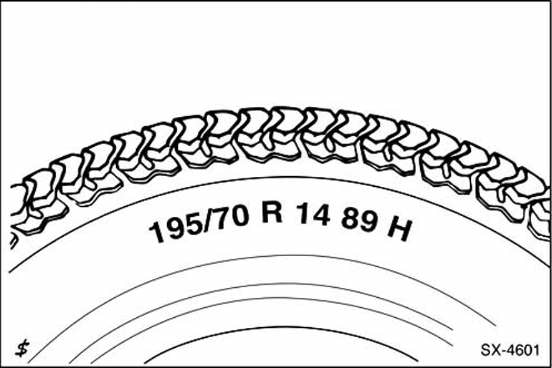
195 = Tire width in mm
/70 = Aspect ratio, height to width (the height of the tire cross-section is 70% of the width). If no special aspect ratio is stated (e.g. 155 R 13), the 'normal' height-to-width ratio applies. For belted tires, it is 82%.
R = radial construction (= belted tire).
14 = Rim diameter in inches.
89 = Load index.
Note: if the designation M+S appears between the entries 14 and 89, the tire has a winter tread.
H = speed symbol for maximum permissible speed, h: up to 210 km/h.
The speed symbol follows the tire size.
The speed symbols apply to both summer and winter tires.
Speed symbol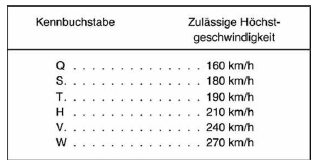
Tire manufacturing date
The manufacturing date is shown in the manufacturer's code on the tire.
Example: DOT CUL2 UM8 3602 tubeless. DOT = Department of Transportation (US Department of Transportation).
Cu = tire manufacturer code
L2 = tire size
UM8 = tire version
3602 = manufacturing date = 36th production week of 2002. Note: if a 3-digit number followed by a < symbol is shown instead of the 4-digit number, the tire was produced in the previous decade. For example, 509< means: 50th production week of 1999.
Tubeless = tubeless (tube type = tire with inner tube)
Note: since 10/98, new tires must also bear an ECE approval number on the sidewall. This approval number confirms that the tire complies with the ECE standard. If tires without an ECE approval number are fitted after 10/98, the vehicle's general operating permit (ABE) becomes void. Wheel disc designation example: 5 1/2 J x 145 1/2 = rim width in inches
J = code letter for flange height and contour (B = lower flange profile)
X = designation for one-piece drop-center rim
14 = rim diameter in inches
Test yourself
A quick Fiat Bravo quiz: every answer comes with an explanation and a link to the manual page.