Tyre rotation
To even out tread wear, rotating the tires every 12,000 km is recommended, or sooner if uneven wear develops.
When rotating the tires, check that the wheels are properly balanced.
When rotating the tires, inspect them for damage and uneven wear.
Abnormal wear is usually caused by incorrect inflation pressure, incorrect wheel alignment, unbalanced wheels, hard braking, or aggressive cornering. Check for bulges or swellings on the tread or sidewall of the tires. If any such defects are found, replace the tire. Replace the tire if the fabric or cord structure is visible. After rotation, make sure to set the front and rear tires to their specified pressures and check that the wheel nuts are tightened correctly.
Refer to "Wheels and Tires" in chapter 8.
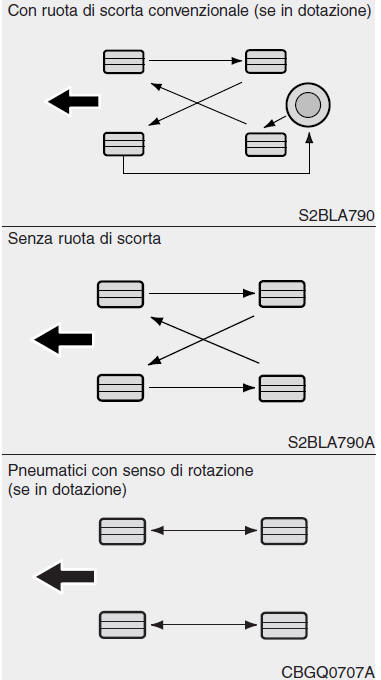
Disc brake pads must be checked for wear when the tires are rotated.
NOTE Radial tires with an asymmetric tread pattern must be rotated only front to rear, not side to side.
WARNING
- Do not include the temporary spare tire when rotating the tires.
- Never mix bias-ply tires and radial tires. This may cause handling problems, with a risk of accidents, including fatal ones, or damage to the vehicle.
Wheel alignment and balancing
The vehicle's wheels are carefully aligned and balanced at the factory to ensure the best performance and maximum tire life.
Normally, wheel realignment is not necessary. However, if abnormal tire wear is found or the vehicle pulls to one side, wheel realignment may be required.
If vibration is felt when driving on a smooth road surface, the wheels may need to be rebalanced.
WARNING Unsuitable balance weights may damage aluminum alloy wheels. Use only approved wheel balance weights.Test yourself
A quick Kia Picanto JA quiz: every answer comes with an explanation and a link to the manual page.