Power Steering Pressure Switch (PSP) Inspection and Replacement
INSPECTION
PROCEDURE
1. The PSP pressure switch is installed in the power steering hydraulic line between the power steering pump and the steering gear housing. During sharp turns of the steering wheel (for example, during parking or tight U-turns), power steering pressure rises significantly and the PSP pressure switch closes, informing the PCM, which raises the idle speed accordingly to compensate for the increased engine load. If the pressure switch malfunctions, the OBD self-diagnostic system stores the corresponding DTC in the processor memory.
2. If the engine stalls when maneuvering during parking, check the PSP pressure switch for proper operation. A faulty pressure switch may also cause the engine idle speed to remain too high.
3. The PSP pressure switch connector terminals can be identified using the wiring diagrams.
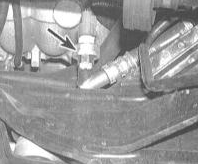
4. Disconnect the wiring from the pressure switch and connect an ohmmeter to the terminals on the switch body.
5. Start the engine and run it at idle.
6. Set the front wheels to the straight-ahead position and read the ohmmeter. The reading should be infinite (open circuit).
7. Turn the steering wheel in either direction and observe the meter. As the steering wheel approaches either full-lock position, the PSP pressure switch must close, which is confirmed by a zero (short circuit) reading on the ohmmeter.
8. If the results are negative, replace the pressure switch. If the pressure switch is good, check the engine idle speed settings.
REPLACEMENT
PROCEDURE
1. Raise the vehicle and support it on safety stands.
2. Disconnect the negative battery cable.
The negative cable must always be disconnected first and connected last. If the vehicle's audio system is equipped with an anti-theft code, make sure you have the correct code to activate the audio system before disconnecting the battery!
3. Disconnect the wiring from the pressure switch and unscrew it from its fitting.
4. Install a new pressure switch in place of the faulty one and lower the vehicle to the ground.
5. Bleed air from the power steering hydraulic system (refer to Suspension and Steering Section). If necessary, correct the hydraulic fluid level (refer to Maintenance and Adjustments Section).
Test yourself
A quick Honda Accord quiz: every answer comes with an explanation and a link to the manual page.