Idle Air Control (IAC) Valve Inspection and Replacement
General Information
When the engine is running at idle, the air-fuel mixture is controlled by the Idle Air Control (IAC) valve. The IAC valve is actuated by the PCM depending on the current engine load (air conditioning operation, power steering use, engine temperature, etc.). The valve regulates the amount of air supplied to the intake manifold, bypassing the throttle plate. The PCM receives input from the VSS, ECT sensor, PSP switch, and A/C compressor clutch relay. Depending on the engine load, the module adjusts the idle speed accordingly. To prevent idle instability when starting the engine, the IAC valve opens while the engine is cranking and remains open for a period of time immediately after starting, supplying additional air to the intake manifold.
INSPECTION
PROCEDURE
When working in the engine compartment, keep hands, hair and clothing away from moving components such as drive belts, fan blades, etc.
1. Apply the parking brake, chock the wheels, and place the transmission in neutral (manual) or in "P" (automatic). Connect a tachometer to the engine following the tool manufacturer's instructions. Start the engine and raise engine speed to 3000 rpm. Wait for the cooling fan to engage, then return to idle and record the tachometer reading (cooling fan and all electrical loads must be off). If engine speed is 650 ÷ 700 rpm, the system is functioning properly. If the reading is below 650 rpm, disconnect the IAC valve electrical connector. Engine speed should drop noticeably when the valve is disconnected; otherwise the valve is probably faulty. If engine speed drops but the idle stability problem remains, check the wiring harness and its connector terminals between the IAC valve and the PCM.
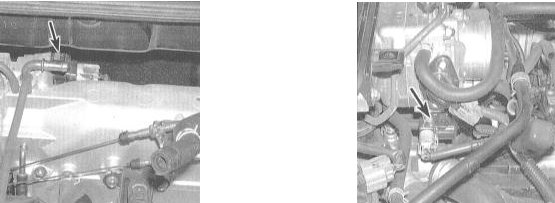
2. If the tachometer reads more than 750 rpm, turn off the engine and disconnect the air intake duct from the throttle body. Start the engine and let it idle. Block the lower port of the throttle body (connected to the IAC valve) with your finger. If the speed drops noticeably, adjust the idle speed to meet the Specifications (see Chapter Tune-up and Routine Maintenance). If the adjustment cannot be made, replace the IAC valve. If the speed does not drop, check the intake tract for vacuum leaks.
3. If the check confirms the IAC valve is serviceable but the idle speed remains unstable, check the wiring and its connections between the valve and the PCM.
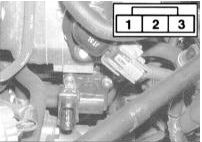
4. Make sure battery power is supplied to the IAC valve. Disconnect the wiring from the valve, turn the ignition on (do not start the engine), and measure the voltage between terminal No. 2 of the harness-side connector and ground. The reading should equal battery voltage. If there is no power, check the wiring between the IAC valve and the PGM-FI main relay (see wiring diagrams in the Electrical Systems chapter).
5. Using an ohmmeter, measure the resistance between terminal 1 of the IAC valve and ground. The meter should show continuity. If it does not, repair the ground circuit.
6. If both checks are positive, take the vehicle to a service station for further diagnosis.
REPLACEMENT
PROCEDURE
1. Disconnect the wiring from the IAC valve.
2. On V6 models, remove the throttle body from the intake manifold (see Fuel and Exhaust Systems chapter).
3. Remove the two mounting screws and remove the valve from the intake manifold (4-cylinder models) or the throttle body (V6 models).
4. Install in reverse order. Be sure to replace the O-ring.
Test yourself
A quick Honda Accord quiz: every answer comes with an explanation and a link to the manual page.