Manual transmission
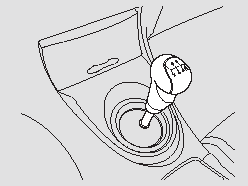
Smooth gear shifting is ensured by synchronizers, which are fitted to all forward gears. The transmission is equipped with a locking device that prevents direct shifting from any forward gear to reverse gear (see page 325).
When shifting gears, first fully depress the clutch pedal, then shift the gear, and finally release the clutch pedal smoothly. If you are not shifting gears, do not rest your foot on the clutch pedal.
This may cause rapid wear of the clutch.
Before engaging reverse gear, wait until the vehicle comes to a complete stop. Engaging reverse gear before the vehicle has stopped risks damaging the transmission. Before engaging reverse, depress the clutch pedal and pause briefly, or momentarily engage one of the forward gears. This slows the rotation of the gears in the transmission so that they mesh without grinding.
When decelerating, you can downshift to a lower gear to use engine braking. This driving technique allows you to maintain a safe speed when descending steep grades without overheating the brake system. Before downshifting, make sure the tachometer needle will not enter the red zone. When shifting gears, observe the vehicle speed values given below.

WARNING
Rapid acceleration or deceleration on a slippery road surface may cause the vehicle to skid. In this case, an accident with serious injuries is possible.
Exercise extreme caution when driving on slippery roads.
WARNING
Do not rest your hand on the shift lever. This may cause premature wear of the shift mechanism components.
On some vehicle variants, the shift lever is made of aluminum alloy. After the vehicle has been parked in the sun for a long time, touch the lever with care, as it may be heated to a high temperature. In cold weather, the lever may be extremely cold.
Test yourself
A quick Honda Civic quiz: every answer comes with an explanation and a link to the manual page.