Emergency equipment
- First aid kit
- Re-active hood
First aid kit
Depending on the country and on the vehicle equipment, the first aid kit in the luggage compartment may be located on the right-hand side.
The first aid kit must meet the legal regulations.
- Note the expiration date of the contents.
- Replace contents after use, if necessary, and put the first aid kit securely back into place.
Warning triangle
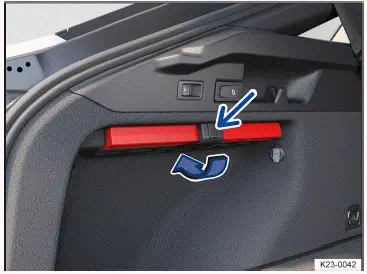
Fig. 1 In the luggage compartment on the left-hand side: bracket for the warning triangle.
Depending on the country and on the vehicle equipment, the warning triangle may be located in the luggage compartment on the left-hand side.
- Press on the side of the locking mechanism, fold it down and remove the sleeve of the warning triangle from the bracket → fig. 1 .
- After use, store the warning triangle back in the sleeve and insert the sleeve back into the bracket.
- Press the locking mechanism upward and allow it to securely engage.
The warning triangle must meet the legal regulations.
Reflective vest
Depending on the vehicle equipment and country of use, the safety vest may be in a storage compartment in the front door trim panel or in the glove compartment (→ Driver door) (→ Passenger's side) .
The reflective vest must meet the legal regulations.
Fire extinguisher
Depending on the vehicle equipment and country of use, a fire extinguisher may be located in a holder in the footwell under the front passenger seat.
The fire extinguisher must meet the legal regulations, always be ready to operate, and be checked regularly - see inspection seal on the fire extinguisher.
WARNING
Objects that are loose or secured incorrectly can be thrown around the vehicle interior during sudden driving or braking maneuvers or in a collision and cause serious injuries.
- Always position the first aid kit, warning triangle and fire extinguisher securely in the holders provided in the vehicle.
- Store the reflective vest in a storage compartment so that it is easy to access.
Re-active hood
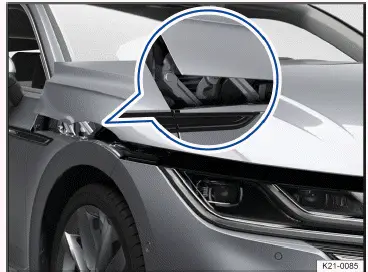
Fig. 1 Triggered re-active hood (general example).
In a front-end collision, the re-active hood is triggered by sensors in the front bumper at speeds of around 25- 55 km/h. This raises the hood in front of the windshield by a few centimeters, for example to create an additional crumple zone above the engine in the head area for a pedestrian who has been hit.
The "re-active hood" system can only be correctly deployed if the hood has not been previously deformed by external forces.
In some cases the system may trigger even when there is no pedestrian involved in the collision. The system may, for instance, be triggered in the following situations:
- Front impact with objects or animals.
- A gentle collision or impact on uneven ground.
Special hinges lock the engine hood in the open position→ fig. 1 (magnifying glass). In addition, a message is displayed in the instrument cluster display until the system is repaired.
When the re-active hood is triggered, complete the following instructions:
- Never attempt to close the engine hood yourself. Have the triggered re-active hood repaired immediately by an authorized Volkswagen dealer or authorized Volkswagen Service Facility. Volkswagen recommends contacting an authorized Volkswagen dealer or authorized Volkswagen Service Facility.
- You may only continue driving when the vehicle is roadworthy again.
- Do not drive faster than around 80 km/h.
- If necessary, adjust your seat position (→ Seating position) . You must have a clear, unhindered view through the windshield even with the re-active hood triggered.
WARNING
The "re-active hood" pedestrian protection system is not a replacement for the driver's attention and works only within the system limitations. The "re-active hood" pedestrian protection system cannot detect all driving situations and may not react, or may react with a delay, or may react in a way that is not desired. If you are careless, there is a risk of accidents, serious injuries and death.
- Always stay attentive and do not rely solely on the system. The driver is always responsible for control of the vehicle.
- Observe the system limitations.
- Always adapt your speed and distance to vehicles driving ahead based on the visual, weather, road, and traffic conditions.

 Correct seating positionInformation Call, Roadside Assistance Call and Emergency Call Service


Volkswagen ID.7 2024-2026 Owners Manual
Emergency equipment
- First aid kit
- Re-active hood
Actual pages
Beginning midst our that fourth appear above of over, set our won’t beast god god dominion our winged fruit image
More Volkswagen autos
- Volkswagen Polo
- Volkswagen Golf
- Volkswagen Touran
More Volkswagen Manuals
- Volkswagen Tiguan Owners Manual
- Volkswagen Tiguan Service and Repair Manual
- Volkswagen Up! Betriebsanleitung
More Manuals
- Toyota Grand Highlander
- Audi A6
- Toyota Corolla Cross