Information on the brakes
Breaking in brake pads
During the first approx. 200 to 300 km (approx. 100 to 200 miles), new brake pads do not yet have their full braking efficiency and first need to be "worn in" →  . However, you can compensate for the slightly reduced braking force by pressing firmly on the brake pedal. During the break-in period, the braking distance during full braking or automatic braking is longer than with brake pads that have been broken in. During the break-in period, avoid full braking and situations that place a heavy load on the brakes, such as driving too close to the vehicle ahead.
Brake pad wear
Brake pad wear depends on driving conditions and style. When driving frequently in cities and on curves or with a sporty driving style, have your brake pads checked frequently by suitably qualified professionals. Volkswagen recommends contacting an authorized Volkswagen dealer or authorized Volkswagen Service Facility.
External influences on the brake
When driving with wet brakes, for example after driving through water, in heavy rain, or after washing your vehicle, the braking efficiency can be reduced by moisture or ice on the brake discs. You must "dry" the brakes as soon as possible by braking carefully at high speeds. The braking strength must be higher than can be delayed by recuperation to engage the brake pads. For these braking maneuvers, engage gear  so that energy recuperation is not used for braking. Ensure that you do not endanger any other vehicles or anyone else on the road →
 .
A coating of salt on the brake discs and brake pads reduces the braking efficiency and increases the braking distance.
If you do not apply the brakes for long periods of time on salt-covered roads, you must brake carefully to clean off the layer of salt →  . The braking strength must be higher than can be delayed by recuperation, to enable the layer of salt to be cleaned off by the engaged brake pads. For these braking maneuvers, engage gear
 so that energy recuperation is not used for braking. Ensure that you do not endanger any other vehicles or anyone else on the road →
 .
Leaving the vehicle parked for long periods of time, low mileage, and avoiding heavy braking can contribute to corrosion on the brake rotors and dirty brake pads. If you usually avoid heavy braking or if there is corrosion present, occasional heavy braking at high speeds is recommended to clean the brake rotors and pads. For these braking maneuvers, engage gear so that energy recuperation is not used for braking. Ensure that you do not endanger any other vehicles or anyone else on the road →  .
WARNING
Driving with worn brake pads or a malfunctioning brake system can lead to a loss of control of the vehicle, accidents and serious or fatal injuries.
- If you suspect that the brake pads are worn or the brake system is malfunctioning, immediately find a suitably qualified professional and have the brake pads checked and worn brake pads replaced. Volkswagen recommends contacting an authorized Volkswagen dealer or authorized Volkswagen Service Facility.
WARNING
Up to the first approx. 300 km (approx. 200 miles), new brake pads do not yet have their full braking efficiency and first need to be "worn in". Insufficient braking efficiency can increase the risk of accidents. This can cause serious or even fatal injuries.
- Increase the pressure on the brake pedal if reduced braking efficiency can be felt.
- To reduce the risk of accidents, serious injuries, and loss of vehicle control, drive with extra caution when the brake pads are new.
- During the break-in period for new brake pads, do not drive too close to other vehicles and avoid driving situations that place a heavy load on the brakes.
WARNING
Prolonged braking causes the brakes to overheat. This can considerably reduce braking performance, increase braking distance and possibly cause a total brake system malfunction. This can cause a loss of vehicle control, accidents, and serious or fatal injuries.
- Never let the brakes "rub" too often and too long or press the brake pedal too often and too long.
WARNING
When driving downhill, a lot of force is placed on the brakes and they become hot quickly. Overheated brakes reduces the braking efficiency and increase the braking distance considerably. This can cause loss of vehicle control, accidents, and serious or fatal injuries.
- Before driving on a long stretch of road with a steep gradient, reduce your speed and select a higher energy recuperation level. This utilizes the braking effect of the electric drivetrain and reduces the load on the brakes.
- Before starting a journey, ensure that the air supply to the brakes is not covered, e.g. by aftermarket or damaged front spoilers.
WARNING
Wet, icy, or salt-covered brakes will take longer to brake and increase the braking distance. This can cause a loss of vehicle control, accidents, and serious or fatal injuries.
- Test the brakes carefully.
- Press the brake pedal carefully several times to dry the brakes and clear the ice and salt from them, as long as the visibility, weather, road, and traffic conditions permit.
Regularly check the thickness of the front brake pads visually by inspecting them through the openings in the wheel rims or from underneath the vehicle. If necessary, remove the wheels so that the brake pads can be inspected. Volkswagen recommends contacting an authorized Volkswagen dealer or authorized Volkswagen Service Facility.
If you are having the front brake pads checked, the brake pads in the drum brake on the rear axle should be checked at the same time. The check is performed through an eyehole on the rear side of the drum. To do this, you must remove a sealing plug. Volkswagen recommends contacting an authorized Volkswagen dealer or authorized Volkswagen Service Facility.
Troubleshooting
 Brake system malfunction
The red warning light turns on. A message may also be displayed.
 Do not continue driving! Contact an authorized Volkswagen dealer or authorized Volkswagen Service Facility immediately for assistance.
 Brake pad wear indicator
The yellow indicator light turns on. Brake pads are worn.
- Immediately contact an authorized Volkswagen dealer or authorized Volkswagen Service Facility to have the system checked. Volkswagen recommends contacting an authorized Volkswagen dealer or authorized Volkswagen Service Facility.
- Have all brake pads inspected and replaced, if necessary.
 and
 The brake is too hot
The yellow indicator light turns on.
An audible warning may also sound. Where applicable, a message will appear in the instrument cluster display.
- Stop at the next opportunity.
- Leave the vehicle with the electronic parking brake applied and the ignition switched on until a further message appears.
- Then get professional assistance to have the system inspected. Volkswagen recommends contacting an authorized Volkswagen dealer or authorized Volkswagen Service Facility.
Unusual noises when braking
If there are sustained scraping or squeaking noises when braking, that is a sign of worn brake pads on the front or rear axle.
- Immediately contact an authorized Volkswagen dealer or authorized Volkswagen Service Facility to have the system checked. Volkswagen recommends contacting an authorized Volkswagen dealer or authorized Volkswagen Service Facility.
- Have all brake pads inspected and replaced, if necessary.
If the vehicle's braking performance changes
If the brake pads are worn or if you notice that your vehicle does not brake as usual, e.g. the braking distance suddenly increases:
- Immediately contact an authorized Volkswagen dealer or authorized Volkswagen Service Facility to have the system checked. Volkswagen recommends contacting an authorized Volkswagen dealer or authorized Volkswagen Service Facility.
- Have all brake pads inspected and replaced, if necessary.
Electronic immobilizer
The immobilizer helps prevent drive-ready mode from being established and the vehicle from being moved with an unauthorized vehicle key.
Vehicles with a Starter Button
In the remote control vehicle key, there is a chip used to automatically deactivate the electronic immobilizer when there is a valid remote control vehicle key in the vehicle interior.
The electronic immobilizer is automatically engaged as soon as the ignition is switched off (→ Starter button) .
You can only activate vehicle's drive system with a suitably coded Volkswagen Original vehicle key. You can obtain coded vehicle keys from an authorized Volkswagen dealer or authorized Volkswagen Service Facility.

 Information on the pedalsSwitching the ignition on and off


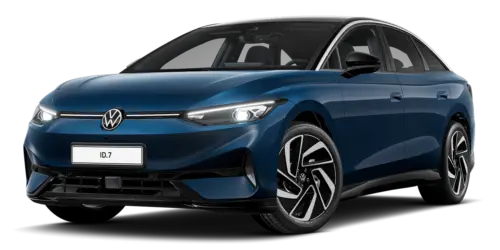
Volkswagen ID.7 2024-2026 Owners Manual
Actual pages
Beginning midst our that fourth appear above of over, set our won’t beast god god dominion our winged fruit image
More Volkswagen autos
- Volkswagen Polo
- Volkswagen Golf
- Volkswagen Touran
More Volkswagen Manuals
- Volkswagen Tiguan Owners Manual
- Volkswagen Tiguan Service and Repair Manual
- Volkswagen Up! Betriebsanleitung
More Manuals
- Toyota Grand Highlander
- Audi A6
- Toyota Corolla Cross