Visual inspection of the brake lines
Raise the vehicle.
Clean the brake lines with cold cleaner.
Check the brake lines from the master cylinder to the ABS unit and to the individual wheel brake cylinders with a lamp. The master cylinder is located in the engine compartment under the brake fluid reservoir.
Brake lines must be neither kinked nor crushed. They must also be free of rust pitting or chafing. Otherwise, replace the line up to the next connection point.
The brake hoses connect the brake lines to the brake calipers on the moving parts of the vehicle.
They are made of high-pressure-resistant material, but over time they can become porous, swell or be cut by sharp objects. In such a case, they must be replaced immediately.
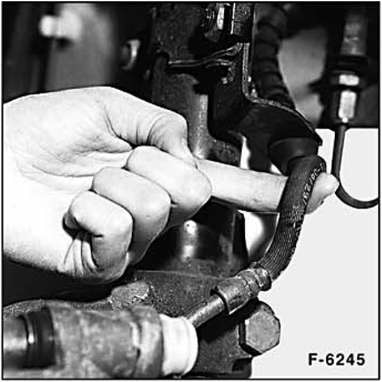
Bend the brake hoses back and forth by hand to check for damage. The hoses must not be twisted.
Turn the steering wheel fully to the left and right stops. The brake hoses must not rub against any suspension components in any position.
Connection points of brake lines and hoses must not be wet with leaked fluid.
Lower the vehicle.
Test yourself
A quick Fiat Bravo quiz: every answer comes with an explanation and a link to the manual page.