Honing the Cylinder Bores
PROCEDURE
1. Before assembling the engine, the cylinder bores must always be honed to achieve correct seating of the piston rings, ensuring proper sealing of the combustion chambers.
If you do not have the necessary tools or prefer not to hone the bores yourself, this work can be entrusted to specialists at an automotive service shop for a reasonable fee.
2. Before honing, install the main bearing caps/connecting bridge (without bearing shells) and tighten the bolts to the specified torque.
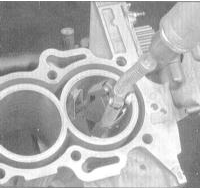
3. Two types of hone are available for machining cylinder bores: the “bottle brush” type and the more traditional surface hone in the form of an attachment with spring-loaded abrasive stones. Both tools provide the required quality of bore finish, although the bottle brush type is preferable for an inexperienced mechanic. You will also need a sufficient quantity of clean rags, special honing oil or light engine oil, and an electric drill to drive the honing attachments. Proceed as follows:
a) Clamp the hone in the electric drill chuck, compress the spring-loaded stones or brush bristles of the attachment, and insert it into the cylinder.
Do not forget to wear safety glasses or a face shield!
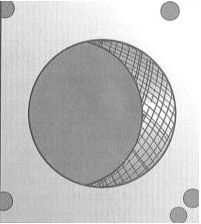
b) Thoroughly wet the bore of the cylinder being machined with oil, start the drill, and move the hone up and down inside the cylinder. The vertical stroke speed of the hone must produce a crosshatch pattern on the bore surface with a cross-hatch angle of approximately 60°. Use plenty of oil and try not to remove more material from the cylinder wall than is actually necessary to achieve the required result.
Piston ring manufacturers may have their own requirements for the crosshatch angle. Carefully read the instructions on the piston ring set packaging.
c) Do not remove the hone from the cylinder until the drill has come to a complete stop! Continue moving the hone up and down until it stops rotating. After the drill has stopped, compress the stones and remove the hone from the cylinder. When using the bottle brush type hone, wait until the drill has stopped completely, then remove the attachment while turning the chuck by hand in the normal direction.
d) Wipe the cylinder bore with a clean rag and move on to honing the next cylinder.
4. After machining is complete, use a file to chamfer the upper edges of the cylinders. This is done so that pistons with rings fitted can be installed into the cylinders without difficulty. Exercise extreme caution and do not scratch the cylinder bore with the file.
5. Finally, the entire block must be thoroughly washed with warm soapy water.
The cylinders can be considered clean when a white rag moistened with oil, drawn across the bore, shows no grey residue. Be sure to clean all oil holes and passages with a cylinder brush, then flush the block with a strong jet of water.
6. After washing, dry the block thoroughly and coat the machined surfaces with oil to protect them from corrosion. Before starting engine assembly, wrap the block in a clean polyethylene bag.
Test yourself
A quick Honda Accord quiz: every answer comes with an explanation and a link to the manual page.