Rail Pressure Sensor (RPS)
Specifications
Specification
| Pressure | Output Voltage (V) [Vref=5V] | |
| bar | [MPa (kgf/cm², psi)] | |
| 0 | 0 (0, 0) | 0,5 |
| 140 | 14 (142, 2031) | 2,5 |
| 280 | 28 (286, 4061) | 4,5 |

Description and Operation
Description
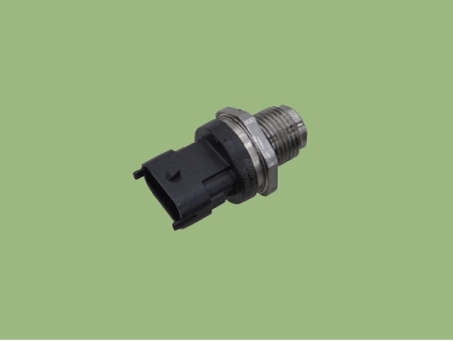
The rail pressure sensor (RPS), installed on the delivery pipe, measures the instantaneous fuel pressure in the delivery pipe. The sensing element (semiconductor element) built into the sensor converts the pressure into a voltage signal. Using this signal, the ECM controls the correct injection volume and timing, and regulates the fuel pressure with the fuel pressure regulator valve if the actual pressure calculated from the RPS output signal differs from the target pressure.
Circuit Diagrams
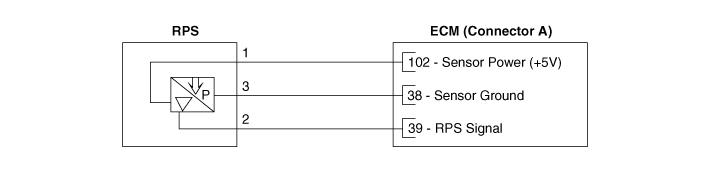
Wiring Diagram
Harness Connector

Repair Procedures
Inspection
Connect the KDS to the Data Link Connector (DLC).
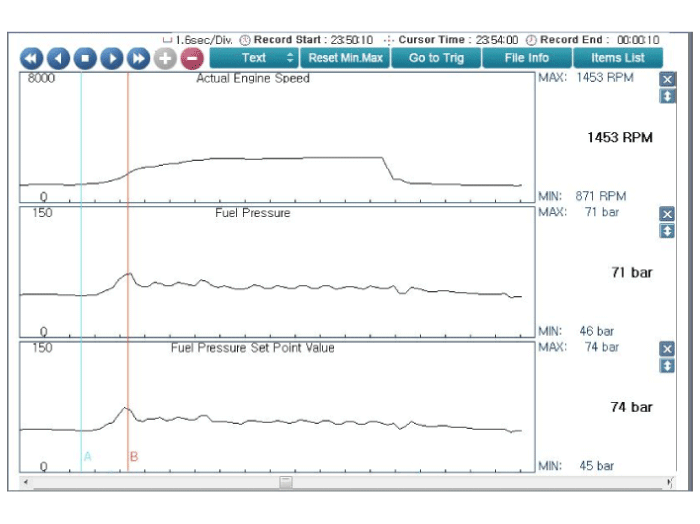
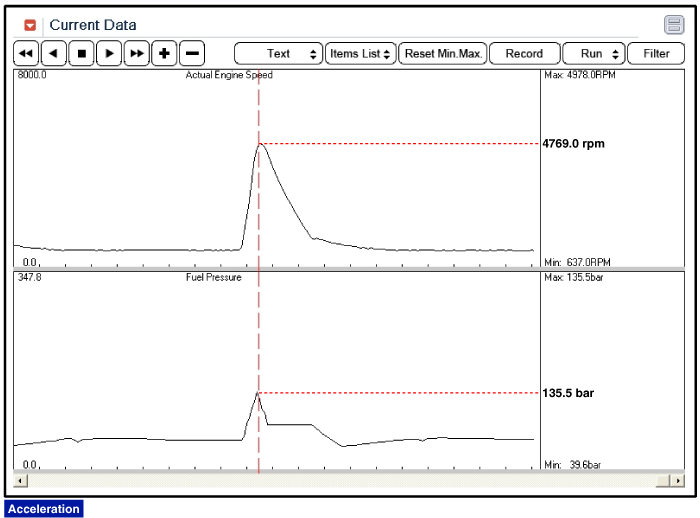
Measure the RPS output voltage and fuel pressure at idle and at various engine speeds.
Pressure Output Voltage (V) [Vref=5V] bar [MPa (kgf/cm², psi)] 0 0 (0, 0) 0,5 140 14 (142, 2031) 2,5 280 28 (286, 4061) 4,5
Removal
Release the residual pressure in the fuel line.
(See Fuel System - "Relieve Fuel Line Residual Pressure")
Turn the ignition switch OFF and disconnect the negative (-) battery terminal.
Remove the intake manifold.
(Refer to Engine Mechanical System - "Intake Manifold")
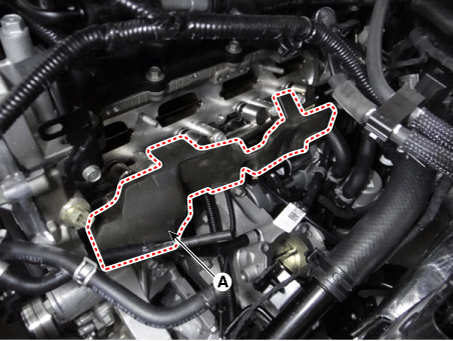
Remove the foam insulation on the delivery pipe (A).
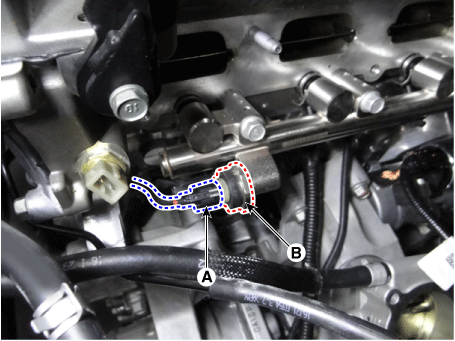
Disconnect the rail pressure sensor connector (A), then remove the sensor (B) from the fuel rail.
Installation
Install in the reverse order of removal.
Troubleshooting
Signal Waveform
Test yourself
A quick Kia Stinger CK quiz: every answer comes with an explanation and a link to the manual page.