Knock Sensor (KS)
Specifications
SPECIFICATIONS
| Position | SPECIFICATIONS |
| Resistance (kOhm) | 4,87 |
| Capacitance (pF) | 850~1150 |
| Type | piezoelectric effect |
| Handle | 2 |
Description and Operation
Description
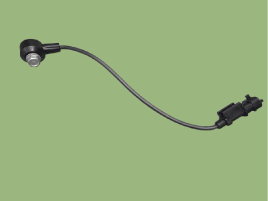
Knocking is a phenomenon characterized by undesirable vibration and noise. It may damage the engine. The knock sensor (KS) is mounted on the cylinder block and detects engine knocking.
When engine knock occurs, the vibration of the cylinder block acts as pressure on the piezoelectric element. When knocking occurs, the sensor generates a signal voltage. The ECM retards the ignition timing when knock occurs. If the knock disappears after the ignition timing is advanced, the ECM advances the ignition timing. This sequential control can improve engine output, torque and fuel economy.
Schematic diagrams
Circuit diagram

repair procedures
expansion
Turn the ignition switch OFF and disconnect the negative (-) battery terminal.
Remove the intake manifold.
(Refer to Engine Mechanical - "Intake Manifold").
Remove the delivery line.
(Refer to Fuel System - "Delivery Line")
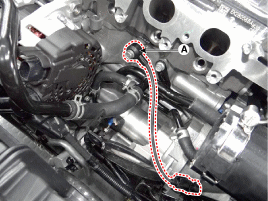
Loosen the mounting bolt, then remove the knock sensor (A).
Knock sensor mounting bolt: 18.6~24 N·m
Installation
Installation is the reverse of removal.
Test yourself
A quick Kia Stonic quiz: every answer comes with an explanation and a link to the manual page.